From the compact Elite 30 V2 to the 3kWh Elite 300, we re-ranked BLUETTI's current LiFePO4 lineup by real-world value, expandability, and use case — the brand that pioneered modular solar generators and keeps raising the bar.
Quick Answer: The best BLUETTI for most people is the AC200L ($899): 2,048Wh of LiFePO4 capacity, 2,400W output, and expansion to 8,192Wh. For 3kWh in one box, the Elite 300 ($1,199) is rated for 6,000+ cycles. For camping, the Elite 30 V2 ($249.99) weighs little and charges to 80% in 45 minutes. Prices are from bluettipower.com as of October 1, 2026.
BLUETTI was one of the first brands to go all-in on LiFePO4 battery chemistry and modular expansion — two features that have since become industry standard. The brand's ecosystem now spans everything from a lunchbox-size camping unit to 3kWh home backup stations, which makes choosing the right model less about "is BLUETTI good?" (it is) and more about which BLUETTI fits your specific situation.
We ranked the four BLUETTI models you can buy new today — AC200L, Elite 300, AC180, and Elite 30 V2 — using the same framework we apply to every brand. The five factors:
The result is a ranking built around who should buy what, not just stacking spec sheets. The Elite 300 has the biggest numbers, but the AC200L offers the best combination of portability, expandability, and value for the widest range of buyers. Below, we break down each model and tell you exactly who it's for — and who should look elsewhere.
Updated October 1, 2026: the EP500Pro is no longer sold on BLUETTI’s U.S. store, the AC2A is discontinued, and the AC70 is sold out. They are replaced below by the Elite 300, AC180, and Elite 30 V2. Prices are from bluettipower.com on October 1.
Short on time? Here's every current BLUETTI model side by side. Jump to any section below for the full breakdown.
| Rank | Model | Capacity | Output | Solar Input | Weight | Price |
|---|---|---|---|---|---|---|
| #1 Top Pick | AC200L | 2,048Wh | 2,400W (3,600W surge) | 1,200W | ~62 lbs | ~$899 |
| #2 | Elite 300 | 3,014Wh | 2,400W (4,800W surge) | 1,200W | ~58 lbs | ~$1,199 |
| #3 | AC180 | 1,152Wh | 1,800W (2,700W lifting) | 500W | 35.3 lbs | ~$449 |
| #4 | Elite 30 V2 | 288Wh | 600W (1,500W lifting) | — | — | ~$249.99 |
All four run LiFePO4 (lithium iron phosphate) cells rated for 3,000 to 6,000+ charge cycles — no NMC holdovers anywhere in the lineup. BLUETTI's Power Lifting technology on the AC200L and AC180 also lets these units handle brief loads above their rated continuous output, which is useful for motor and compressor startup on appliances that would otherwise exceed the wattage cap. If you're not sure how to translate these numbers into "how long will this run my stuff," our sizing guide walks through the math step by step.
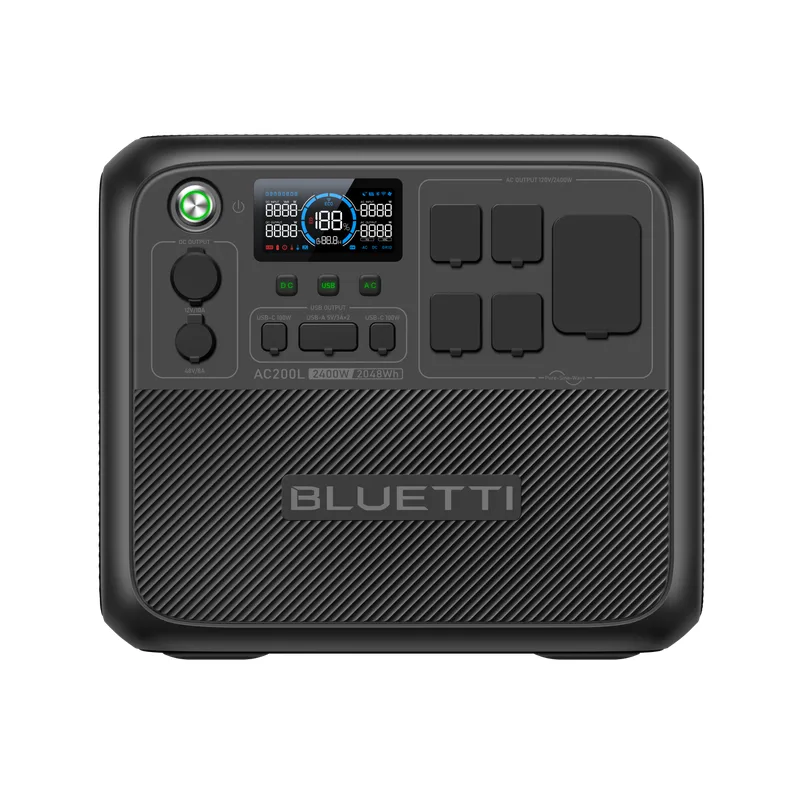
Price: ~$899 • Expandable: Yes (up to 8,192Wh with B230/B300) • Cycle life: 3,500+ • UPS: Yes (<20ms) • Power Lifting: 3,600W
The AC200L is the successor to the wildly popular AC200P and AC200MAX, and it fixes every meaningful complaint about those older models. LiFePO4 battery chemistry (the older AC200P used NMC), 2,400W continuous output with 3,600W Power Lifting for brief surges, 1,200W solar input, and — the big one — modular expansion up to 8,192Wh with B230 or B300 expansion batteries. Read our full BLUETTI AC200L review for the deep dive on build quality and real-world testing.
The expansion ecosystem is what separates BLUETTI from most competitors in this price range. Start with the 2,048Wh base unit for $899, and if you need more capacity later, add a B230 (2,048Wh) or B300 (3,072Wh) expansion battery — up to three expansion batteries for a maximum of 8,192Wh. That's enough to run a full household through a multi-day outage. No other brand offers this level of modularity at this price point except EcoFlow's DELTA Pro ecosystem, which costs significantly more for comparable total capacity.
The dual charging capability (solar + AC simultaneously) means you can plug into a wall outlet and connect solar panels at the same time for maximum recharge speed. The 1,200W solar input accepts up to six BLUETTI PV200 panels in parallel for a full recharge in roughly two hours of strong sun. The built-in UPS with <20ms switchover makes this a serious home backup option — keep it plugged in, and it'll take over automatically when the grid drops. At 62 lbs, it's not a grab-and-go unit, but it's manageable for one person to carry room to room or load into a car.
"Best value in the portable power station market. The 2,400W output with Power Lifting handles my microwave and coffee maker no problem."
— Verified Buyer
Check Price at BLUETTI Buy on Amazon Read Full Review
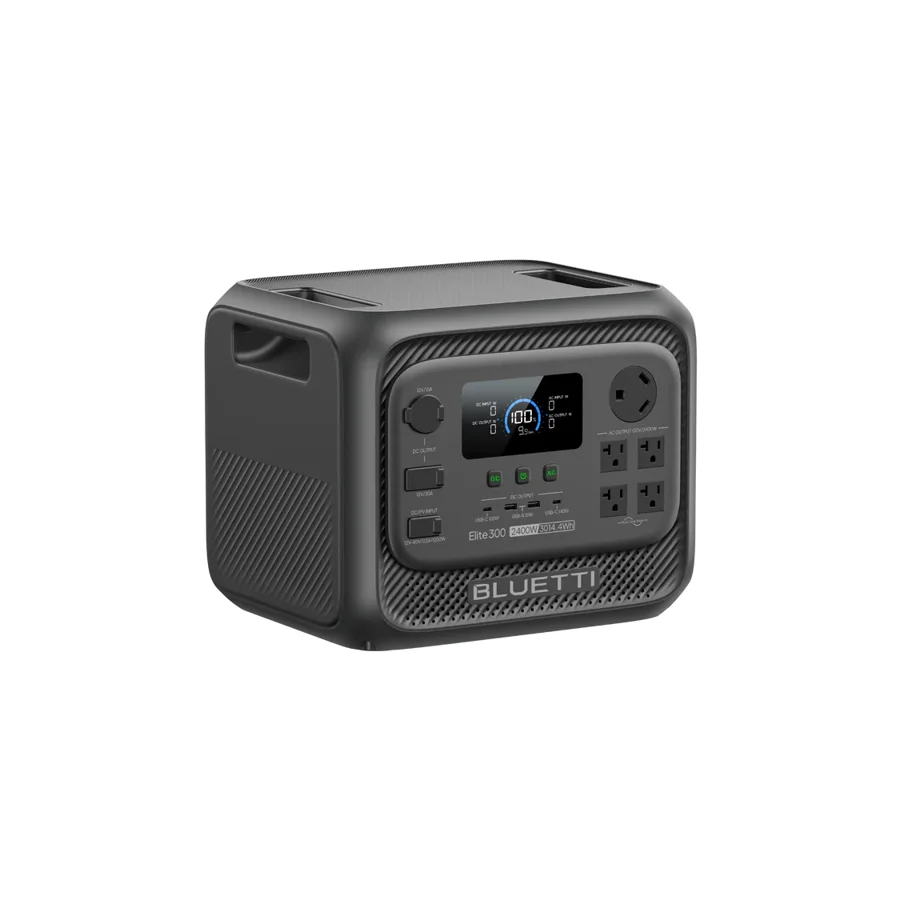
Price: ~$1,199 • Cycle life: 6,000+ cycles
The Elite 300 takes over the home-backup slot from the EP500Pro, which BLUETTI no longer sells in the U.S. It packs 3,014Wh of LiFePO4 capacity and 2,400W of output into what reviewers call one of the most compact 3kWh stations on the market.
BLUETTI rates the battery for 6,000+ cycles. Reviewers list up to 1,200W of solar input, 1,800W AC charging, a 4,800W surge rating, and a weight of about 58 lbs — heavy, but it stays in one place during an outage.
At $1,199 on bluettipower.com, it costs about $300 more than the AC200L for nearly 1kWh of extra capacity in a single box. Choose the AC200L if you want to start smaller and add batteries later; choose the Elite 300 if you want 3kWh from day one.
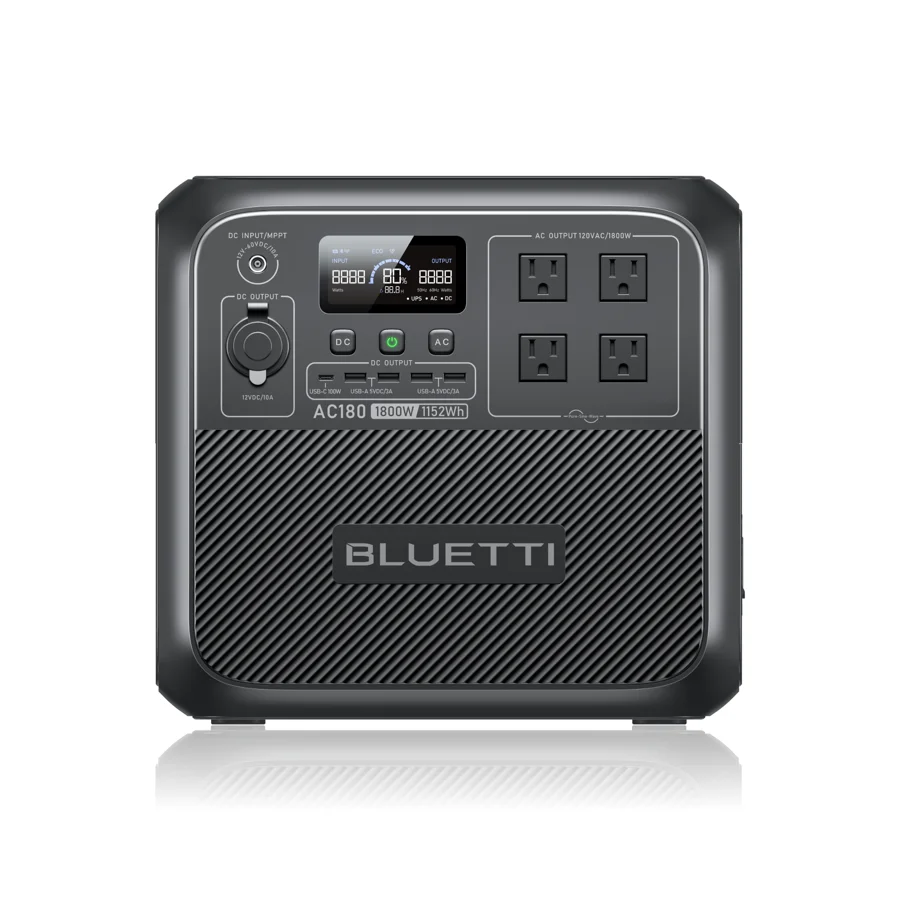
Price: ~$449 • Cycle life: 3,500+ cycles
The AC180 replaces the AC70, which is sold out on BLUETTI’s U.S. store. It is the better buy anyway: 1,152Wh of LiFePO4 capacity and 1,800W of AC output (2,700W in power-lifting mode for resistive loads like kettles and hair dryers) for $449.
With 1,440W AC input it recharges to 80% in about 45 minutes, and it accepts up to 500W of solar. It has 11 output ports and BLUETTI app control over Bluetooth.
At 35.3 lbs it is a two-hand carry, but for under $500 it is one of the most capacity-per-dollar stations BLUETTI sells.
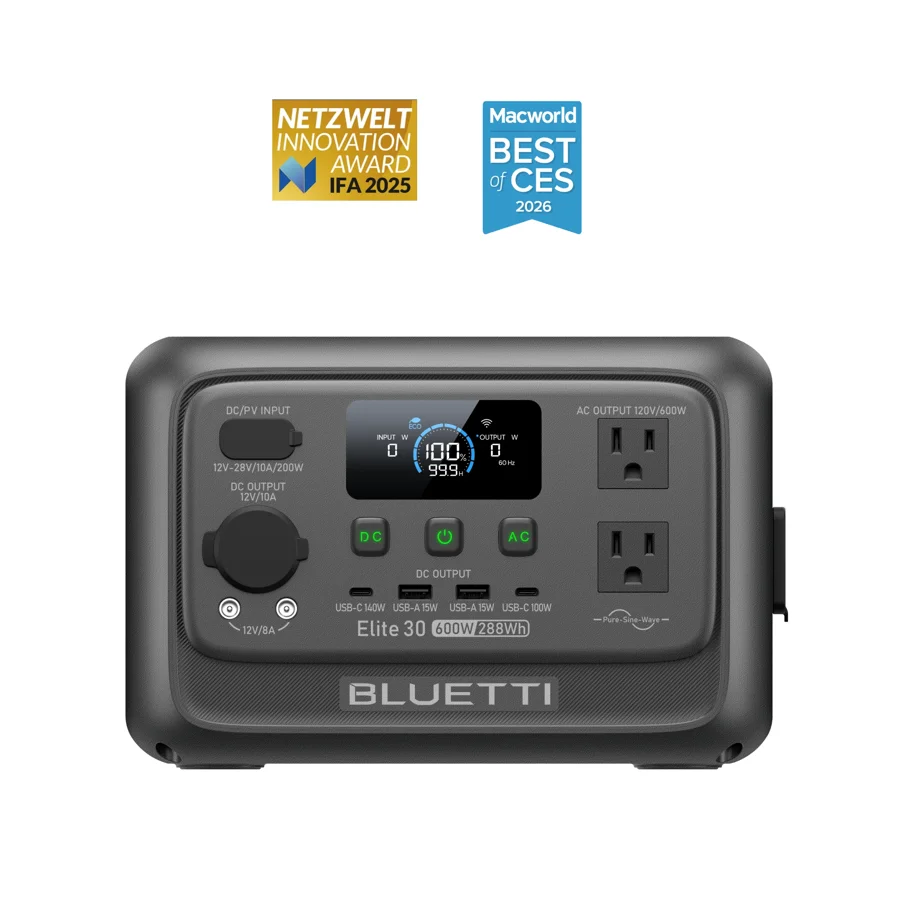
Price: ~$249.99 • Cycle life: 3,000+ cycles
The Elite 30 V2 replaces the discontinued AC2A as BLUETTI’s entry-level pick. It delivers 288Wh of LiFePO4 capacity and 600W of output (1,500W lifting power) in a lunchbox-size unit.
A 140W USB-C port fast-charges laptops, TurboBoost charging hits 80% in about 45 minutes, and a 10ms UPS switchover protects a modem or CPAP during outages. It runs under 30dB at light loads.
At $249.99 on bluettipower.com, it is the cheapest way into BLUETTI’s LiFePO4 lineup for camping, tailgating, and keeping electronics charged.
BLUETTI makes its own solar panels, and the PV200 (200W, ~$449) is the sweet spot for most BLUETTI owners. It's a foldable monocrystalline panel with an integrated kickstand and MC4 connectors that work natively with every BLUETTI power station.
Third-party panels with MC4 connectors also work. Check our best solar panels guide for options from Renogy, BougeRV, and others that may offer better value per watt.
Cut through the specs and answer one question: what are you powering, and for how long?
Go with the AC200L ($899). 2,048Wh and 2,400W, expandable to 8,192Wh with B230/B300 batteries.
Go with the Elite 300 ($1,199). 3,014Wh and 6,000+ cycles without buying expansion batteries.
Go with the AC180 ($449). 1,152Wh and 1,800W with a 45-minute charge to 80%.
Go with the Elite 30 V2 ($249.99). 288Wh, 140W USB-C, and quiet operation.
BLUETTI doesn't exist in a vacuum. Here's how it stacks up against the other major brands at each price tier:
| Factor | BLUETTI | EcoFlow | ALLPOWERS | Jackery |
|---|---|---|---|---|
| Best at | Modular expansion, home battery ecosystem | App ecosystem, AC fast charging, raw power | Price-per-watt-hour — most specs for least money | Brand trust, retail availability, ease of use |
| Expansion | Best in class — B230/B300 for AC200L | Good — Extra Battery for DELTA series | Limited — R3500 only | Good — HomePower 2000 Plus v2 expands to 12kWh |
| Value | Mid-range — premium for expansion flexibility | Premium pricing — you pay for the ecosystem | Best value — consistently 20-30% less for comparable specs | Premium pricing — brand tax |
| Home Battery | Elite 300 — 3kWh in one unit, 6,000+ cycles | DELTA Pro Ultra — highest raw capacity | None | None |
| Battery | LiFePO4 across entire lineup | LiFePO4 across current lineup | LiFePO4 across entire lineup | LiFePO4 across current lineup |
Bottom line: Choose BLUETTI if expansion flexibility and the home battery ecosystem matter to you. Choose EcoFlow if you want the best app and fastest AC charging. Choose ALLPOWERS if you want the most specs for the least money. Choose Jackery if you want the easiest setup and widest retail availability. All four are solid choices — the difference is priorities, not quality.
Free Download
Get our free Solar Generator Buyer's Guide — 47 pages, real specs, no fluff. We'll send it straight to your inbox.
No spam. Unsubscribe anytime.
For most people, the AC200L ($899) is the best BLUETTI: 2,048Wh, 2,400W output, and expansion to 8,192Wh. The Elite 300 ($1,199) gives you 3,014Wh in one unit, the AC180 ($449) is the best value under $500, and the Elite 30 V2 ($249.99) is the entry-level camping pick. Prices are from bluettipower.com on October 1, 2026.
As of October 2026, the EP500Pro is no longer sold on BLUETTI’s U.S. store, the AC2A is marked discontinued, and the AC70 is sold out. Their closest current replacements are the Elite 300, Elite 30 V2, and AC180.
Yes. Every model in this guide uses LiFePO4 cells, rated from 3,000+ cycles (Elite 30 V2) to 6,000+ cycles (Elite 300).
The AC200L accepts B230 and B300 expansion batteries for up to 8,192Wh. The Elite 300, AC180, and Elite 30 V2 are single-unit designs.
BLUETTI tends to offer more capacity per dollar and strong expansion options on its AC-series units. EcoFlow leads on fast AC charging, and Jackery focuses on simple, lightweight designs. All three now use LiFePO4 across their main lineups.
Compare every BLUETTI model against EcoFlow, ALLPOWERS, Jackery, and more — side by side, spec by spec.
Shop BLUETTI Compare All Models Not sure what size you need? Read the sizing guide →47 pages. Plain English. No fluff. Covers every major brand, real-world runtime tests, and our top picks for every budget.
No spam. Unsubscribe anytime. We hate junk mail as much as you do.