Gas generators are out of the question. These battery-powered units are silent, fume-free, and built for apartment life — from studio walkups to high-rise condos.
Quick Answer: The best solar generator for apartments in 2026 is the EcoFlow Delta 2 Max — it delivers 2,400W output from a unit that fits in a closet, charges from a standard wall outlet in under 2 hours, and runs a mini fridge, window AC, and all electronics during outages. For studio apartments with limited space, the BLUETTI AC2A (204Wh, 6.2 lbs) slides under a desk and handles phone/laptop charging for days. Solar generators are the only backup power option that works safely indoors with zero emissions.
If you live in an apartment or condo, you already know the uncomfortable truth about power outages: you have zero backup options that most homeowners take for granted. Gas generators? Prohibited by virtually every lease, fire code, and building management company in the country — and for good reason. Running a combustion engine inside or even near a multi-unit building is a carbon monoxide hazard that puts not just you but dozens of neighbors at risk.
But the need for backup power doesn't disappear just because you rent. If anything, apartment dwellers are more vulnerable during outages:
The solution is a solar generator — more accurately called a portable power station. These are large, rechargeable lithium battery units with built-in inverters that output standard AC power. You charge them from a wall outlet (or solar panels), store them in a closet, and plug in your essentials when the power goes out. No fumes, no noise complaints, no fire code violations, no landlord issues.
We evaluated dozens of models specifically through the lens of apartment living — prioritizing noise level, indoor safety, compact dimensions, weight, balcony-friendly solar charging, and outlet charging speed. Below are the five that make the most sense for renters and condo owners in 2026.
Shopping for a solar generator as an apartment dweller is different from shopping as a homeowner. You're not wiring into a breaker panel or setting up a permanent solar array on your roof. Here are the criteria that actually matter for apartment and condo use:
This is non-negotiable in a shared-wall environment. The best apartment generators run under 30 dB — quieter than a whisper. Some units ramp fans up to 40–50 dB under heavy load, which is audible through thin apartment walls. We prioritize units with whisper-quiet or fanless operation at low-to-moderate loads.
Every generator on this list uses sealed lithium batteries with zero emissions. Look for LiFePO4 (lithium iron phosphate) chemistry specifically — it's the most thermally stable lithium type, with built-in overcharge protection, short-circuit cutoffs, and temperature monitoring. No fumes, no CO, no fire risk under normal use.
You need to carry this unit from your front door to your apartment, possibly up stairs if the elevator is out. Units over 50 lbs become a serious problem in walkups. We also consider the physical footprint — can it sit on a shelf, slide into a closet, or tuck under a desk without taking over your limited floor space?
Not everyone has a balcony, but if you do, it opens up solar charging as a genuine recharging option during extended outages. We look at each unit's solar input wattage and how well it pairs with compact, balcony-sized panels (100W–200W portable panels that lean against a railing or wall).
For most apartment residents, the primary charging method is a wall outlet. Some units charge 0–80% in under an hour via AC; others take 6–8 hours. Fast AC charging means you can top off your generator during a brownout warning, storm watch, or even during the day between scheduled rolling blackouts.
An apartment's critical loads are different from a house's. You're typically powering a fridge, a router, a laptop, phone chargers, LED lights, maybe a fan or CPAP machine. Most apartments don't need 3,000W+ output. Match the generator's output to what you'll actually plug in — overspending on wattage you'll never use is wasted money.
For a deeper dive into matching capacity to your specific appliances, check our solar generator sizing guide.
Short on time? Here's a summary of all five apartment-friendly picks. Click any name to jump to the full breakdown.
| Pick | Capacity | Output | Weight | Price | Best For |
|---|---|---|---|---|---|
| #1 Best Overall EcoFlow Delta 2 Max | 2,048Wh | 2,400W | 51 lbs | ~$1,599 | All-around apartment backup |
| #2 Best Budget EcoFlow River 3 Plus | 286Wh | 600W | 7.7 lbs | ~$349 | Essential electronics only |
| #3 Best for WFH Anker SOLIX C1000 | 1,056Wh | 1,800W | 27 lbs | ~$899 | Work-from-home backup |
| #4 High-Power BLUETTI AC300 + B300 | 3,072Wh | 3,000W | 143 lbs | ~$2,999 | Window AC, full kitchen |
| #5 Ultra-Portable ALLPOWERS R600 | 299Wh | 600W | 7.5 lbs | ~$269 | Smallest footprint |
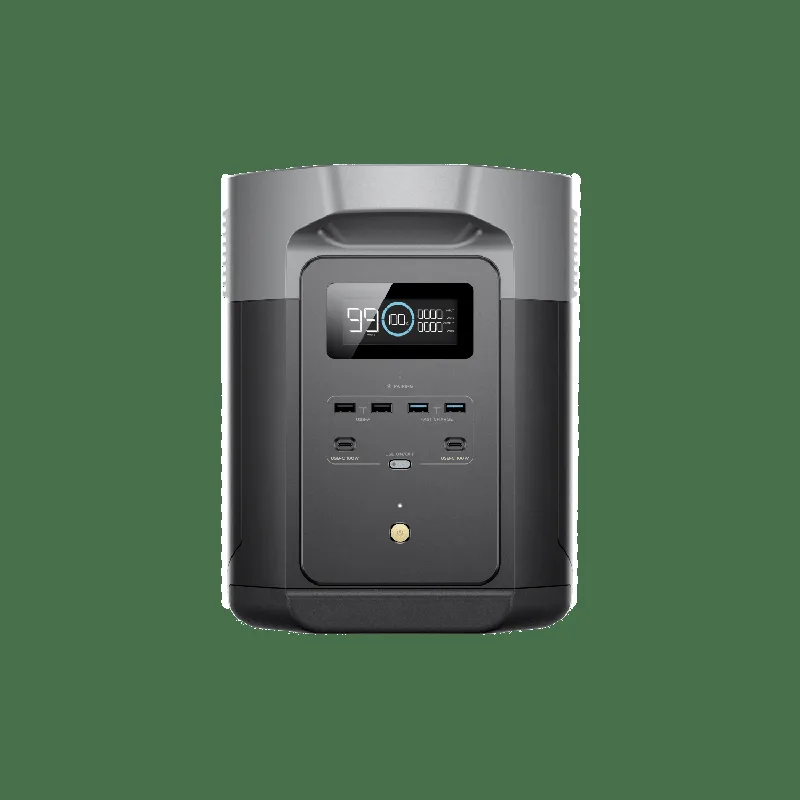
Price: ~$1,599 | Battery: LiFePO4
The EcoFlow Delta 2 Max is the Goldilocks pick for apartment living — powerful enough to run a full-size fridge, a router, LED lights, and a laptop simultaneously, yet compact enough to slide into a coat closet or sit beside a desk without commanding attention. At 51 lbs, it's heavy but manageable for a single person to carry from a delivery lobby to an apartment, even up a few flights of stairs if needed.
The 2,400W continuous output handles virtually every appliance you'd find in an apartment, including hair dryers, microwaves (most are under 1,800W at the plug), blenders, and even small space heaters. The only common apartment appliance it can't run is a full-size window AC unit that draws more than 2,400W on startup — but most window AC units in the 5,000–8,000 BTU range that apartments use start at 1,200–1,800W, well within range.
What makes the Delta 2 Max especially apartment-friendly is its charging speed. Using a standard wall outlet, it charges from 0 to 80% in just 43 minutes via EcoFlow's X-Stream technology. That speed matters in apartments because you often get short warning windows before planned outages — a maintenance email at 2 PM for a 4 PM shutdown gives you enough time to get to 80% charge. And the fan noise during charging is noticeably lower than competitors; under light loads, the Delta 2 Max is essentially silent.
For extended outages, the Delta 2 Max accepts up to 500W of solar input. A single 160W or 220W portable panel on a south-facing balcony can add 600–800Wh per day in good conditions, meaningfully extending your runtime. The unit is also expandable to 6,144Wh with two additional EcoFlow DELTA 2 Max Smart Extra Batteries, though most apartment users won't need that capacity.
Check Price at EcoFlow See in Home Backup Guide
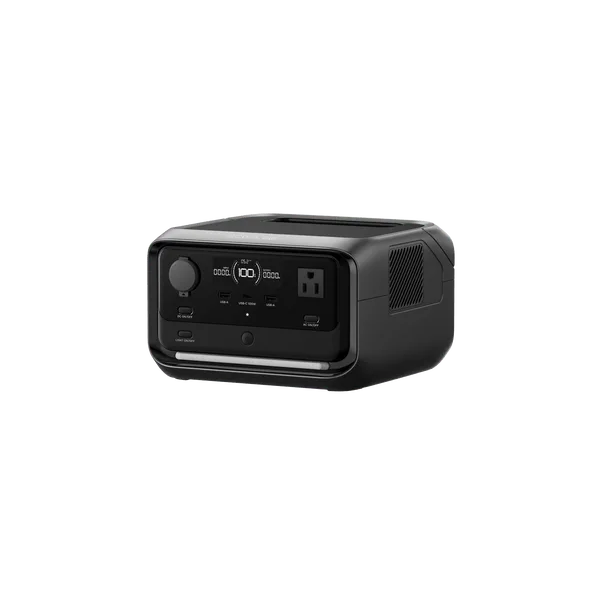
Price: ~$349 | Battery: LiFePO4
Not everyone needs (or can afford) 2,000+ watts of backup power. If your apartment outage plan is "keep my phone charged, my laptop running, and a couple of LED lights on," the EcoFlow River 3 Plus does exactly that — and does it brilliantly — for under $350.
At 7.7 lbs, the River 3 Plus weighs less than a gallon of paint. You can literally carry it in one hand up 10 flights of stairs without breaking a sweat. It stores anywhere: a bookshelf, a nightstand drawer, under the bathroom sink, on top of the fridge. In a small apartment where every square foot matters, this kind of invisibility is a genuine feature.
The 286Wh capacity sounds modest, and it is — but consider what it actually runs. A modern smartphone charges at roughly 15–20Wh per full charge. The River 3 Plus can fully charge an iPhone about 15 times. A laptop draws 40–60W, so you get 4–6 hours of continuous laptop use. An LED lamp draws 5–10W, giving you 25–50 hours of light. A Wi-Fi router draws 10–15W, so roughly 18–24 hours of internet. For a single person or couple whose outage plan centers on communication, light, and basic productivity, that's genuinely sufficient.
EcoFlow's fast-charge technology works here too: 0–80% in about 50 minutes via AC wall outlet. And the River 3 Plus is virtually silent — the fan barely engages at its typical load range, making it perfect for studio apartments and shared bedrooms.
The 600W output means you won't be running a fridge, a microwave, or any heating/cooling appliance. But that's not what this unit is for. It's an affordable insurance policy that keeps you connected and functional during outages lasting 6–12 hours. For the price of two nice dinners out, that peace of mind is hard to argue against. Compare it directly with our other budget picks in our best power stations under $1,000 guide.
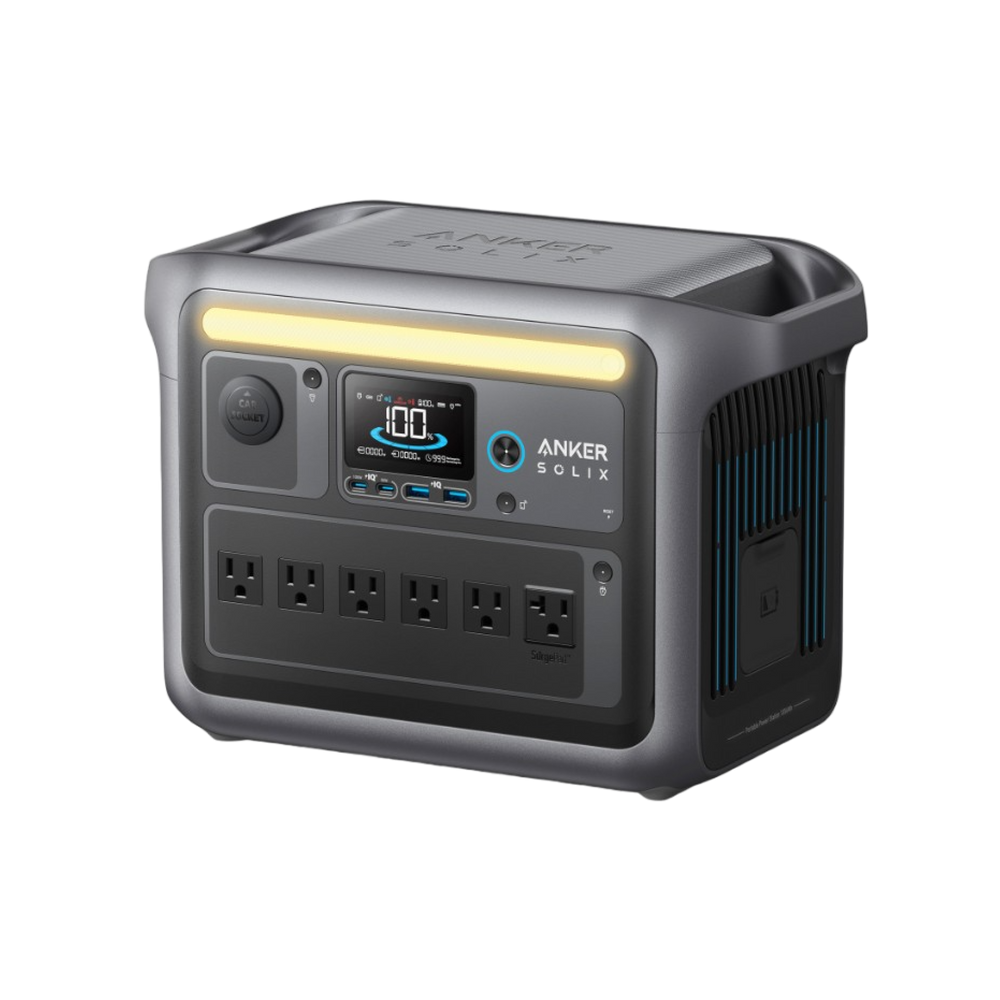
Price: ~$899 | Battery: LiFePO4
Here's the scenario the Anker SOLIX C1000 was built for: it's Tuesday at 10 AM, you're on a video call with a client, your dual monitors are running, the router is pushing your Zoom stream, your desk lamp is on, your phone is charging, and the power goes out. In a pre-C1000 world, your call drops, your screens go black, and you spend the next hour on your phone hotspot apologizing and rescheduling. In a post-C1000 world, you don't even notice the outage happened.
The math works: a typical work-from-home setup draws about 150–250W total (laptop 45–65W, monitor 25–40W each, router 10–15W, desk lamp 8–12W, phone charger 15–20W). At 250W continuous draw, the C1000's 1,056Wh battery provides over 4 hours of uninterrupted work. Drop the monitors and work from just the laptop? You're looking at 8–10 hours. That covers the vast majority of daytime apartment outages.
At 27 lbs, the C1000 sits comfortably under or beside a desk. It's light enough to carry up stairs one-handed and small enough (14.8 x 8.3 x 9.6 in) to tuck into a closet shelf when not in use. Anker's build quality is what you'd expect from one of the most trusted names in consumer electronics — the fit and finish are premium, and the interface is clean and intuitive.
The 1,800W continuous output (2,400W surge) also means the C1000 can handle most apartment appliances beyond just work equipment: a blender, a coffee maker, a mini-fridge, a CPAP machine, or a box fan. It's the mid-range sweet spot that gives you enough power to maintain normalcy during an outage without paying $1,500+.
AC charging hits 0–100% in about 58 minutes, which is outstanding for a unit in this price range. Solar input maxes at 600W, making it one of the better options for balcony solar recharging.
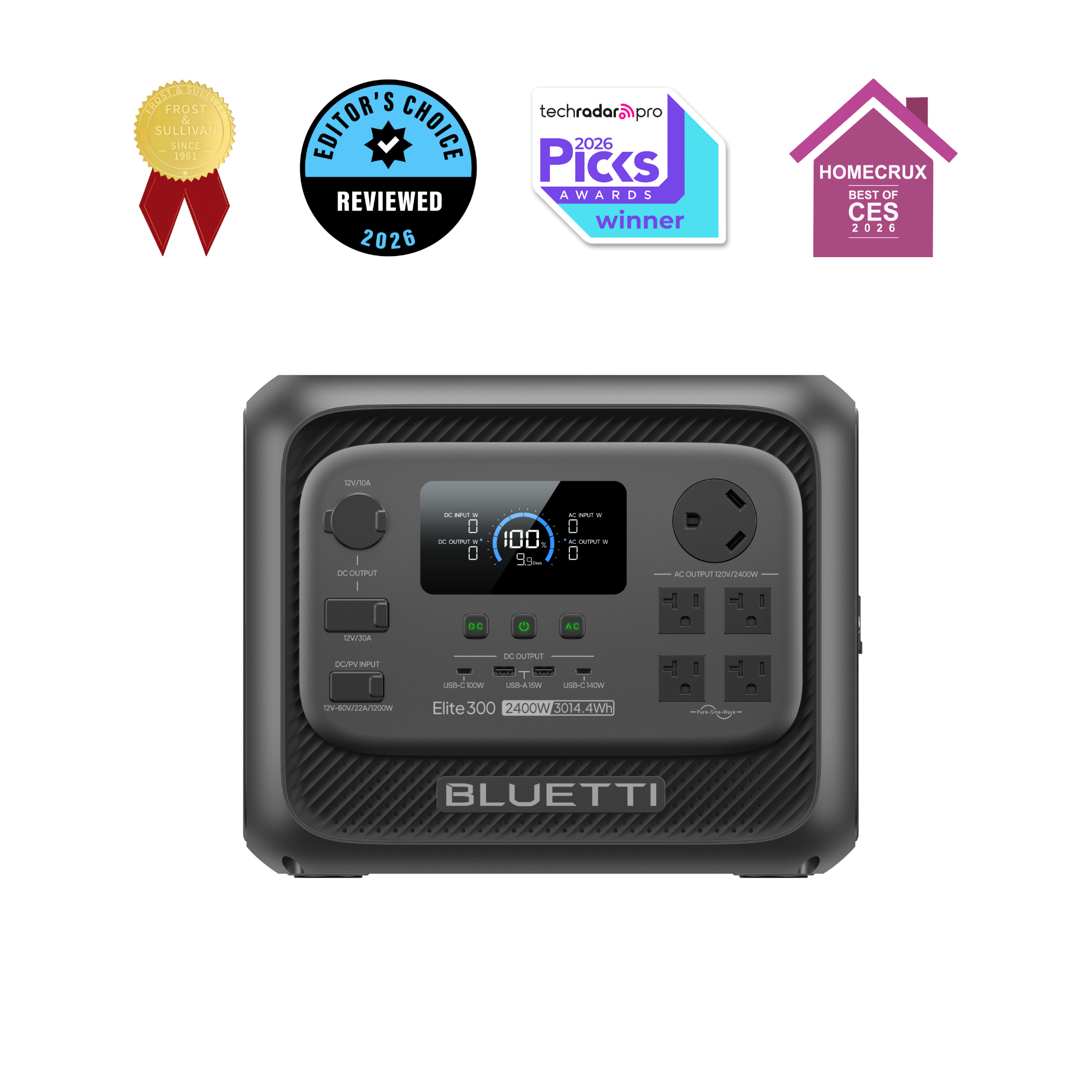
Price: ~$2,999 (inverter + 1 B300) | Battery: LiFePO4
The BLUETTI AC300 is the pick for apartment dwellers who refuse to compromise. If your definition of "backup power" includes running a window AC unit through a summer heat wave, keeping a full-size fridge and freezer going overnight, making coffee in the morning, and still having enough juice to charge every device in the household — this is the only unit on this list that delivers all of that simultaneously.
With 3,000W continuous output (6,000W surge), the AC300 handles every residential appliance you'd find in an apartment. Window air conditioners in the 5,000–10,000 BTU range (800–1,500W running, 1,200–2,500W startup) run without tripping. A microwave (1,000–1,500W), a full-size refrigerator (150W continuous), and a dozen USB devices — all at once. The 6,000W surge means high-startup appliances like refrigerator compressors kick on without issue.
The 3,072Wh capacity (with one B300 battery) provides serious runtime. At a moderate apartment load of 400–500W (fridge + router + lights + phone chargers), you're looking at 6–7 hours of uninterrupted backup. Scale back to essentials only (150W), and you extend to 18–20 hours. Need more? Add a second B300 and double it to 6,144Wh.
The caveat for apartment living is weight. The AC300 inverter unit weighs about 44 lbs, and each B300 battery weighs roughly 99 lbs. Combined, you're looking at 143 lbs — this is not something you carry up 6 flights of stairs. For elevator-accessible apartments and ground-floor condos, it's perfectly feasible. The two-piece modular design (inverter + battery ship separately) actually helps here: you carry two heavy pieces instead of one impossible piece. Once positioned in a corner or closet, it stays put.
Solar input peaks at 2,400W via dual MPPT, the best on this list. Even a modest 200W balcony panel setup recharges meaningfully. For more details on the AC300's full capability set, read our home backup generator guide where it takes our #1 overall spot.
Check Price at BLUETTI Read Full Review
Price: ~$269 | Battery: LiFePO4
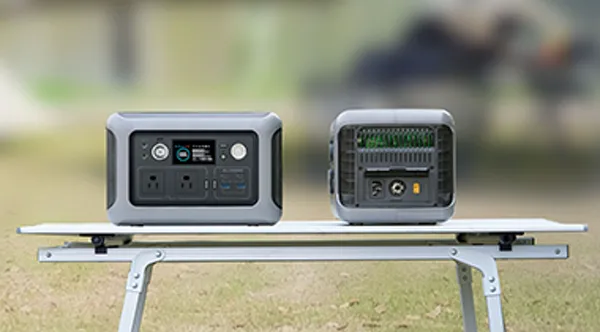
The ALLPOWERS R600 exists for the apartment resident who wants backup power but has virtually no space to spare. At 7.5 lbs and roughly the size of a thick hardcover book (8.9 x 6.1 x 7.8 in), this unit disappears into any apartment. Slide it into a closet shelf next to your shoes. Stack it on a bookshelf between actual books. Tuck it under the bathroom sink. It takes up so little room that you'll forget it's there — until you need it.
The specs mirror the EcoFlow River 3 Plus almost identically: 600W output, ~300Wh capacity, LiFePO4 chemistry. Where the R600 differentiates is price and features per dollar. At ~$269, it typically undercuts the River 3 Plus by $50–80, and it includes two features the River 3 Plus lacks: a built-in wireless charging pad on top of the unit (lay your phone on it, it charges) and 100W USB-C PD output.
The wireless charging pad is a small thing, but in apartment life it's surprisingly useful. During an outage, you set the R600 on your nightstand, plug in a lamp or fan, and lay your phone on top to charge — no cables to dig out. The 100W USB-C PD port means it fast-charges any USB-C laptop (MacBook Air, Dell XPS, Lenovo ThinkPad) at full speed.
Like the River 3 Plus, this is not a unit for running a fridge or a microwave. It's a phone-laptop-lights-router unit. But at $269, it's the cheapest insurance policy on this list, and the one that's least likely to trigger a "where do I put this?" conversation in a 400-square-foot studio.
Solar input maxes at 200W, which is solid for a unit this size — a single 100W portable panel on a balcony can recharge it in about 4 hours of good sun. For more budget options, see our full best portable power stations under $1,000 roundup.
One of the most common questions we get from apartment residents is: "Can I actually use solar panels if I don't have a roof?" The answer is yes — if you have a balcony, patio, or even a large south-facing window, you can meaningfully solar-charge your generator. Here's the practical breakdown.
A portable folding solar panel in the 100W–200W range. These panels fold flat for storage (about the size of a briefcase when collapsed) and unfold to roughly 2–4 square feet. They connect to your generator via a standard MC4 or proprietary solar cable. Most generators on this list come with the required cables.
Be honest with yourself about what balcony solar delivers. This isn't a rooftop array:
The key insight for apartment solar is this: solar isn't your primary charging method, it's your emergency backup charging method. Day-to-day, you charge from the wall. But during an extended multi-day outage when grid power isn't available, even a modest 100W balcony panel can keep your essentials running indefinitely. That's the real value.
If you've ever been told "generators aren't allowed in apartments," the person was talking about gas generators — combustion engines that burn gasoline or propane, produce lethal carbon monoxide, and require outdoor ventilation. Solar generators (portable power stations) are an entirely different category of device. Here's why they're safe for indoor apartment use:
No combustion engine. No exhaust. No CO risk whatsoever. This is the #1 reason gas generators kill people indoors — and solar generators eliminate it entirely.
Most units run under 30 dB at typical loads. No engine noise, no vibration. Your neighbors won't know you have one, and it won't keep you awake at night.
LiFePO4 (lithium iron phosphate) chemistry doesn't experience thermal runaway like older lithium-ion types. It's the same chemistry used in electric buses and medical equipment.
Every unit on this list includes overcharge protection, over-discharge protection, short circuit cutoff, over-temperature shutdown, and overcurrent protection. Multiple redundant safety layers.
Most apartment leases that prohibit "generators" are specifically referring to combustion generators — gasoline, propane, or diesel engines. A solar generator is technically a battery-powered portable power station, not a generator in the combustion sense. It's more accurately compared to a large UPS (uninterruptible power supply) or a big laptop battery.
That said, if your lease uses broad language, it's worth a quick email to your property manager: "I'm planning to keep a battery-powered portable power station (no fuel, no fumes, no noise) in my unit for emergency backup. It's essentially a large rechargeable battery. Any issues?" In our experience, property managers universally approve these once they understand there's no combustion involved.
Yes. Solar generators (portable power stations) are completely safe to use indoors. Unlike gas generators, they produce zero carbon monoxide, zero exhaust fumes, and minimal noise. They run on lithium batteries charged from a wall outlet or solar panels. Most apartment leases that prohibit generators are referring specifically to gasoline or propane generators — solar generators are battery-powered appliances, similar to a large power bank. They require no ventilation, no fuel storage, and no special permits.
Yes. A portable solar panel (100W–200W) can be set up on a balcony railing, propped against a wall, or laid flat on a balcony floor to charge your solar generator. South-facing balconies get the best results. A single 100W panel in good sun will add roughly 400–500Wh per day. For faster charging, two 100W panels are practical on most apartment balconies. You can also charge the generator from a standard wall outlet when power is available, then keep it topped off with solar for emergencies.
It depends on the generator's capacity and output. A typical apartment fridge draws 100–200W running and 800–1,200W on compressor startup. A generator with at least 1,000W continuous output and 1,000Wh capacity can run a standard apartment fridge for 5–8 hours. The EcoFlow Delta 2 Max (2,400W, 2,048Wh) can power a fridge for 12–18 hours. Smaller units like the EcoFlow River 3 Plus (600W, 286Wh) are better suited for mini-fridges, phone charging, and small electronics.
Absolutely. Solar generators use sealed lithium batteries (most modern units use LiFePO4 chemistry, which is the safest lithium type) and produce zero emissions. There is no combustion, no carbon monoxide risk, and no exhaust. They are essentially large rechargeable battery packs with built-in inverters. All reputable brands include overcharge protection, short circuit protection, temperature monitoring, and automatic shutoff. They are as safe as any other consumer electronic device and are specifically designed for indoor use.
Our complete apartment-specific guide covers sizing, balcony solar setups, and runtime calculations for every common apartment appliance.
No spam. Unsubscribe anytime. We hate junk mail as much as you do.
Use our free tools to find your perfect match — no guesswork, no pressure.
Calculate Your Power Needs Take the 2-Min Quiz Or compare all models side by side →