
Solar panels, wall outlets, car chargers, EV stations, and dual charging — every method compared with real charge times and practical tips.
Quick Answer: You can charge a solar generator four ways: solar panels (free, 3–6 hours), wall outlet (fastest, 1–2 hours), car 12V adapter (while driving, 5–8 hours), or a gas generator's AC output (backup method). Solar panels are the best long-term charging method — a single 200W panel produces roughly 800–1,000Wh per day in direct sun. For fastest results, combine wall charging before an outage with solar recharging during and after.
You just bought a solar generator. Maybe it's for emergency backup, camping trips, or keeping your home office alive during outages. Either way, you've got one question before anything else: how do I actually charge this thing?
The answer isn't just "plug it in." Modern solar generators accept power from multiple sources — solar panels, wall outlets, car ports, EV stations, and even combinations of these at the same time. Each method has different speeds, costs, and use cases. Choosing the right one (or the right combination) makes the difference between a generator that's always ready and one that's sitting dead when you need it most.
This guide covers all five charging methods, with real charge times from specific products, practical tips you won't find in the manual, and the math behind choosing the right setup for your situation.
Let's break down each method in detail.
Solar panel charging is the defining feature of a solar generator — it's what separates these units from ordinary battery packs. Connect compatible solar panels to your generator's DC or solar input port, set them in direct sunlight, and the unit charges using nothing but the sun. No fuel, no electricity bill, no grid required.
This is the method you'll rely on during extended power outages, off-grid camping, and any situation where wall power isn't available. It's also the only charging method that's completely free to operate after the initial panel purchase.
Every modern solar generator includes an MPPT (Maximum Power Point Tracking) charge controller. This is the brain that sits between your solar panels and the battery. Its job is to continuously optimize the voltage and current from your panels to extract the maximum possible power — even as sunlight intensity changes throughout the day.
Without MPPT, a basic PWM (Pulse Width Modulation) controller wastes 20-30% of your panel's output. MPPT recovers most of that, operating at 95-99% efficiency. Every unit we recommend uses MPPT.
The math for estimating solar charge time is straightforward:
Charge Time = Battery Capacity (Wh) / (Panel Wattage x 0.85)
The 0.85 factor accounts for real-world losses: MPPT conversion, cable resistance, temperature effects, and the fact that panels rarely produce their full rated wattage. In ideal noon sun with a clean, cool panel at the perfect angle, you might hit 90-95% of rated output. In typical conditions — mild cloud haze, panel not perfectly aimed, afternoon heat — 80-85% is realistic.
Here's what solar charging actually looks like with popular setups:
Getting the most from your solar panels isn't just about buying bigger panels. These adjustments can improve your charge speed by 20-40%:
Your generator's solar input rating determines the maximum panel wattage it can accept. Exceeding this doesn't damage the unit (the MPPT controller limits intake), but any excess panel capacity is wasted money. Here are the top-end solar input ratings for popular models:
Plug the included AC charging cable into any standard household outlet and your solar generator charges from the grid. This is the simplest and fastest single-source method for most units. There's nothing to position, no weather dependency, and no special equipment needed beyond what comes in the box.
Use wall charging as your primary method for keeping the generator topped off at home, preparing for a camping trip, or recharging quickly after a power outage ends.
A standard US household outlet provides 120V at 15A — that's 1,800W of available power. Many solar generators can draw most or all of that. Higher-end units with internal AC-to-DC rectifiers rated at 1,800W+ can charge a 2,000Wh battery from empty to full in slightly over an hour.
But EcoFlow has pushed this further. Their X-Stream charging technology draws up to 2,400W from a standard outlet (on a 20A circuit) using proprietary power electronics. The result is charging speeds that were unthinkable just two years ago.
A few practical notes about wall charging:
Almost every solar generator includes a 12V DC car charging cable (or offers one as an accessory). Plug it into your vehicle's cigarette lighter port or 12V DC outlet while the engine is running, and the generator charges from your car's alternator.
This is the slowest charging method — but it's also the most universally available backup. As long as you have a vehicle with fuel, you can charge your generator.
A standard car cigarette lighter port delivers 12V at 10-15A, which translates to roughly 120-180W of charging power. Some vehicles with heavy-duty 12V outlets can push closer to 200W, and a few newer trucks and SUVs have 24V outlets that can deliver more.
At 100-200W of input, charging a large solar generator is a slow process:
Those numbers make car charging impractical as a primary charging method for large units. But that's not the point. Car charging shines in two scenarios:
A few ways to improve the car charging experience:
This is the newest charging method in the solar generator world. Select models from EcoFlow and Anker SOLIX can charge from Level 2 EV charging stations (the same ones used by electric vehicles at homes, workplaces, and public charging networks).
EV station charging delivers 240V AC power at higher amperages than a standard wall outlet, enabling faster charging speeds — especially useful when you're traveling and don't have access to your regular charging setup.
To charge from an EV station, you need:
The generator's internal charger converts the 240V AC input from the EV station to the appropriate DC voltage for battery charging. Because EV stations can deliver 3.3-7.7kW (or more), the charging speeds can be impressive — comparable to or faster than wall outlet charging.
EV charging compatibility is still rolling out across brands. Currently, select EcoFlow models (including higher-end Delta Pro and Delta series units) and certain Anker SOLIX models support this feature with the appropriate adapter. Check your specific model's documentation before purchasing an adapter.
This feature is particularly useful for overlanders, RV travelers, and anyone who frequently passes EV charging stations on road trips. As the EV charging network continues to expand, this will become an increasingly practical option for topping off your solar generator while traveling.
Here's where modern solar generators get genuinely impressive. Many units support simultaneous charging from multiple sources. Plug into the wall and connect solar panels at the same time, and the generator combines both inputs for dramatically faster charging.
This isn't a niche feature — it's a core capability of most mid-range and premium solar generators. And it transforms recharge times, especially for large-capacity units.
Here's what simultaneous charging looks like in practice:
Dual charging is most valuable in these situations:
This table puts real charge times side by side so you can compare how each model performs across different charging methods.
| Model | Battery | Solar (Max Input) | AC Wall | Car 12V | Max Combined |
|---|---|---|---|---|---|
| EcoFlow Delta 2 Max | 2,048Wh | ~2.5 hrs (1,000W) | ~80 min Fastest AC | ~12 hrs | 2,800W |
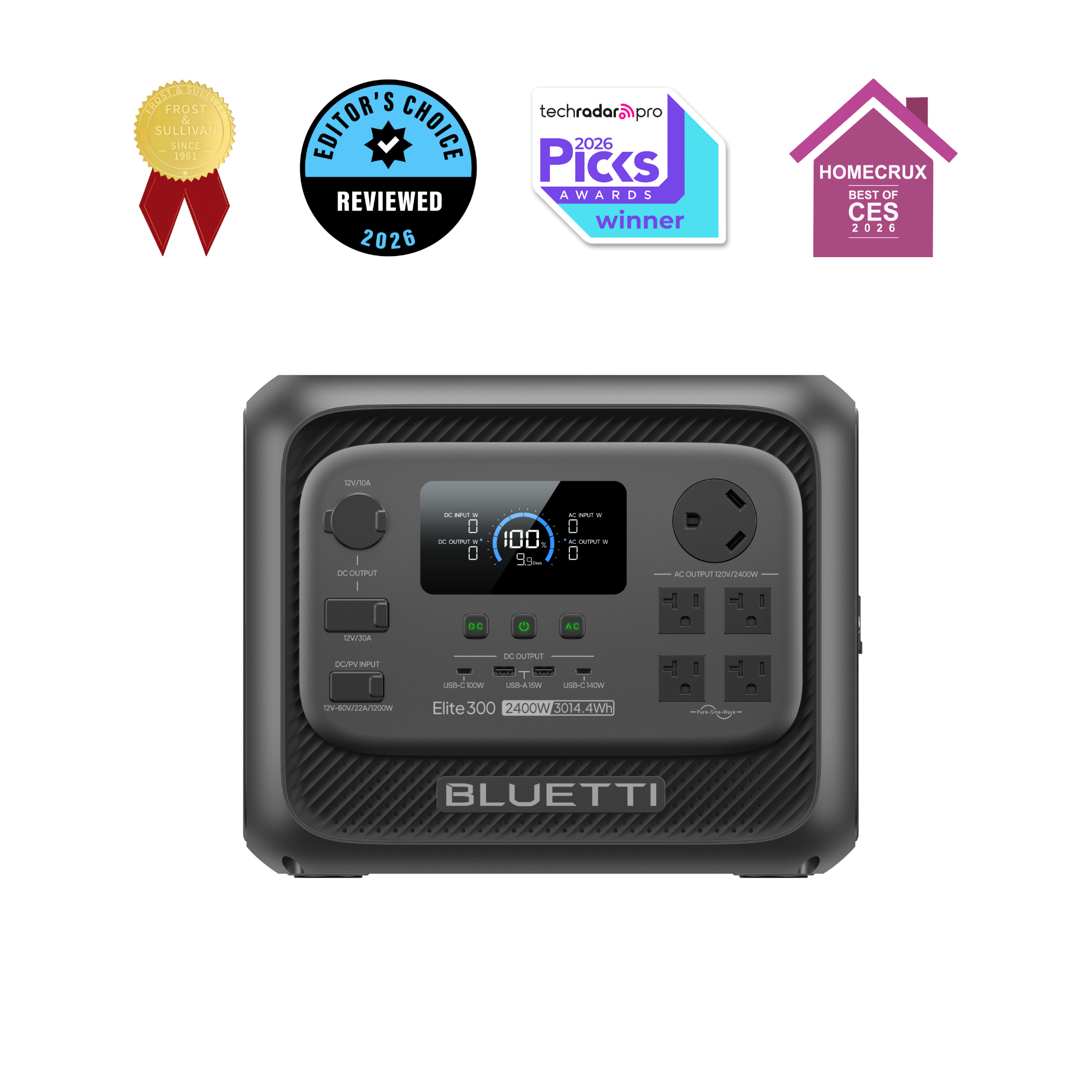
| BLUETTI AC300 + B300 | 3,072Wh | ~1.5 hrs (2,400W) Fastest Solar | ~1.5 hrs | ~18 hrs | 5,400W |
| ALLPOWERS R3500 | 3,168Wh | ~2 hrs (2,000W) | ~1.5 hrs | ~19 hrs | ~3,800W |
| EcoFlow River 3 Plus | 286Wh | ~3 hrs (110W) | ~50 min | ~2 hrs | ~350W |
A few things jump out from this table:
If charging speed is your top priority — whether from solar, AC, or both — these three units lead the market in 2026.
The BLUETTI AC300 accepts more solar power than any other consumer solar generator. Its dual MPPT charge controllers can process 2,400W of solar panel input simultaneously, which means you can pair it with six 400W rigid panels and fill the 3,072Wh B300 battery in roughly 1.5 hours of peak sun.
For anyone building a solar-first backup system — where the panels are your primary energy source and grid charging is secondary — the AC300 is the clear choice. Its modular design also lets you add up to four B300 batteries (12,288Wh total), turning it into a serious home energy storage system.
Best for: Large solar panel arrays, home backup systems, off-grid living, and anyone who wants the fastest possible solar recharge.
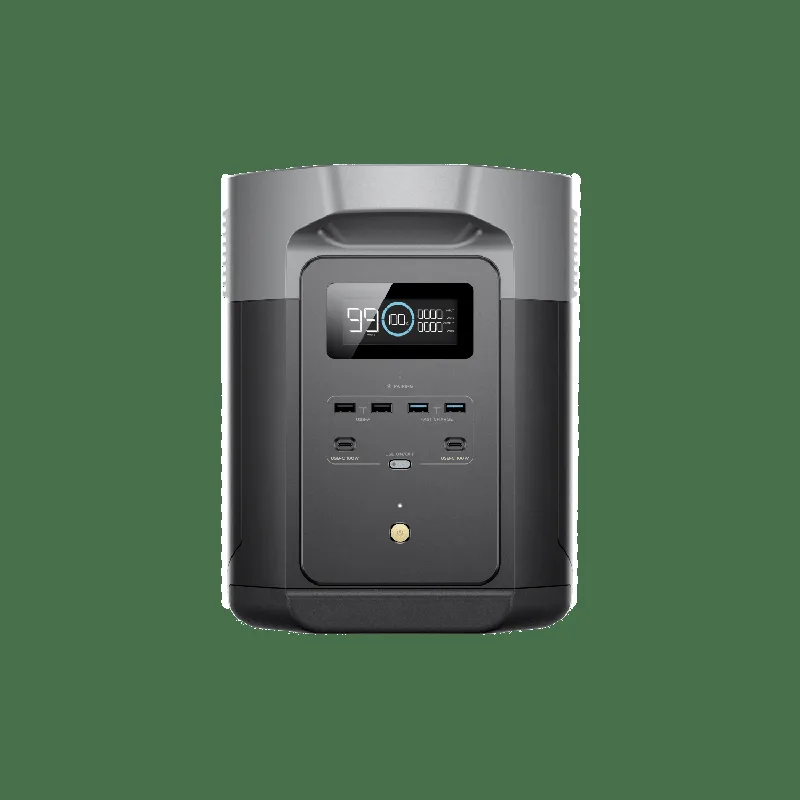
Check BLUETTI AC300 Price →The EcoFlow Delta 2 Max charges from a wall outlet faster than any other solar generator on the market. Zero to 80% in 43 minutes is not a typo. EcoFlow's X-Stream technology draws up to 2,400W from a standard outlet, with internal power electronics that handle the conversion efficiently enough to maintain this speed without overheating.
This matters most for people who use their generator as a home backup system. The generator sits in a closet or garage, plugged in. Storm warning comes in? It's already at 100%. Power goes out unexpectedly? It was topped off from regular trickle charging. And when the power comes back, it refills to 80% before you've finished checking the circuit breakers.
Best for: Home backup, anyone who charges primarily from wall power, fast pre-trip preparation, and users who want a generator that's always ready.
Check EcoFlow Delta 2 Max Price →The ALLPOWERS R3500 doesn't win a single charging category outright — but it's excellent across all of them. With 2,000W of solar input (second only to the BLUETTI AC300), fast ~1.5 hour AC charging (competitive with units costing significantly more), and solid combined charging capabilities, the R3500 delivers the best all-around charging package relative to its price.
At 3,168Wh of LiFePO4 capacity, it's also one of the largest batteries in the mid-range price segment. You get home-backup-grade capacity with solar input that can handle a serious panel array — all at a price point well below the BLUETTI AC300.
Best for: Value-conscious buyers who want fast charging across multiple methods, large solar panel setups on a budget, and anyone who doesn't want to compromise on any single charging method.
Check ALLPOWERS R3500 Price →The "best" charging method depends entirely on your use case. Here's a decision framework:
Use AC wall charging as your primary method. Keep the generator plugged in at home, maintained at 80% charge. When severe weather is forecast, top it to 100%. The solar panels are your backup charging method during the actual outage.
Charge via wall outlet to 100% before you leave. Use car charging during the drive to top off any drain. Switch to solar panels at camp for daily recharging. This three-method rotation means you arrive with a full battery and maintain it throughout the trip. Read our best solar generators for camping guide for detailed camping-specific picks.
Solar panels are your primary method by default. Size your panel array to fully recharge your battery in 4-5 hours of peak sun, which gives you margin for cloudy days. Keep a car charging cable as a backup for extended overcast periods.
Prioritize a generator with fast AC charging (like the EcoFlow Delta 2 Max). You'll be charging at hotels, Airbnbs, and friends' houses. The faster it charges, the less time you spend waiting. EV station compatibility is a bonus if you frequently pass charging stations on road trips.
It depends on your solar panel wattage and battery capacity. As a rule of thumb, divide your battery capacity (Wh) by your effective solar input (watts x 0.85 for real-world efficiency). With 400W of panels on a 2,000Wh battery, expect about 5-6 hours in good sunlight. With 200W of panels on the same battery, it doubles to 10-12 hours. Peak sun hours (10am-2pm) are the most productive. Cloud cover, panel angle, and shade on even one cell can reduce output by 30-70%.
Yes. Nearly every portable power station includes a 12V car charging cable or adapter. Plug it into your vehicle's cigarette lighter port while the engine is running. Charging speed is typically 100-200W, so a 1,000Wh battery takes roughly 6-10 hours to fill via car alone. This makes it best for topping off during long drives rather than primary charging. Always keep the engine running while car-charging to avoid draining your vehicle battery.
Yes, most modern solar generators support pass-through charging, meaning you can charge the unit while simultaneously powering devices. The battery management system handles the power routing. However, your available output will be reduced by the amount of incoming charge power. Some manufacturers recommend avoiding heavy pass-through charging as a daily habit because it can slightly increase battery temperature and may marginally reduce long-term battery lifespan. For occasional use during outages or camping, it's perfectly fine.
Match your panel wattage to your battery size and how quickly you want to recharge. For a 1,000Wh battery, 200W of panels gives a full charge in about 6-7 hours of sun. For a 2,000Wh battery, 400W of panels achieves the same timeframe. Check your generator's maximum solar input rating before buying panels — the EcoFlow Delta 2 Max accepts up to 1,000W, the BLUETTI AC300 up to 2,400W, and the ALLPOWERS R3500 up to 2,000W. Never exceed your unit's rated solar input. Our sizing guide walks you through the full calculation.
Join our free newsletter for charging tips, product reviews, and exclusive deals from EcoFlow, BLUETTI, and ALLPOWERS.
Take our 2-minute quiz for a personalized recommendation based on your charging needs and budget.