An honest, side-by-side comparison. We cover the real strengths and weaknesses of both — because the right answer depends on what you need.
Quick Answer: Solar generators are better for home backup, apartments, and indoor use because they produce zero emissions, run silently, and require no fuel. Gas generators are better for sustained high-wattage loads (5,000W+) like running central AC or powering a full workshop. For most households, a 2,000–3,600Wh solar generator covers 90% of outage needs at lower lifetime cost than a gas generator — with zero carbon monoxide risk, which kills over 80 Americans per year from generator misuse.
Ten years ago, this article would have been three sentences long: “Gas generators are cheaper, more powerful, and available everywhere. Solar generators are expensive novelties. Get the gas one.”
That is no longer true. The portable solar generator market has exploded since 2020, driven by three simultaneous forces: lithium iron phosphate (LiFePO4) batteries that last 3,000+ cycles and cost a fraction of what they did five years ago, increasingly frequent power outages across the United States (the average household experienced over 5.5 hours of interruption in 2024, per EIA data), and a growing population of people who are simply tired of dealing with gasoline, noise, fumes, and engine maintenance.
But here is the thing that most “solar vs gas” articles get wrong: gas generators are not obsolete. They still win in specific, important scenarios. If you need to run a 15,000-BTU air conditioner for 18 hours straight during a summer blackout, a $400 gas generator will do it. A $2,000 solar generator will not.
This guide does not pick a side. It gives you the real numbers, the real trade-offs, and enough context to pick the one that actually matches your life. If you are already leaning toward solar and want specific product recommendations, we have a separate best solar generators for home backup guide. If you are still deciding between the two technologies, keep reading.
Here is every major factor, compared honestly. Green highlighting shows which technology wins in that category. Where it depends on your situation, we explain why.
| Factor | Solar Generator | Gas Generator |
|---|---|---|
| Upfront Cost | $300–$3,500+ | $200–$1,500 (lower for equivalent output) |
| Fuel Cost | $0 (charges from sun, wall outlet, or car) | $3–$5/hour of operation ($150–$600+/year) |
| Noise Level | 0–30 dB (near-silent fan hum) | 65–80 dB (louder than a vacuum cleaner) |
| Maintenance | Zero moving parts. Wipe dust off. Done. | Oil changes, spark plugs, air filters, fuel stabilizer, carburetor cleaning |
| Runtime | Limited by battery capacity (4–24 hrs typical) | Unlimited with fuel refills (8–12 hrs per tank) |
| Indoor Use | Completely safe indoors. Zero emissions. | NEVER use indoors. Carbon monoxide kills ~70 people/year (CDC). |
| Portability | 8–60 lbs typical. No fuel to carry. | 40–200+ lbs, plus gasoline cans. |
| Environmental Impact | Zero emissions during use. Recyclable batteries. | CO2, CO, NOx emissions. Gasoline supply chain footprint. |
| Power Output | 300W–3,000W typical (up to 6,000W premium) | 1,000W–12,000W+ widely available |
Bottom line: Solar generators win on 7 out of 9 factors for typical consumer use. Gas generators hold two critical advantages: unlimited runtime with fuel and higher sustained power output. Those two factors matter a lot for specific use cases, which is why gas generators are not going away.
Solar generators are not just “the eco-friendly option.” In many real-world scenarios, they are the objectively better tool for the job. Here are the situations where solar is the clear winner.
If your goal is to keep the refrigerator running (so you do not lose $300+ in groceries), maintain Wi-Fi and internet (critical for remote workers and kids), charge phones and laptops, run LED lighting throughout the house, and power a CPAP or other medical device overnight — a solar generator handles all of this silently, safely, and indoors.
A mid-range unit like the EcoFlow Delta 2 Max (2,048Wh, 2,400W) runs those combined loads — roughly 250–350W total — for 6 to 8 hours on a single charge. Add 400W of solar panels, and you can recharge during the day and run essentials indefinitely through a multi-day outage. No gas runs. No noise complaints from neighbors. No extension cords snaking through a cracked window.
A gas generator can do this too, but you will be refueling it every 8–12 hours, it must stay outside (even in rain or snow), it will wake your neighbors at 3:00 AM, and it produces carbon monoxide that the CDC says kills dozens of Americans every year during storm-related outages.
This is where solar generators are not just better — they are in a completely different category. Try bringing a gas generator to a national park campground. Most parks explicitly ban them because of noise and emissions. Even where they are technically allowed, running a 75-dB engine next to someone else’s tent at 7:00 AM will earn you enemies fast.
A compact solar generator like the EcoFlow River 3 Plus (286Wh, 600W) weighs 7.7 lbs, fits in a backpack, and charges phones, runs a portable fridge, powers LED lanterns and a Bluetooth speaker, and recharges from a single foldable solar panel during the day. For tailgating, it runs a blender, charges a portable projector, and keeps your phone topped off — all without any noise or smell.
If you live in a building without a yard or dedicated outdoor space, a gas generator is not an option. Period. You cannot run one on a balcony (carbon monoxide risk), in a parking garage (same), or inside your unit (lethal). A solar generator sits on your counter, charges from a wall outlet before a storm, and provides hours of backup power with zero safety concerns.
Freelancers, remote workers, and van lifers need reliable power for laptops, monitors, routers, and video calls. A solar generator provides clean, stable power (pure sine wave output protects sensitive electronics) without the vibration, noise, and fuel logistics of a gas generator. You can take a video call while your solar generator runs three feet away. You cannot do that with a gas generator without everyone on the call hearing it.
A 300Wh solar generator + foldable panel keeps your phone, camera, and portable fridge running for the entire weekend. Total fuel cost: $0. Weight: under 15 lbs.
A 2,000Wh solar generator runs your fridge, router, lights, and phone chargers through an overnight outage and into the next day. No gas station runs in the dark.
A 1,000–2,000Wh unit runs a laptop, monitor, and router for 8–12 hours. Your Zoom call does not drop because of a flickering gas engine.
CPAP machines draw 30–60W. Even a budget 300Wh solar generator runs one for 5–9 hours. Safe beside your bed. No fumes. Pure sine wave output.
We are a solar-focused site, so we will be upfront: we want you to go solar. But we are not going to lie to you. There are real situations where a gas generator is the better choice, and pretending otherwise would waste your money and leave you underprepared.
If you need to run a 13,500-BTU RV air conditioner (1,800W running, 3,500W startup), a well pump (1,000–2,000W), a large chest freezer AND a refrigerator AND a window AC unit simultaneously, or power tools on a job site (circular saw, compressor, welder), a gas generator in the 5,000–8,000W range handles all of this for hours on end, refuel after refuel. A solar generator with equivalent output exists (the Anker SOLIX F3800 does 6,000W), but it costs $3,500+ and its battery will drain in 1–2 hours under those loads. A gas generator delivering the same wattage costs $700–$1,200 and runs as long as you have gasoline.
This is the gas generator’s single biggest structural advantage. Battery capacity is finite. Gasoline is refillable.
If you are facing a 3–5 day outage after a major hurricane and need continuous power for a refrigerator and sump pump, a gas generator with a 5-gallon tank running 8–12 hours per fill gives you effectively unlimited runtime. You refuel, and it keeps going. A solar generator depends on sunlight for recharging, and if the same hurricane brought three days of overcast skies, your solar panels may only recover 20–30% of their rated output. You will run out of battery.
That said, this scenario specifically favors gas only if you can get gasoline. After major storms, gas stations often have no power themselves, and those that do have lines stretching around the block. The 2024 hurricane season saw gas shortages across the Gulf Coast within 48 hours of landfall in several storms. A solar generator that can trickle-charge from even overcast sky conditions has a different kind of resilience.
If you have $300–$500 to spend and need to run high-wattage appliances (1,500W+), a gas generator is your only realistic option. A portable gas generator delivering 3,500W costs around $350–$500. The cheapest solar generator with 1,500W+ output is around $800–$1,000. If budget is the hard constraint and you need serious wattage, gas wins on day one.
We do recommend factoring in the ongoing fuel and maintenance costs (covered in the next section), but we understand that not everyone can optimize for 5-year total cost of ownership when they need backup power now.
Running a circular saw (2,400W), an air compressor (1,800W startup), or a welder (4,000W+) for a full workday requires a gas generator. No portable solar generator on the market can sustain those loads for 8 hours. This is where gas generators earn their keep, and it is not close.
5-day blackout after a hurricane. Overcast skies. A gas generator with stored fuel runs 24/7. Solar panels produce minimal output. Gas wins here — if you can get fuel.
Running a miter saw, compressor, and work lights for 8 hours. Total draw: 3,000–5,000W. A $600 gas generator handles it. A solar equivalent costs 5x more and dies in 2 hours.
13,500-BTU rooftop AC draws 1,800W sustained with 3,500W startup spikes. A gas generator runs it all day for $15 in fuel. Solar would require a $3,500+ system.
You have $400 and need 3,000W+ output. A dual-fuel portable generator delivers. The cheapest solar generator in that power class costs $1,500+.
Upfront price is the most misleading number in this comparison. A gas generator looks cheaper on the shelf, but its total cost over five years tells a very different story. Here is the math, using realistic usage assumptions.
Assumptions: Both generators are used for approximately 200 hours per year (a mix of outage backup, recreational use, and standby). Gas price averaged at $3.50/gallon. Gas generator consumes 0.5–1.0 gallons per hour at typical load. Annual gas generator maintenance includes one oil change, spark plug, and air filter per year plus fuel stabilizer for stored gasoline.
| Cost Category | Solar Generator (Mid-Range) | Gas Generator (Equivalent) |
|---|---|---|
| Upfront Purchase | $1,599 (e.g., EcoFlow Delta 2 Max) | $500 (e.g., 3,500W portable inverter) |
| Solar Panels (optional) | $300–$500 (2x 200W portables) | N/A |
| Fuel (Year 1–5) | $0 | $350–$700/year × 5 = $1,750–$3,500 |
| Maintenance (Year 1–5) | $0 | $50–$100/year × 5 = $250–$500 |
| Fuel Stabilizer | $0 | $15–$25/year × 5 = $75–$125 |
| 5-Year Total | $1,899–$2,099 | $2,575–$4,625 |
There is one scenario where gas wins the cost argument even over 5 years: if you use the generator very rarely (under 50 hours per year). In that case, fuel and maintenance costs stay low, and the gas generator’s lower upfront price makes it cheaper overall. But if you use yours regularly — for camping, tailgating, home backup, or remote work — solar pays for itself.
For a more personalized calculation, use our solar generator sizing guide to estimate what capacity you need, then compare total cost based on your actual usage patterns.
This deserves more emphasis than a table cell. The CDC reports that portable gas generators cause an average of 70 carbon monoxide poisoning deaths per year in the United States, and over 4,000 emergency department visits. Many of these happen during power outages when people run generators in garages, basements, or near open windows in desperation.
A solar generator has zero CO emissions. You can run it in your bedroom, your basement, your sealed apartment — anywhere. For families with children, elderly parents, or anyone with respiratory conditions, this is not a minor convenience feature. It is a safety issue.
A gas generator at 70–80 dB is roughly the volume of a vacuum cleaner or a busy restaurant. Running one at night during a power outage means you and your neighbors hear it constantly. Many HOAs and municipalities have noise ordinances that effectively prohibit running gas generators during nighttime hours (typically 10 PM to 7 AM). During a power outage — when you need your generator most — you may be legally required to shut it off.
A solar generator at 0–30 dB is essentially silent. You can run it 24/7 without disturbing anyone. This is why solar generators are increasingly popular in suburban neighborhoods, condos, and RV parks with quiet-hour policies.
Gasoline goes stale in 3–6 months without fuel stabilizer. Ethanol-blended fuel (E10, which is virtually all pump gas in the U.S.) degrades even faster, gumming up carburetors and fuel lines. To keep a gas generator ready for emergencies, you need to rotate your stored fuel every 3–6 months, add fuel stabilizer to every can, run the generator monthly to keep the engine and carburetor healthy, and store gasoline safely in approved containers away from living spaces. A solar generator stays plugged in (trickle charging) or sits on a shelf at 50–80% charge for months or years with zero degradation. When you need it, press the button. It works.
Quality solar generators from brands like EcoFlow, BLUETTI, and Anker hold their resale value remarkably well. A two-year-old EcoFlow Delta Pro still sells for 60–75% of its original retail price on the used market. Gas generators depreciate much faster because buyers assume engine wear, carburetor issues, and reduced reliability. A two-year-old gas generator typically sells for 30–40% of retail.
Solar generator technology is improving rapidly. LiFePO4 battery costs dropped roughly 40% between 2022 and 2025, and solar panel efficiency continues to climb. A solar generator you buy in 2026 is significantly better (more capacity per dollar, faster charging, longer cycle life) than one from even 2023. Gas generator technology, by contrast, is mature and largely plateaued. The engines are as efficient as they are going to get. This means the price/performance gap between solar and gas narrows every year, and solar generators will likely be cost-competitive at every wattage tier within the next 3–5 years.
If you have read this far and decided a solar generator is right for you, here are our three recommendations at different price points. Each one represents the best value in its category. For a full breakdown of every model we have tested, see our complete comparison tool.

The River 3 Plus is the perfect entry point into solar generators. At 7.7 lbs, it is genuinely portable — lighter than most laptops in their bags. It charges from 0 to 80% in just 50 minutes via AC, which means you can grab-and-go before a storm. The 600W output handles phones, laptops, LED lights, a portable fridge, and even a small blender or coffee maker. It will not run a full-size refrigerator or a window AC, but for camping, tailgating, road trips, and light emergency backup, it punches well above its price point. The LiFePO4 battery is rated for 3,000+ cycles, meaning this $349 investment could easily last a decade.
Best for: Camping, tailgating, phone/laptop backup, CPAP machines, first-time solar generator buyers.
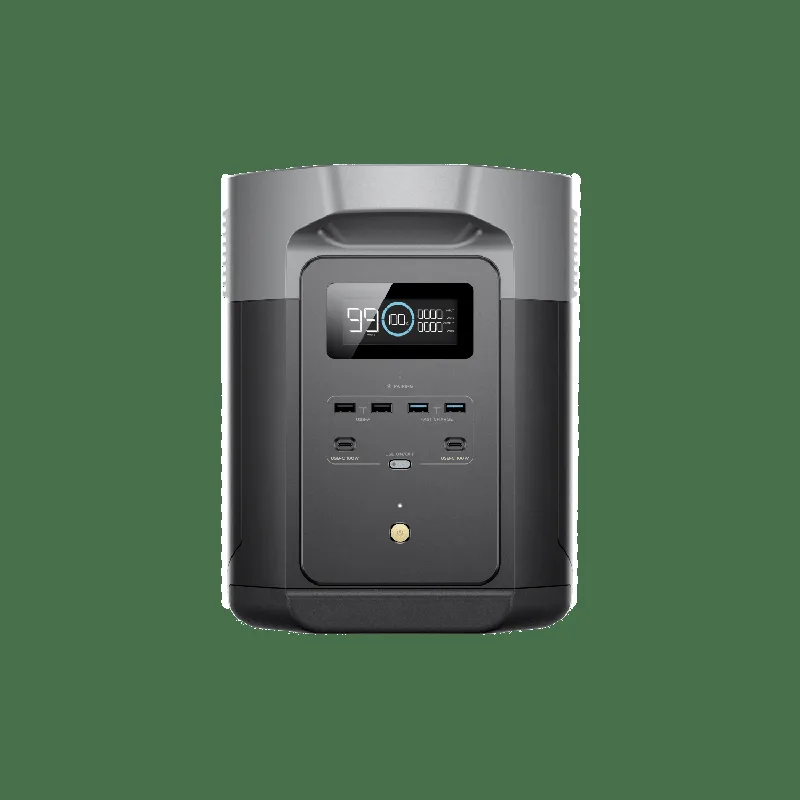
The Delta 2 Max is where solar generators start to genuinely replace gas generators for home backup. With 2,048Wh of capacity and 2,400W of continuous output, it runs a full-size refrigerator (150W), a router (15W), LED lights (30W), and phone chargers (20W) for 8–10 hours. Add a window AC unit and that drops to 2–3 hours, but pair it with 400W of solar panels and you can cycle through the day — solar charges the battery during peak sun, battery carries you through the evening and night.
The AC charging speed is absurd: 0 to 80% in 43 minutes. This means even if you forget to charge it before a storm, you likely have time to get a meaningful charge before the grid goes down. The battery expands to 6,144Wh with add-on batteries, giving you multi-day capacity if needed.
Best for: Home backup, extended outages with solar panels, remote work, van life, and anyone who wants one unit that handles most scenarios.
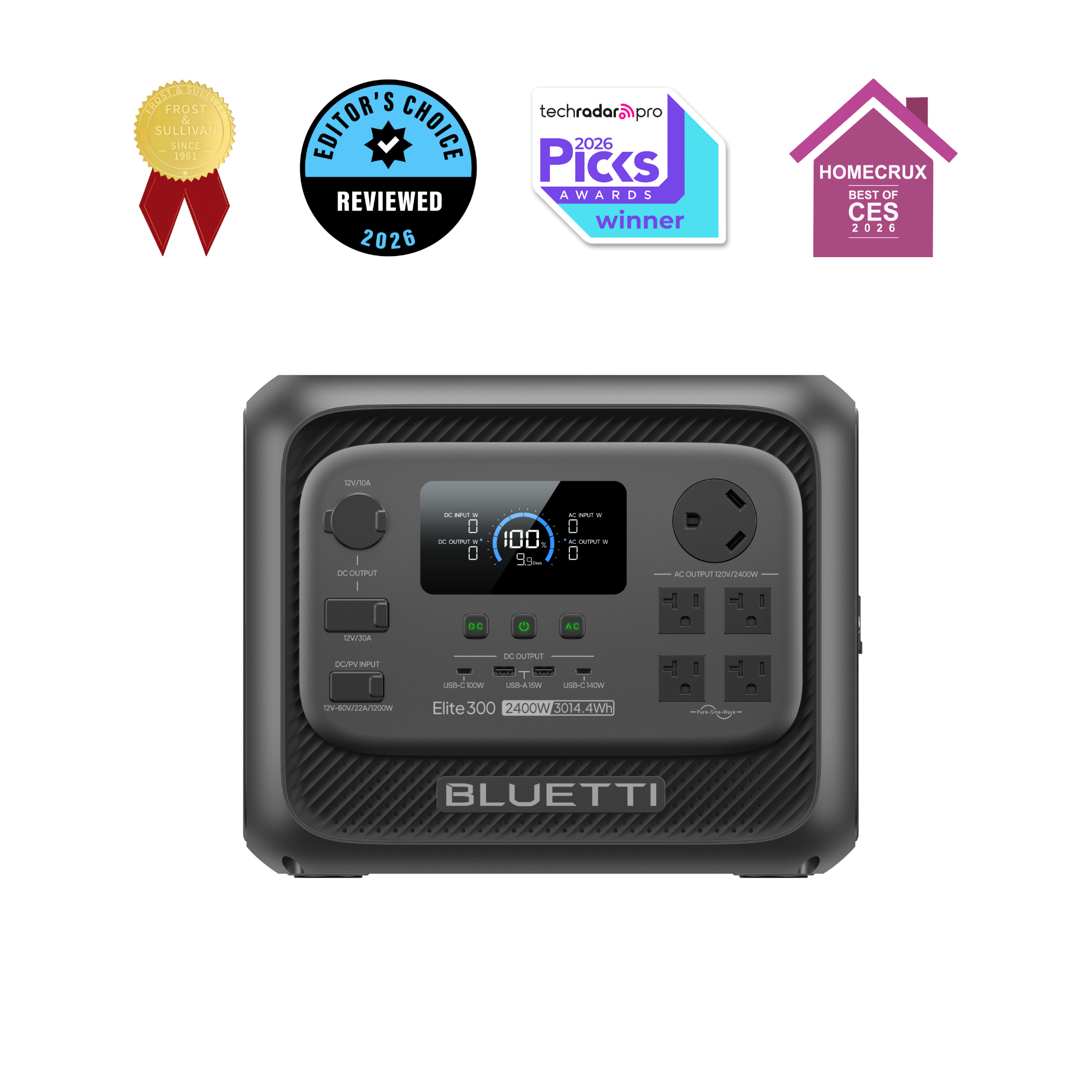
The AC300 + B300 is the closest a solar generator gets to truly replacing a gas generator for home backup. The 3,000W continuous output and 6,000W surge capacity handles virtually everything in a household except central air conditioning and electric ranges. The modular design means you start with one B300 battery (3,072Wh) and can expand to four batteries for a staggering 12,288Wh — that is multiple days of essential-load runtime.
The killer feature is 240V split-phase capability via the Fusion Box Pro. Connect two AC300 units, and you can power 240V appliances like a well pump, a dryer, or even a small central AC unit. This is the only portable solar generator system that can match the voltage output of a traditional whole-house gas generator. The 2,400W solar input means a full set of panels can recharge the base battery in under 2 hours of peak sun.
Best for: Whole-home essential backup, households in outage-prone areas, off-grid cabins, and anyone who wants the most capable solar generator system available.
Not sure what capacity you actually need? Our sizing guide walks you through the calculation based on your actual appliances and usage patterns, or use the solar calculator for a quick estimate.
Here is our honest advice at three common budget levels. We include both solar and gas options because the right answer depends on your priorities, not ours.
If you prioritize portability, quiet, and safety: Get the EcoFlow River 3 Plus ($349). It handles camping, tailgating, and light emergency backup beautifully. It will not run your fridge during a blackout, but it will keep phones charged, lights on, and a CPAP running.
If you need raw wattage: A 3,500W portable inverter gas generator ($350–$450) gives you more output. Just remember: outdoor use only, buy fuel stabilizer, and budget $200–$400/year for gas and maintenance.
Our recommendation: Go solar. The EcoFlow Delta 2 Max ($1,599) is the sweet spot. At this budget, solar’s 5-year cost is lower than gas, and you get all the convenience benefits (silent, indoor-safe, zero maintenance). Pair it with a 200W solar panel ($150–$200) for outage resilience. See our best options under $1,000 if you want to spend less.
Go all-in on solar. The BLUETTI AC300 + B300 ($2,999) gives you 3,000W output with expansion potential up to 12,288Wh. There is no gas generator at this price point that matches its versatility, safety, and long-term value. Add 400–800W of solar panels, and you have a system that can ride out multi-day outages without fuel.
We are not going to lecture you about your carbon footprint. But the numbers are worth knowing.
A typical 3,500W gas generator burns 0.5–1.0 gallons of gasoline per hour. At 200 hours of use per year, that is 100–200 gallons of gasoline annually, producing roughly 1,800–3,600 lbs of CO2 per year. Over five years, that is 4.5–9 tons of CO2 from a single portable generator.
A solar generator charged from solar panels produces zero operational emissions. Even charged from the grid, a solar generator’s lifetime carbon footprint is dramatically lower because it draws only what it stores (no idle fuel burn), grid electricity is increasingly generated from renewables (over 40% of U.S. electricity came from carbon-free sources in 2025), and LiFePO4 batteries are recyclable at end-of-life.
If environmental impact matters to you, even partially, solar is the clear choice. If it does not, the cost and convenience arguments above still stand on their own.
A solar generator can power essential circuits in a house — refrigerator, lights, router, phone chargers, and medical devices — but it cannot run an entire home the way a whole-house standby generator does. A large solar generator like the BLUETTI AC300 + B300 (3,072Wh, 3,000W) can keep critical loads running for 12–24 hours. For truly whole-home power including central HVAC, an electric range, and a water heater, you would need either a permanent battery installation or a traditional fuel-powered standby generator rated at 20,000W or more. Our solar calculator can help you figure out what your actual draw is.
For most people, yes. Over five years, a solar generator’s total cost of ownership is often lower because there is no fuel to buy and no maintenance to perform. A $1,500 solar generator with $0 annual operating cost beats a $500 gas generator that costs $300–$500 per year in gas, oil, and tune-ups. The exception is if you need sustained high-wattage output (above 3,000W) for many hours straight — construction sites, large RV air conditioners, or running a well pump during a multi-day outage. In those cases, a gas generator is still more practical. See our comparison tool to match specific models to your needs.
Modern solar generators using LiFePO4 (lithium iron phosphate) batteries are rated for 3,000 to 3,500+ charge cycles before the battery degrades to 80% of original capacity. If you use one cycle per day, that is roughly 8 to 10 years of daily use. For most homeowners who use their solar generator only during outages (a few times per year), the unit could last 15–25 years. Gas generators, by comparison, typically last 2,000 to 3,000 hours of runtime, and their engines require regular maintenance — oil changes, spark plugs, air filters, carburetor cleaning — or they will fail well before reaching that runtime. See our home backup guide for models with the longest cycle life.
Yes, and this is one of the biggest safety advantages over gas generators. Solar generators produce zero emissions — no carbon monoxide, no exhaust fumes, no combustion byproducts. You can run one in your bedroom, kitchen, basement, apartment, or any indoor space without any safety risk. The CDC reports that portable gas generators cause an average of 70 carbon monoxide poisoning deaths per year in the United States, almost all during power outages. Gas generators must always be operated outdoors, at least 20 feet from any window, door, or vent. This is not optional — it is a life-safety requirement.
Use our free tools to compare models, calculate your power needs, or get a personalized recommendation in 2 minutes.
Compare All Solar Generators Take the 2-Min Quiz Calculate what size you need →47 pages. Plain English. No fluff. Covers every major brand, real-world runtime tests, and our top picks for every budget — including honest comparisons with gas.
No spam. Unsubscribe anytime. We hate junk mail as much as you do.