Dakota Lithium makes the toughest LiFePO4 batteries in the solar market — built in North Dakota, rated to −20°F, backed by an 11-year warranty, and $200 less than Battle Born. We ranked their full lineup for solar, RV, marine, and off-grid use.
Quick Answer: The best Dakota Lithium battery for most solar setups is the 12V 100Ah ($749) — 1,280Wh of usable LiFePO4 capacity, 2,000+ cycle life, −20°F cold rating, 50 lbs, and an industry-leading 11-year warranty. For larger off-grid systems, the 12V 200Ah ($1,449) doubles the capacity to 2,560Wh. Battery bank buyers often buy 2–4 units in parallel — two 100Ah batteries give you 2,560Wh for $1,498, matching a single BLUETTI EP500Pro at half the weight. Compared to Battle Born ($949/100Ah), Dakota Lithium saves $200 per battery with a longer warranty and better cold-weather rating.
The LiFePO4 battery market is crowded. You can buy a 12V 100Ah battery from a dozen brands at every price point — LiTime at $340, Renogy at $450, Battle Born at $949. Dakota Lithium sits at $749, which sounds expensive until you understand what you’re paying for.
Dakota Lithium is based in Williston, North Dakota — one of the coldest places in the continental U.S. Their batteries are designed for extreme environments: rated to operate at −20°F (discharge), tested by hunters, ice fishers, and commercial fleet operators in conditions that kill standard lithium batteries. The company was founded to solve a specific problem: batteries that die in the cold when you need them most.
Three things differentiate Dakota Lithium from every competitor:
The trade-off: they’re not the cheapest option. LiTime and Renogy undercut on price significantly. If you live in a warm climate, never camp below 32°F, and don’t need a decade-plus warranty, a budget LiFePO4 battery from LiTime is a rational choice. But if you need a battery that works in every condition, lasts a decade, and is backed by a real warranty — Dakota Lithium is the answer.
| Rank | Model | Capacity | Wh | Weight | Cycles | Price |
|---|---|---|---|---|---|---|
| #1 Flagship | 12V 200Ah | 200Ah | 2,560Wh | 96 lbs | 2,000+ | $1,449 |
| #2 Best Seller | 12V 100Ah | 100Ah | 1,280Wh | 50 lbs | 2,000+ | $749 |
| #3 Compact | 12V 54Ah | 54Ah | 691Wh | 14 lbs | 2,000+ | $449 |
| #4 Mini | 12V 10Ah | 10Ah | 128Wh | 3.2 lbs | 2,000+ | $149 |
All Dakota Lithium batteries use LiFePO4 chemistry with built-in BMS (Battery Management System) for overcharge, over-discharge, short circuit, and temperature protection. All carry the 11-year warranty. All rated to −20°F discharge.
Price: $1,449 • Chemistry: LiFePO4 • BMS: Built-in • Temp Range: −20°F to 120°F • Warranty: 11 years
The 200Ah is Dakota Lithium’s flagship single-battery unit. At 2,560Wh, it stores enough energy to run essential home circuits (fridge, lights, router, phone charging) for 12–16 hours during an outage, or power an RV house bank indefinitely when paired with solar panels.
The math is straightforward: a typical home fridge draws ~150W continuously. 2,560Wh ÷ 150W = 17 hours of fridge runtime from a single battery. Add LED lights (20W), phone charging (10W), and a Wi-Fi router (15W), and your total draw is ~195W — giving 13+ hours of runtime. Pair it with 400W of solar panels and you cover daily consumption with surplus.
At $1,449, the 200Ah is cheaper per watt-hour than buying two 100Ah batteries ($1,498) and saves the wiring complexity of parallel connections. For buyers building a dedicated solar battery bank, this is the most efficient entry point.
Shop Dakota Lithium ↗ Check Amazon Price Check eBay Price ↗
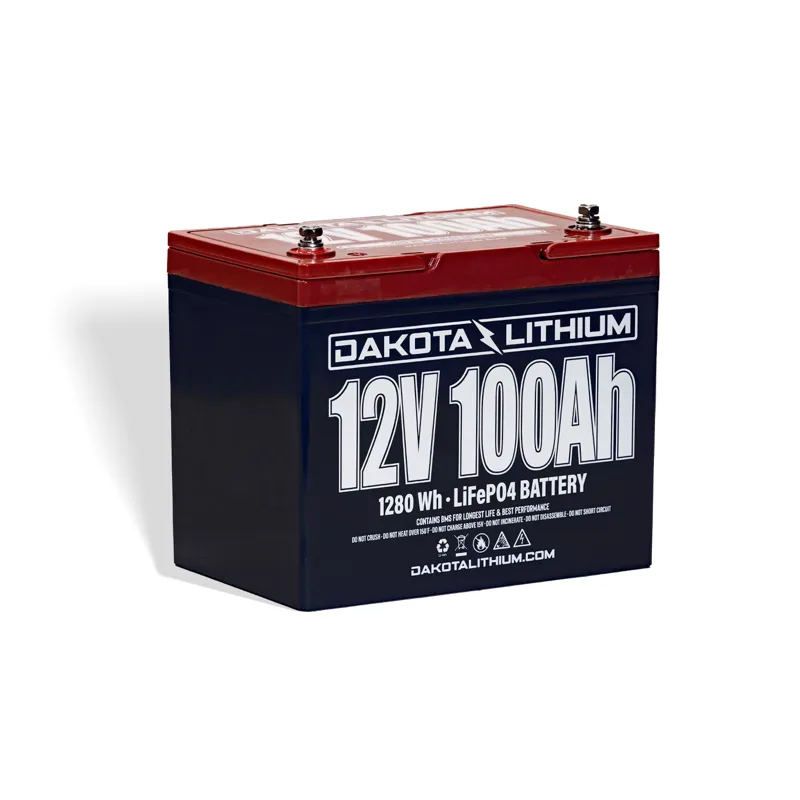
Price: $749 • Chemistry: LiFePO4 • BMS: Built-in • Temp Range: −20°F to 120°F • Warranty: 11 years
This is where most buyers should start. The 100Ah is Dakota Lithium’s best-selling battery and the most versatile unit in their lineup. At 1,280Wh, it replaces two to three lead-acid batteries in a fraction of the weight (50 lbs vs. 130+ lbs for equivalent lead-acid capacity). It drops into any 12V system: RV house bank, marine trolling motor, off-grid cabin, or a dedicated solar battery system.
For solar use: pair with a 200W panel and an MPPT charge controller. Full recharge from 20% to 100% in 5–6 hours of good sun. Daily cycling on solar will give you 5+ years of daily use before the battery hits 80% capacity — and the 11-year warranty covers the entire operational period.
The comparison that matters: A Dakota Lithium 100Ah ($749) vs. a Battle Born 100Ah GC2 ($949). Same chemistry, same capacity, similar BMS. Dakota Lithium saves you $200 per battery. On a 4-battery bank, that’s $800 saved. Dakota Lithium also rates to −20°F discharge vs. Battle Born’s 25°F (without their optional heating module at extra cost).
Shop Dakota Lithium ↗ Check Amazon Price Check eBay Price ↗
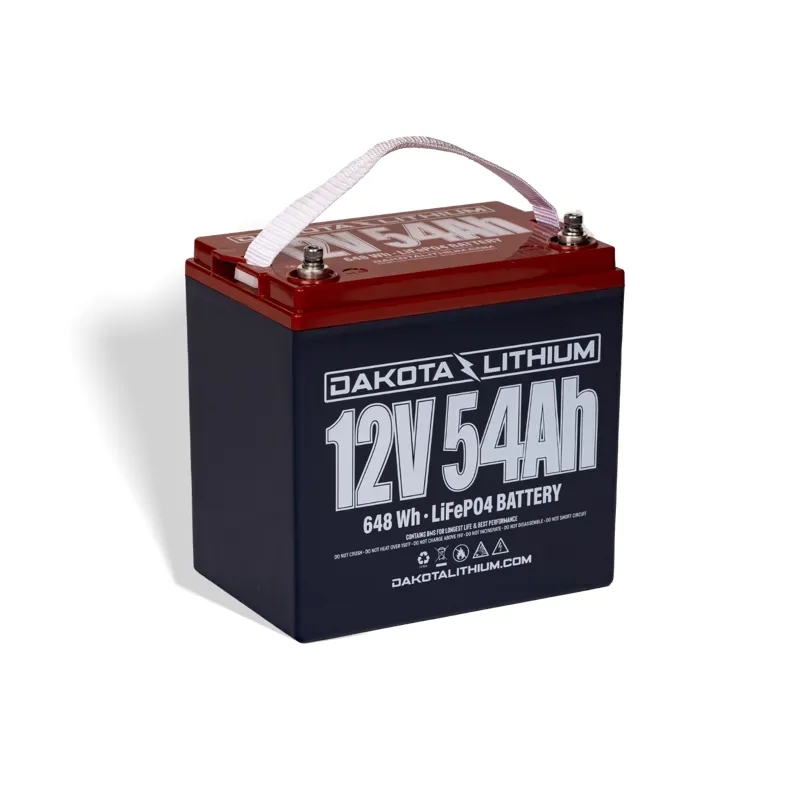
Price: $449 • Best for: Trolling motors, kayaks, fish finders, small solar setups
The 54Ah is Dakota Lithium’s lightweight option — 14 lbs makes it practical for kayaks, small boats, and any application where weight matters more than capacity. At 691Wh, it runs a trolling motor for a full day of fishing, powers fish finders and sonar for 20+ hours, or serves as a compact solar battery for a weekend cabin.
For small solar setups: pair with a 100W panel and a basic MPPT controller. Full recharge in 4–5 hours. Good for powering LED lights, charging phones and laptops, and running small 12V appliances. Not sized for whole-home backup — use the 100Ah or 200Ah for that.
Shop Dakota Lithium ↗ Check Amazon Price Check eBay Price ↗
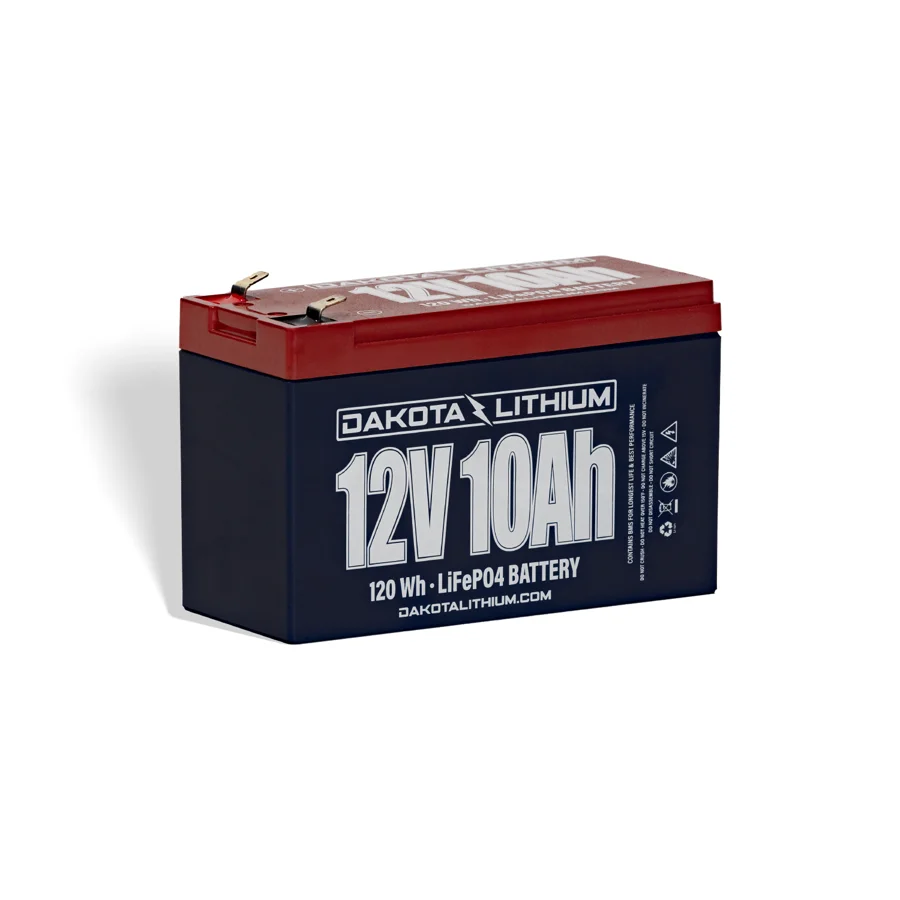
Price: $149 • Best for: Fish finders, trail cameras, small electronics backup
The entry point to Dakota Lithium. At 3.2 lbs and $149, the 10Ah is designed for single-device power: fish finders, trail cameras, security cameras, or a small electronics backup. Not a solar battery — think of it as a premium replacement for disposable batteries in applications where reliability in extreme cold matters.
This is the comparison every LiFePO4 buyer makes. Here’s how the four major 12V 100Ah batteries stack up:
| Spec | Dakota Lithium | Battle Born | Renogy | LiTime |
|---|---|---|---|---|
| Price (100Ah) | $749 | $949 | $450 | $340 |
| Chemistry | LiFePO4 | LiFePO4 | LiFePO4 | LiFePO4 |
| Usable Wh | 1,280Wh | 1,280Wh | 1,280Wh | 1,280Wh |
| Cycle Life | 2,000+ | 3,000–5,000 | 4,000+ | 4,000+ |
| Cold Discharge | −20°F | 25°F | 14°F | 14°F |
| Warranty | 11 years | 10 years | 5 years | 5 years |
| Weight | 50 lbs | 31 lbs | 24.2 lbs | 24.25 lbs |
| BMS | ✓ Built-in | ✓ Built-in | ✓ Built-in | ✓ Built-in |
| Bluetooth | ✗ | ✗ (optional) | ✓ (some models) | ✓ (some models) |
| Heating Element | ✗ | ✓ (optional) | ✗ | ✓ (some models) |
| US Support | ✓ North Dakota | ✓ Nevada | ✓ California | Shenzhen (US warehouse) |
| Our Verdict | ⭐ Best Value Premium | Best Brand Recognition | Best Mid-Range | Best Budget |
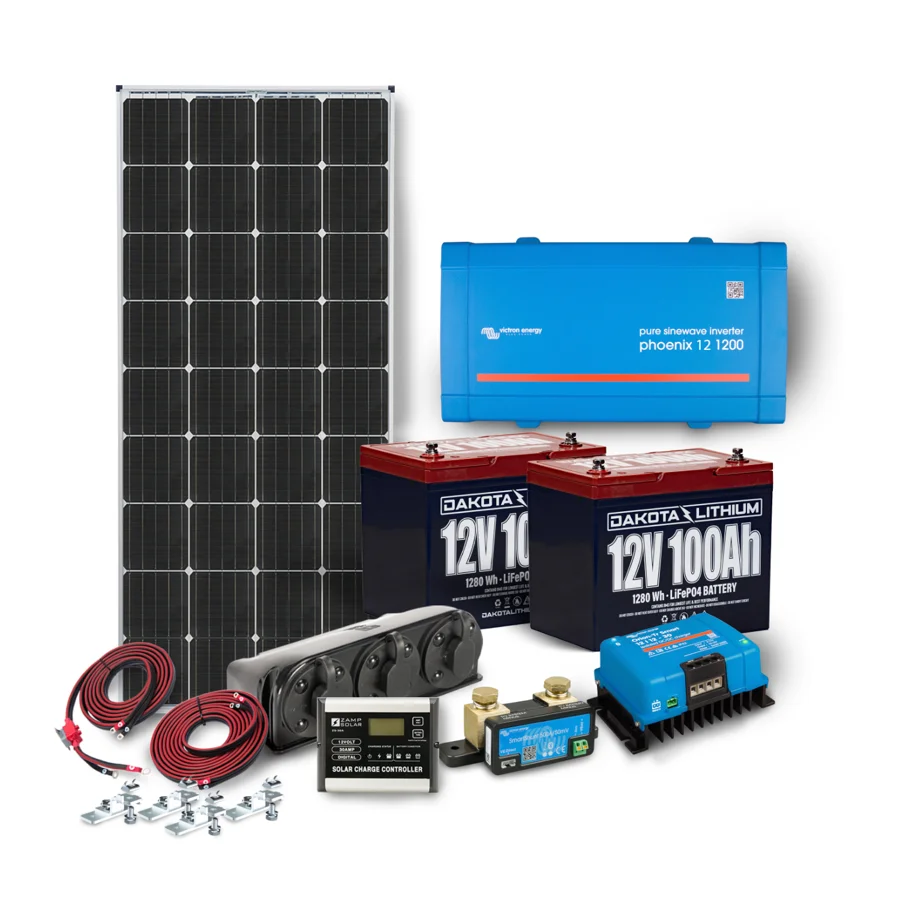
Charging a Dakota Lithium battery with solar is straightforward, but you need the right components. Here’s the basic setup:
Sizing rule: Panel watts ÷ peak sun hours = daily recharge capacity. In most of the U.S., expect 4–6 peak sun hours per day. So 200W of panels × 5 hours = 1,000Wh of daily recharge — covering about 78% of a fully depleted 100Ah battery per day.
If your battery bank sits in an unheated garage, cabin, or RV in winter, Dakota Lithium’s −20°F discharge rating is the reason to buy them over any competitor.
Drop-in 12V replacement for lead-acid. 60% lighter. No maintenance. The 100Ah is the most popular RV battery upgrade in the LiFePO4 market.
Build a 2–4 battery bank, add panels and an MPPT controller, and you have a complete off-grid power system with an 11-year warranty.
11-year warranty. US support. Military and first-responder tested. If you need a battery that works when everything else fails, this is it.
The 12V 100Ah ($749) for most setups. 1,280Wh, 50 lbs, 2,000+ cycles, 11-year warranty. For larger systems or whole-cabin backup, the 12V 200Ah ($1,449). For lightweight/compact needs, the 54Ah ($449).
Dakota Lithium wins on price ($749 vs $949), cold-weather rating (−20°F vs 25°F), and warranty (11 vs 10 years). Battle Born wins on weight (31 lbs vs 50 lbs), brand recognition, and the optional internal heating module. For most buyers, Dakota Lithium is better value.
2,000+ full cycles to 80% capacity. At daily cycling, that’s 5.4+ years. In typical solar partial cycling, real-world lifespan exceeds 10 years. Battery cells rated for 15-year lifespan. Backed by 11-year warranty.
Yes. Parallel for same voltage + combined capacity (e.g., two 12V 100Ah = 12V 200Ah). Series for higher voltage (e.g., two 12V = 24V). Use same model and age. Built-in BMS supports both configurations.
Solar panels → MPPT charge controller (set to LiFePO4 profile) → Dakota Lithium battery. 200W of panels fully charges 100Ah in 5–6 hours of good sun. Always use a controller rated for LiFePO4 — never a standard lead-acid charger.
Dakota Lithium LiFePO4 batteries — 11-year warranty, −20°F rated, built for solar, RV, marine, and off-grid.
Pair with BougeRV Panels LiFePO4 vs Lithium-Ion — Which Battery Chemistry Is Better? →47 pages. Plain English. No fluff. Covers every major brand, real-world runtime tests, and our top picks for every budget.
No spam. Unsubscribe anytime. We hate junk mail as much as you do.