Mango Power E is the rare power station that doubles as a whole-home battery. CATL LFP cells, 240V split-phase, expandable to 14 kWh, and currently 69% off. We ranked every kit and expansion so you know exactly which one to buy.
Quick Answer: The best Mango Power product for most buyers is the Mango Power E base unit ($1,299 — 69% off). It delivers 3,533Wh of CATL LiFePO4 capacity, 3,000W AC output, 2,000W solar input, 16 output ports, WiFi/Bluetooth app control, and a 10-year warranty with 6,000 cycles. For whole-home backup including HVAC and heavy appliances, upgrade to the 240V Power Kit Pro ($4,199 / 14 kWh) with split-phase 240V and 6,000W output. At $0.37 per Wh, the Mango Power E is currently the best value per watt-hour of any LFP power station on the market.
Every portable power station brand occupies a lane. EcoFlow owns the mid-range mainstream. BLUETTI owns the budget-to-premium LFP space. Jackery owns beginner-friendly camping power. Mango Power occupies a lane no one else has — the bridge between portable power station and permanent home battery.
The Mango Power E is not just a power station you charge at home and bring camping. It’s a power station you can also wire into your home electrical panel for 240V whole-house backup, expand with modular batteries up to 14 kWh, and run your central air conditioning during a power outage. No other portable power station does that.
The company behind it — Mango Power Technology, based in Shenzhen — is not a white-label Amazon brand. They engineer their own battery management system, inverter, and mobile app. Their cells come from CATL, the same Tier 1 battery supplier behind Tesla, BYD, and most of the world’s electric vehicles. The result is a product with genuine engineering depth rather than rebadged parts.
And right now, the Mango Power E is 69% off its original $4,250 MSRP. At $1,299, it delivers the lowest cost per watt-hour of any LFP power station we’ve tested — cheaper than the BLUETTI AC200L, cheaper than the EcoFlow DELTA 2 Max, cheaper than the ALLPOWERS R3500. That pricing is the reason we’re writing this guide.
| Configuration | Capacity | AC Output | 240V | Best For | Price |
|---|---|---|---|---|---|
| Mango Power E (Base) | 3,533Wh | 3,000W | ✗ | Portable backup, camping | $1,299 69% OFF |
| E + Expansion Battery | 7,066Wh | 3,000W | ✗ | Extended outages, RV | $2,199 |
| 240V Power Kit | 7,066Wh | 6,000W | ✓ | Whole-home backup | $2,599 |
| 240V Power Kit Pro | 14,132Wh | 6,000W | ✓ | Full whole-home + HVAC | $4,199 |
| Solar Generator Kit | 3,533Wh+ | 3,000W | ✗ | Off-grid, solar charging | $1,899+ |
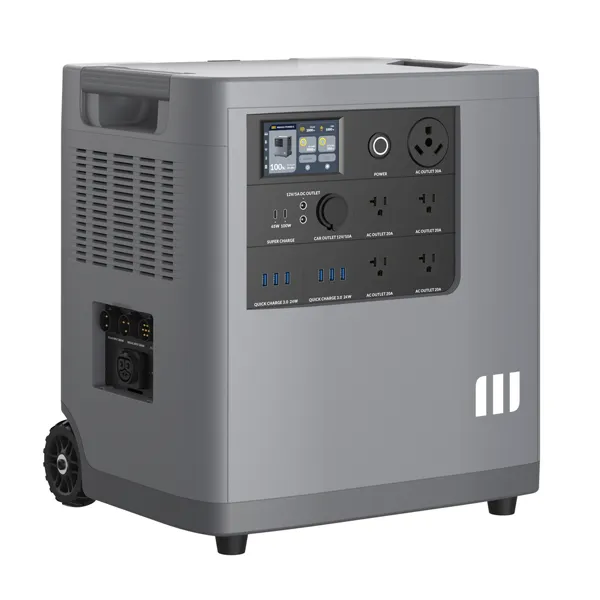
Price: $1,299 (was $4,250) 69% OFF • Battery: CATL LiFePO4 • Solar: 2,000W max • Weight: 100.1 lbs • Ports: 16 outputs • Charge: 0–80% in 60 min • IP: IP21
The base Mango Power E is the core of every configuration. At $1,299, it delivers $0.37 per watt-hour — the lowest cost per Wh of any LFP power station we track. For context, the BLUETTI AC200L ($999 / 2,048Wh) comes out to $0.49/Wh, and the EcoFlow DELTA Pro ($2,699 / 3,600Wh) costs $0.75/Wh. The Mango Power E gives you more capacity than both at a lower price per Wh than either.
The 3,533Wh of CATL LiFePO4 capacity runs your refrigerator (~150W avg) for roughly 20 hours, or your entire essential load set — fridge, lights, router, phone charging, and a laptop — for 8–12 hours during an outage. Pair it with a 200W solar panel and you can sustain essential loads indefinitely in good weather.
16 output ports cover every use case: 4 × 20A AC outlets (120V), 6 × USB-A (QC 3.0, 24W each), 2 × USB-C (65W + 100W), a 12V car outlet, an RV 30A port, and additional DC outputs. The 100W USB-C port fast-charges any modern laptop.
Charging speed is exceptional. The Mango Power E hits 80% charge in 60 minutes via wall outlet with the included 30A power cable. Full charge in 90 minutes. The 2,000W solar input is the highest in this price class — with two 200W panels in series, you can recharge from 0% in about 4 hours of peak sun. Most competing stations cap solar input at 400–800W.
The WiFi/Bluetooth app lets you monitor charge levels, set charging schedules, toggle outlets remotely, and receive firmware updates. It’s not as polished as EcoFlow’s app, but it covers the fundamentals.
Shop Mango Power E — $1,299 ↓ Check Amazon Price
Includes: Mango Power E + 1 Expansion Battery (3,533Wh each) • Total: 7,066Wh • Output: 3,000W (120V) • Best for: 24–48 hour outages without solar
Adding one expansion battery doubles your capacity from 3.5 kWh to 7 kWh. At $2,199 for the bundle, you’re paying $0.31/Wh — even cheaper per Wh than the base unit alone. The expansion battery connects via a proprietary cable and is managed by the main unit’s BMS. No additional configuration required.
7 kWh of LFP capacity runs essential home loads (fridge, lights, router, devices) for 24–48 hours without any solar input. With a 400W solar panel setup, you can sustain a household through a multi-day outage indefinitely in most climates.
The output stays at 3,000W (120V only) — this kit does not include the mSocket Pro for 240V. If you need 240V for HVAC or heavy appliances, step up to the 240V Power Kit below.
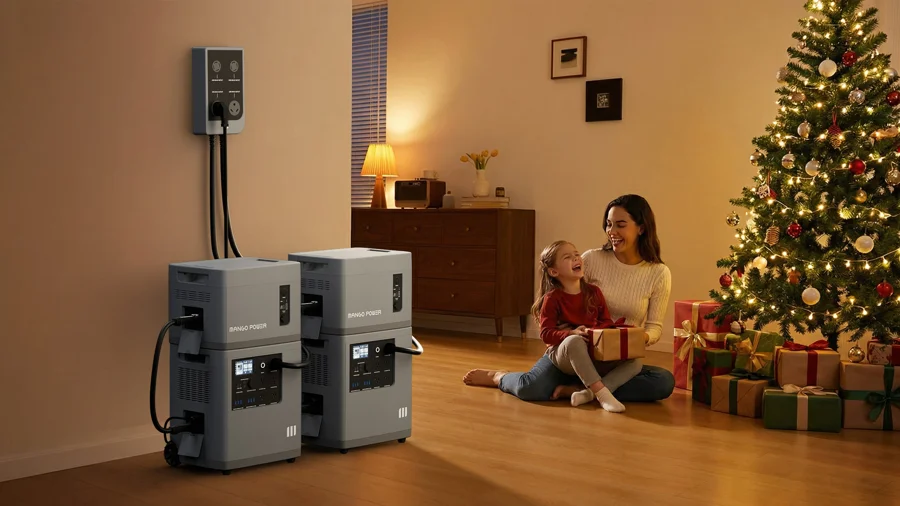
Includes: Mango Power E + 1 Expansion Battery + mSocket Pro • Output: 6,000W split-phase 240V • Connect: Main panel via transfer switch or interlock
This is where the Mango Power E stops being a “portable power station” and becomes a home energy storage system. The mSocket Pro accessory enables split-phase 240V output at 6,000W continuous — enough to run central air conditioning, electric dryers, well pumps, and other 240V appliances that no standard portable power station can touch.
You connect the mSocket Pro to your home’s main electrical panel through a transfer switch or generator interlock kit (installed by an electrician — typically $200–$500 for the install). Once connected, the Mango Power E powers your entire panel — every circuit, every outlet — just like a standby generator, but silent and indoors.
At $2,599 for 7 kWh + 240V + 6,000W, this competes directly with entry-level home battery systems like the Tesla Powerwall 3 ($8,400+ installed) and the Enphase IQ 5P ($6,000+ installed). The Mango Power system is less than half the cost of either, installs in minutes with a transfer switch rather than requiring a full electrical integration, and you can take it with you if you move.
Shop 240V Power Kit — $2,599 ↓
Includes: Mango Power E + 2 Expansion Batteries + mSocket Pro • Total: 14 kWh • Runtime: 24–48 hrs whole-home essential loads
The maximum configuration. Two expansion batteries bring the total to 14 kWh — the same capacity as the Tesla Powerwall 3 (13.5 kWh) and the BLUETTI EP500Pro (5.1 kWh, far less). At $4,199, you’re paying $0.30/Wh for 14 kWh of CATL LFP storage with 240V output. The Tesla Powerwall 3 costs $8,400+ installed for similar capacity.
Runtime at 14 kWh:
This is the configuration for homeowners who want to fully replace a standby generator. A 3-ton central AC unit draws about 3,000W (15A at 240V), which is within the 6,000W continuous output. The 14 kWh capacity keeps it running through a 4–6 hour outage, and solar panels extend that indefinitely during daylight.
Includes: Mango Power E + 200W or 400W Solar Panels • Savings: $100–$300 vs buying separately • Best for: First-time solar buyers who want everything included
The Solar Generator Kit bundles the base Mango Power E with Mango Power’s own 200W portable solar panels. The kit saves $100–$300 versus buying the station and panels separately, and eliminates compatibility concerns — everything is matched and plug-and-play.
The 200W panel charges the Mango Power E from 0–100% in about 14–18 hours of peak sun. For faster charging, the 400W kit (2× 200W panels) cuts that to 7–9 hours. With the Mango Power E’s 2,000W solar input, you can add up to 10× 200W panels for maximum solar charging speed, though 400–800W is the practical sweet spot for most users.
If you already own solar panels with MC4 connectors, you don’t need this kit — just buy the base unit. Mango Power uses standard MC4 input, so any compatible panel (including BougeRV, ALLPOWERS, Renogy, and most third-party panels) works natively.
Shop Solar Generator Kit — $1,899+ ↓

This is the comparison most buyers are making. Both are 3,500Wh-class LFP power stations targeting home backup. Here’s how they stack up:
| Spec | Mango Power E | EcoFlow DELTA Pro |
|---|---|---|
| Price | $1,299 | $2,699 |
| Capacity | 3,533Wh | 3,600Wh |
| Cost per Wh | $0.37 | $0.75 |
| Battery | CATL LFP | LFP |
| Cycle Life | 6,000 | 3,500 |
| AC Output | 3,000W | 3,600W |
| Solar Input | 2,000W | 1,600W |
| Max Expansion | 14 kWh | 7.2 kWh |
| 240V Capable | ✓ (mSocket Pro) | ✓ (Smart Home Panel) |
| Warranty | 10 years | 5 years |
| Weight | 100.1 lbs | 99 lbs |
| App | WiFi + Bluetooth | WiFi + Bluetooth (more polished) |
| Our Pick | ⭐ Best Value | Best Ecosystem |
Bottom line: The Mango Power E wins on value ($1,299 vs $2,699), cycle life (6,000 vs 3,500), solar input (2,000W vs 1,600W), expandability (14 kWh vs 7.2 kWh), and warranty (10 years vs 5). The EcoFlow DELTA Pro wins on output power (3,600W vs 3,000W), app quality, accessory ecosystem depth, and brand trust. If you want the most capacity for the least money, Mango Power E. If you want the most established ecosystem and best software experience, EcoFlow.
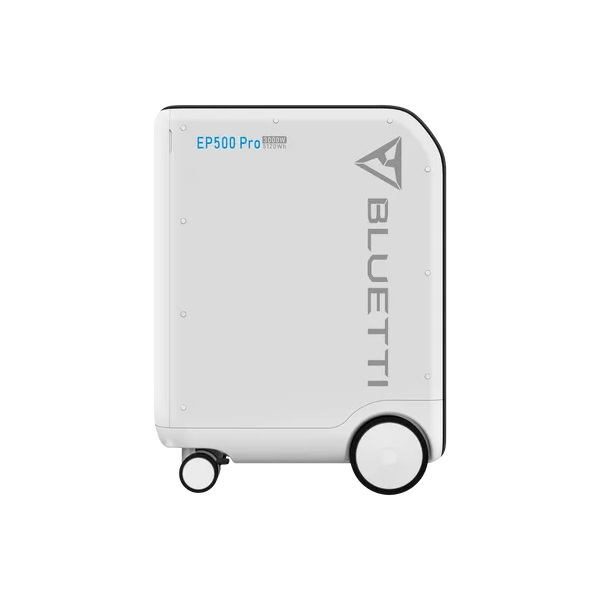
| Spec | Mango Power E (Base) | Mango Power E (240V Pro) | BLUETTI EP500Pro |
|---|---|---|---|
| Price | $1,299 | $4,199 | $4,499 |
| Capacity | 3,533Wh | 14,132Wh | 5,100Wh |
| AC Output | 3,000W | 6,000W | 3,000W |
| 240V | ✗ | ✓ | ✓ (with 2 units) |
| UPS Mode | ✗ | ✗ | ✓ (20ms) |
| Warranty | 10 years | 10 years | 5 years |
| Our Pick | Best Budget | ⭐ Best Home Backup | Best UPS Function |
The BLUETTI EP500Pro is the go-to for users who need true UPS functionality (20ms switchover keeps desktop computers and networking equipment running without a hiccup). But at $4,499 for 5.1 kWh, it delivers less than half the capacity of the Mango Power E 240V Pro ($4,199 for 14 kWh). If you need UPS, go BLUETTI. If you need maximum capacity for whole-home backup, go Mango Power.
The 240V kits deliver Tesla Powerwall-level capability at a fraction of the cost with zero permitting. Transfer switch install is under $500.
Florida, Gulf Coast, and East Coast homeowners need reliable backup. 14 kWh keeps essentials running through multi-day outages. Pair with solar for indefinite runtime.
No electrical modification needed for the base unit. Plug appliances directly into the Mango Power E. When you move, it goes with you.
At $0.37/Wh, the Mango Power E delivers more LFP capacity per dollar than any competing station. The savings compound when you expand.
Yes. Mango Power is an engineering-led energy company using CATL LiFePO4 cells (the same supplier behind Tesla and BYD), with a 10-year warranty and 6,000-cycle rating. They design their own BMS, inverter, and app in-house. The Mango Power E has earned strong reviews from major outlets and holds a 4.3+ star average from verified buyers.
The Mango Power E ($1,299) beats the EcoFlow DELTA Pro ($2,699) on price/Wh, cycle life (6,000 vs 3,500), max expansion (14 kWh vs 7.2 kWh), solar input (2,000W vs 1,600W), and warranty (10 vs 5 years). EcoFlow wins on AC output (3,600W vs 3,000W), app polish, and accessory depth. For pure value and expandability, Mango Power. For ecosystem and brand trust, EcoFlow.
The base unit handles essentials (fridge, lights, router, devices) for 8–12 hours. For true whole-home including HVAC, you need the 240V Power Kit ($2,599 / 7 kWh) or the 240V Pro ($4,199 / 14 kWh). The 240V Pro runs a 3-ton central AC for 4–6 hours and essential loads for 24–48 hours. Adding 800W of solar extends runtime indefinitely.
CATL LiFePO4 cells are rated for 6,000 cycles to 80% capacity. At one cycle per day, that’s 16+ years. Under typical home backup use (partial cycles, occasional use), expect 20+ years. The 10-year warranty is the longest in the portable power station market. LiFePO4 chemistry is inherently safer and longer-lasting than NMC lithium-ion.
At $1,299 (69% off MSRP), the Mango Power E delivers $0.37/Wh — the best value in LFP power stations. That’s cheaper than the BLUETTI AC200L ($0.49/Wh) and EcoFlow DELTA Pro ($0.75/Wh). The 10-year warranty, 6,000 cycles, 2,000W solar input, and expandability to 14 kWh make it one of the strongest deals in the market. The 100 lb weight is the main trade-off — plan on using it as a stationary unit rather than hauling it to campsites.
Currently 69% off. CATL LFP cells, 10-year warranty, expandable to 14 kWh, 240V capable. The best value in home backup.
Shop Mango Power — $1,299 ↗ Compare All Brands See how Mango Power compares to Tesla Powerwall & Enphase →47 pages. Plain English. No fluff. Covers every major brand, real-world runtime tests, and our top picks for every budget.
No spam. Unsubscribe anytime. We hate junk mail as much as you do.