Your gas generator costs $800–$1,500/year in fuel and maintenance. These five solar generators power saws, compressors, and drills — silently, with zero fuel cost — and the full purchase is tax-deductible under Section 179.
Quick Answer: The best solar generator for construction sites in 2026 is the EcoFlow DELTA Pro Ultra ($4,199) — 7,200W continuous output runs every tool on a residential or commercial job site, including table saws and large compressors. For mid-range budgets, the ALLPOWERS R4000 ($1,899) delivers 4,000W at the best output-per-dollar ratio. For light-duty finish work, the EcoFlow DELTA 2 Max ($1,029) handles saws, drills, and chargers at the lowest entry cost. All five picks use LiFePO4 batteries (3,000+ cycles) and qualify for Section 179 full tax deduction as business equipment.
The math is simple. A gas generator burns $3–$8 in fuel per job-site day, needs oil changes every 50–100 hours, creates exhaust that violates indoor-work OSHA limits, generates 70–85 dB of noise that triggers residential complaints, and has a useful life of 2,000–3,000 hours before major service.
A solar generator has zero fuel cost, zero maintenance, zero emissions, and zero noise. LiFePO4 batteries last 3,000–4,500 cycles — that’s 10+ years of daily use. Recharge from a solar panel during lunch, from a wall outlet overnight, or from your truck’s inverter between sites.
The only question is whether solar generators have enough output for construction tools. In 2026, the answer is yes — for most jobs. Here’s where the line is.
Before picking a generator, know what your tools actually draw. Here’s the reference chart for common job-site equipment:
| Tool | Running Watts | Startup Surge |
|---|---|---|
| Circular Saw (7¼″) | 1,200–1,800W | 2,400–3,600W |
| Miter Saw (12″) | 1,200–1,800W | 2,400–3,600W |
| Table Saw (10″ contractor) | 1,800–3,000W | 3,600–6,000W |
| Reciprocating Saw | 700–1,200W | 1,400–2,400W |
| Angle Grinder (4½″) | 600–1,500W | 1,200–3,000W |
| Air Compressor (pancake, 6 gal) | 1,200–1,800W | 2,400–3,600W |
| Air Compressor (30 gal) | 2,000–3,500W | 4,000–7,000W |
| Drill / Impact Driver Charger | 100–300W | N/A |
| LED Work Light (tower) | 100–500W | N/A |
| Jobsite Radio | 20–50W | N/A |
| Concrete Mixer (3.5 cu ft) | 600–900W | 1,200–1,800W |
| Heat Gun | 1,000–1,500W | N/A |
| Planer (portable) | 1,000–1,500W | 2,000–3,000W |
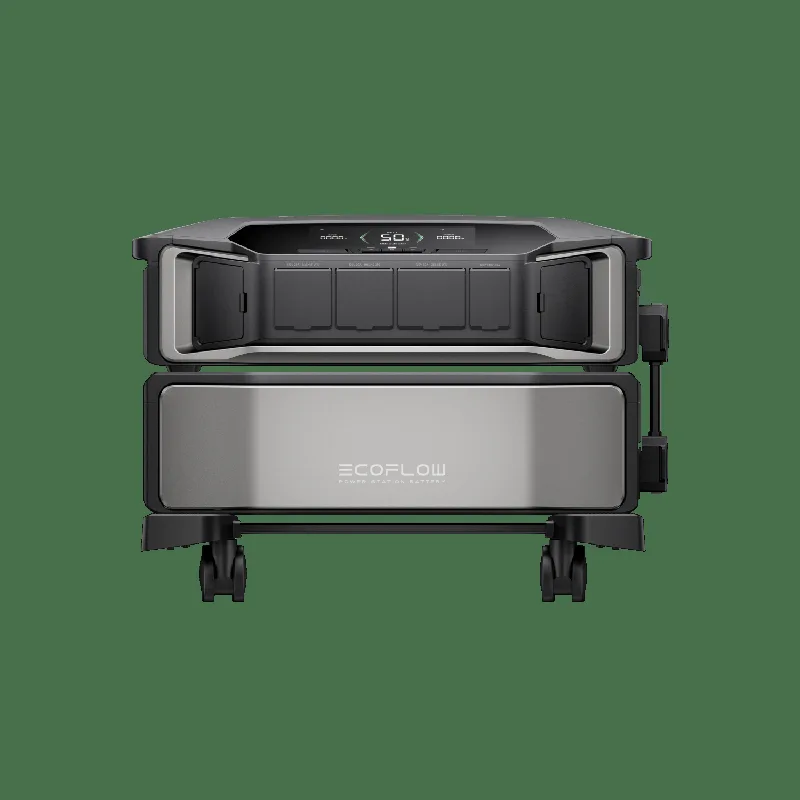
Battery: LiFePO4, 3,000+ cycles • Solar Input: 5,600W max • Expandable: Up to 90kWh • 240V: Built-in split-phase • Weight: ~187 lbs
The DELTA Pro Ultra is the only solar generator that genuinely replaces a gas generator on a full commercial job site. 7,200W continuous output runs table saws, large compressors, and multiple tools simultaneously. The 10,800W surge absorbs every motor startup without flinching. Built-in 240V split-phase means no adapter needed for well pumps, large compressors, or 240V equipment.
At 6,144Wh, a single unit runs a circular saw at 40% duty cycle for about 5 hours. But the real advantage is expandability — add extra battery packs for up to 90kWh, enough to power a commercial site for days. For full-day heavy construction, pair it with two 400W solar panels and recharge during lunch breaks.
Read our full EcoFlow DELTA Pro Ultra Review.
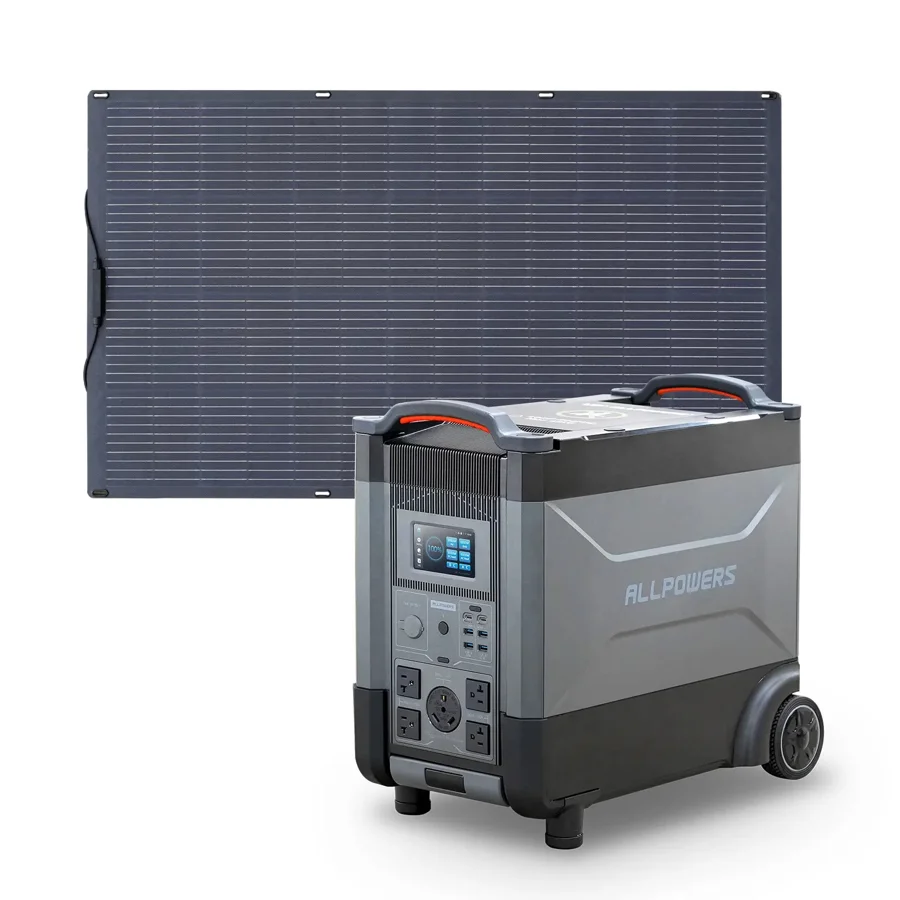
Battery: LiFePO4, 3,500+ cycles • Solar Input: 2,000W max • Expandable: Up to 11,600Wh • Weight: ~86 lbs
The R4000 delivers 4,000W of continuous output at $1,500 less than the DELTA Pro Ultra — the best watts-per-dollar in this roundup. The 6,000W surge handles compressor startups, circular saw kickbacks, and motor inrush on 12″ miter saws without issue. 3,600Wh runs a busy residential job site (saws + drills + chargers + lights) for 4–6 hours at typical duty cycles.
ALLPOWERS doesn’t carry the brand recognition of EcoFlow or BLUETTI, but the R4000 consistently outperforms units $500–$1,000 more expensive on raw specs. The 2,000W solar input means fast field recharging with portable panels. The only trade-off: no built-in 240V split-phase, so you’re limited to 120V tools.
Read our full Best ALLPOWERS Solar Generator 2026 roundup.
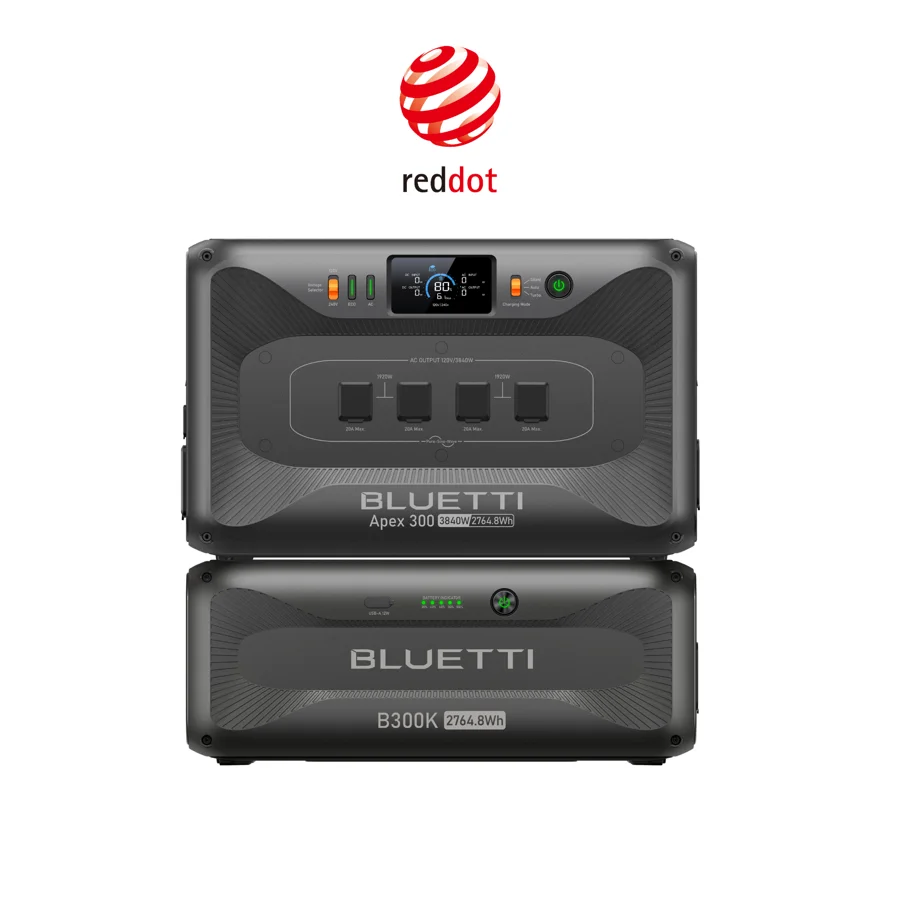
Battery: LiFePO4 • Price source: bluettipower.com, October 1, 2026
The BLUETTI AC300 + B300S bundle we previously recommended is sold out on BLUETTI’s U.S. store. Its modern replacement is the Apex 300, sold here with one B300K expansion battery for $2,599. Together they deliver 5,529.6Wh of LiFePO4 capacity and 3,840W of continuous output — more of both than the AC300 bundle offered.
3,840W continuous covers circular saws, miter saws, and most compressors, and BLUETTI’s 7,680W lifting mode helps with heavy resistive loads. Like the AC300, it is modular: add more expansion batteries for multi-day job sites instead of hauling the unit back to the shop to recharge.
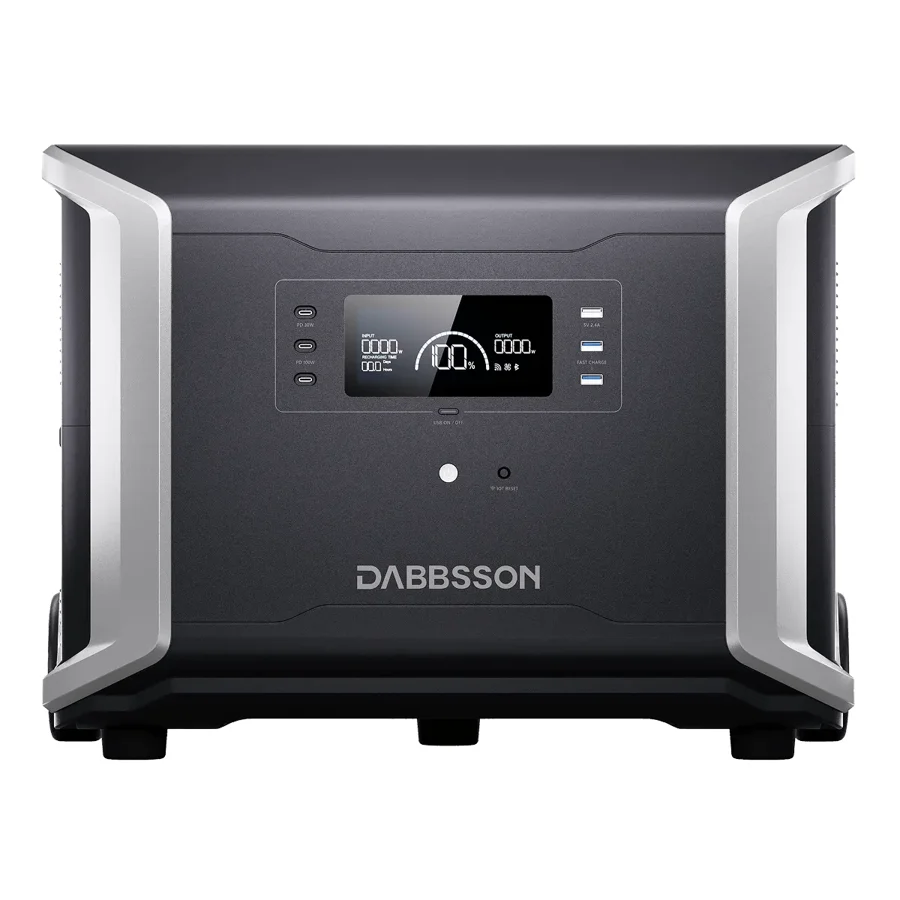
Battery: Semi-solid state LiFePO4, 4,500+ cycles • Solar Input: 2,200W max • Expandable: Up to 28,160Wh • Weight: ~100 lbs
The DBS3500 is the sleeper pick in this roundup. 3,500W continuous at $1,599 undercuts the DELTA Pro Ultra, the Apex 300 bundle, and the R4000 while nearly matching the R4000’s output. The 7,000W surge — highest in the under-$2,500 range — handles even large compressor startups.
Dabbsson’s semi-solid state LiFePO4 chemistry is the differentiator: 4,500+ cycle rating vs. 3,000–3,500 from the competition. At daily use, that’s 12+ years before the battery drops to 80% capacity. And the expansion ecosystem goes deeper than any competitor — up to 28,160Wh total capacity, which is overkill for most job sites but valuable if you also use it for home backup or off-grid work.
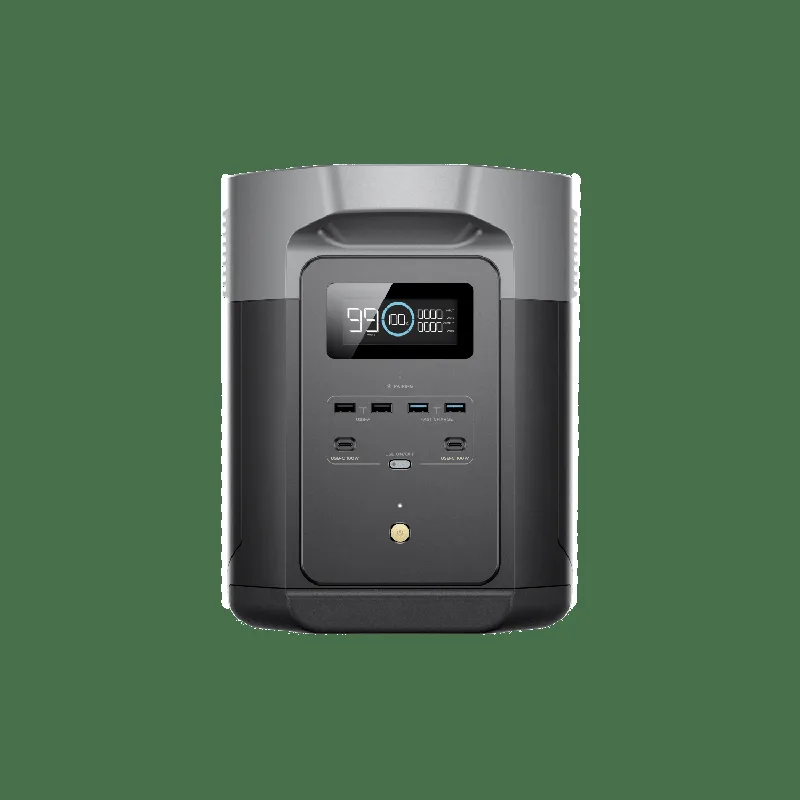
Battery: LiFePO4, 3,000+ cycles • Solar Input: 1,000W max • Expandable: Up to 6,144Wh • Weight: ~51 lbs
The DELTA 2 Max is the entry point for contractors dipping their toes into solar. At 51 lbs, one person can carry it to a second-floor remodel or a tight crawl space. 2,400W handles circular saws, reciprocating saws, drills, and chargers without issue. The 4,800W surge absorbs motor startups on most tools.
You won’t run a table saw or large compressor on this, but for finish work, electrical, plumbing, painting prep, and light framing, the DELTA 2 Max is all you need. At $1,029 it pays for itself in under two years of saved gas — and if you need more capacity, add an expansion battery (up to 6,144Wh total).
Read our full EcoFlow DELTA 2 Max Review.
| Spec | EcoFlow DELTA Pro Ultra | ALLPOWERS R4000 | BLUETTI Apex 300 + B300K | Dabbsson DBS3500 | EcoFlow DELTA 2 Max |
|---|---|---|---|---|---|
| Price | $4,199 | $1,899 | $2,599 | $1,599 | $1,029 |
| Output | 7,200W | 4,000W | 3,840W | 3,500W | 2,400W |
| Surge | 10,800W | 7,680W (lifting) | 6,000W | 7,000W | 4,800W |
| Capacity | 6,144Wh | 3,600Wh | 5,529.6Wh | 3,430Wh | 2,048Wh |
| Max Expansion | 90,000Wh | 11,600Wh | Expandable | 28,160Wh | 6,144Wh |
| Cycle Life | 3,000+ | — | 3,500+ | 4,500+ | 3,000+ |
| Weight | ~187 lbs | ~86 lbs | — | ~100 lbs | ~51 lbs |
| 240V | Built-in | — | — | — | — |
| Solar Input | 5,600W | 2,000W | — | 2,200W | 1,000W |
| Best For | Full commercial sites | Mid-range residential | All-day crews | Value buyers | Finish work / light duty |
Contractors think solar generators are expensive. They’re not — when you factor in the total cost of ownership. Here’s the honest math.
| Cost Factor | Gas Generator (5,000W) | Solar Generator (4,000W) |
|---|---|---|
| Purchase Price | $800–$1,500 | $1,599–$4,199 |
| Fuel Cost (Year 1) | $600–$1,200 | $0 |
| Maintenance (Year 1) | $150–$300 | $0 |
| 3-Year Total Cost | $3,050–$6,000 | $1,599–$4,199 |
| 5-Year Total Cost | $4,550–$9,000 | $1,599–$4,199 |
| Expected Lifespan | 2,000–3,000 hours | 3,000–4,500 cycles (10+ years) |
| Noise Level | 70–85 dB | 0 dB (silent) |
| Emissions | CO, CO₂, NOx | Zero |
| Indoor Use | ✗ Never (CO poisoning risk) | ✓ Yes — safe indoors |
Be honest about the limitations. Gas generators still make more sense for:
For everything else — residential remodels, finish work, electrical rough-ins, plumbing, painting, trim, framing with cordless tools — solar handles it better, cheaper, and quieter.
Under Section 179, contractors and business owners can deduct the full purchase price of qualifying equipment in the year they buy it — no multi-year depreciation. Solar generators used more than 50% for business qualify.
This is general information, not tax advice. Consult your CPA for your specific situation. Equipment must be used more than 50% for business to qualify.
Find its running wattage on the tool’s nameplate or manual. Your generator’s continuous output must exceed this number.
Motor-driven tools (saws, compressors, mixers) draw 2–3× their rated wattage for the first 1–2 seconds of startup. Your generator’s surge rating must exceed this. Example: a 1,500W circular saw needs at least 3,000W surge — but 6,000W+ is better if you’re running multiple motor tools.
Estimate hours of use for each tool, multiply by wattage, and total it up. Be realistic about duty cycles — a saw runs 30–40% of the time, not 100%. Chargers and lights run continuously.
If you’re taking on bigger jobs, choose a unit with expandable battery capacity. It’s cheaper to add a $1,000 expansion battery than to replace a $2,500 generator that’s too small.
Contractors running multiple crews face a choice: one large generator that moves between sites, or several smaller units — one per crew. Both approaches work.
Our recommendation: If you run one crew, buy the DELTA Pro Ultra or R4000. If you run two or more crews, buy DELTA 2 Max units for each light-duty crew and one R4000 or DELTA Pro Ultra for heavy jobs.
Yes. Solar generators with 3,000W+ continuous output run circular saws, miter saws, reciprocating saws, drills, chargers, work lights, small compressors, and concrete mixers. The EcoFlow DELTA Pro Ultra (7,200W) handles everything including table saws and large compressors. The only tools that still require gas generators are sustained heavy loads above 5,000W like large welders and plasma cutters.
Yes. Under IRS Section 179, the full purchase price of a solar generator used more than 50% for business can be deducted in the year of purchase. A $4,199 generator at a 24% tax bracket saves you $1,008 in taxes — making the real cost $3,191. Consult your CPA for your specific situation.
A 3,600Wh battery running a circular saw at 40% duty cycle (realistic for framing) provides roughly 6 hours of active cutting. Running chargers and lights (500W combined) lasts about 7 hours. With a 400W solar panel adding ~2,000Wh during the day, you can extend runtime significantly. For all-day heavy use, choose a 6,000Wh+ unit or bring expansion batteries.
Solar wins for residential construction, finish work, indoor work, and any site with noise ordinances. Zero fuel cost ($800–$1,500/year savings), zero maintenance, zero emissions, zero noise. Solar pays for itself in 18–30 months. Gas still wins for sustained loads above 5,000W (large welders, plasma cutters) and remote multi-day sites with no recharging access.
Size by your heaviest tool’s running wattage plus startup surge. Light-duty (finish work, painting, electrical): 2,000–2,500W unit ($1,029+). Mid-range residential (framing, saws, compressors): 3,500–4,000W unit ($1,599–$1,899). Full commercial (table saws, large compressors, multiple tools): 7,200W unit ($4,199). Battery capacity should be 2,000Wh minimum for half-day, 3,500Wh+ for full-day.
Our top picks for construction — all LiFePO4, all Section 179 deductible, all zero maintenance.
#1 EcoFlow DELTA Pro Ultra ↗ #2 ALLPOWERS R4000 ↗ Compare all solar generators side by side →47 pages. Plain English. No fluff. Covers every major brand, real-world runtime tests, and our top picks for every budget.
No spam. Unsubscribe anytime. We hate junk mail as much as you do.