Gas generators cost food trucks $800+/year in fuel. Here are the 5 solar generators that eliminate that expense — with the output to run commercial kitchen equipment.
Quick Answer: The best solar generator for a food truck is the EcoFlow DELTA Pro Ultra ($3,999–$5,499) — the only portable unit with 7,200W output, enough to run a commercial griddle, refrigerator, and POS system simultaneously. For mid-size setups, the BLUETTI AC300 + B300S ($2,799) delivers 3,000W with expandable 12,288Wh storage. A gas generator costs food truck operators $800–1,200/year in fuel and maintenance; a solar generator pays for itself in 2–4 years with $0 ongoing fuel cost, zero noise, and no fumes near food. The equipment qualifies for a Section 179 tax deduction.
If you run a food truck, you already know the daily frustration of a gas generator: the noise that drowns out customer conversations, the exhaust fumes drifting into your serving window, the $15–25 in fuel burned per service day, the 6 AM oil change when you should be prepping ingredients. And the increasingly frequent “no generators” policies at farmers markets, brewery taprooms, and urban events.
Solar generators solve all of these problems. They’re silent. They produce zero emissions. They cost nothing to fuel after the initial purchase. And they’re allowed everywhere gas generators are banned.
The catch — and it’s been a real one until recently — is that most portable power stations couldn’t handle commercial kitchen equipment. A commercial flat-top griddle draws 3,000–5,000W. A commercial blender pulls 1,500W. A soft-serve machine needs 2,000W+. Until 2025, no portable solar generator could touch those numbers.
That changed. The latest LiFePO4 portable power stations deliver 3,000–7,200W of continuous output — enough to run real commercial equipment, not just a phone charger and some LED lights. Here’s how to size and choose the right one for your operation.
Before you buy anything, you need to know how much power your food truck actually draws. This is the step most buyers skip — and it’s the step that prevents expensive mistakes.
| Appliance | Running Watts | Startup Surge | Daily Wh (8 hrs) |
|---|---|---|---|
| Commercial Refrigerator | 200–400W | 800–1,500W | 1,200–2,400 Wh |
| Commercial Freezer | 300–500W | 1,000–2,000W | 1,800–3,000 Wh |
| Flat-Top Griddle (electric) | 2,500–5,000W | 5,000W+ | 10,000–20,000 Wh |
| Commercial Blender (Vitamix) | 1,200–1,500W | 2,000W | 600–1,500 Wh * |
| Coffee Machine (drip) | 800–1,200W | 1,200W | 3,200–4,800 Wh |
| Espresso Machine | 1,200–1,800W | 2,200W | 4,800–7,200 Wh |
| POS System + Router | 50–100W | 100W | 400–800 Wh |
| LED Lights (full truck) | 50–150W | 150W | 400–1,200 Wh |
| Exhaust Fan / Ventilation | 100–300W | 500W | 800–2,400 Wh |
| Soft-Serve / Ice Cream Machine | 1,500–2,500W | 3,500W | 6,000–10,000 Wh |
| Electric Deep Fryer | 1,500–3,000W | 3,000W | 6,000–12,000 Wh |
| Phone Chargers (x4) | 40–80W | 80W | 320–640 Wh |
* Blender wattage is intermittent — Wh based on 30–60 min total blend time per day, not 8 hours continuous.
We ranked these by continuous AC output power because that’s the spec that determines what equipment you can actually run. All five use LiFePO4 batteries for maximum lifespan in commercial daily-use scenarios. Why LiFePO4 matters →
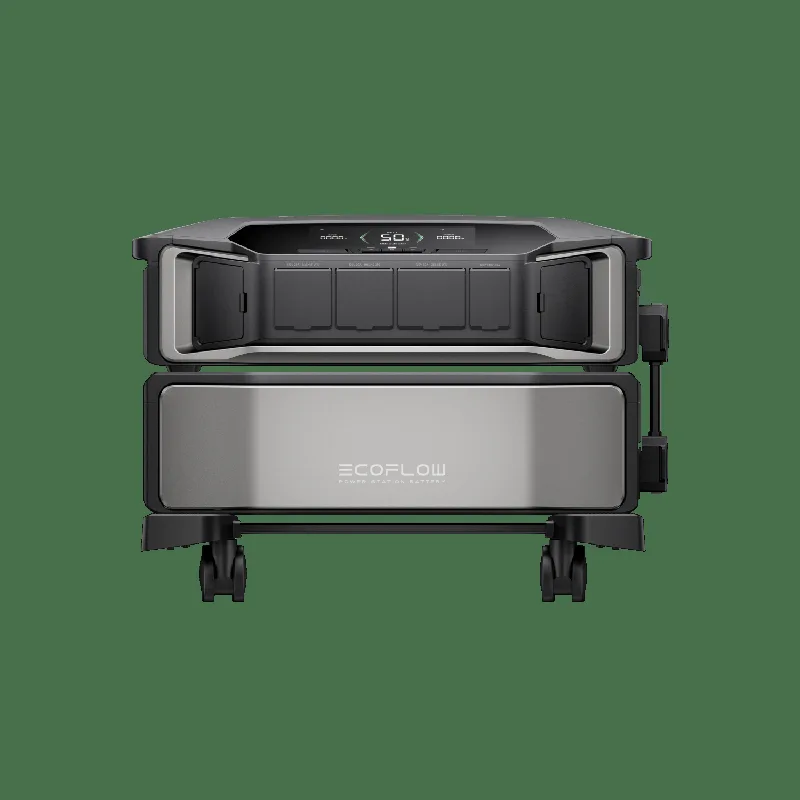
The DELTA Pro Ultra is the only portable power station that can run a full commercial kitchen. 7,200W continuous output handles an electric griddle (3,000–5,000W) alongside a refrigerator, POS system, and lights — simultaneously. Expandable to 90kWh of storage for multi-day festivals without charging. Smart load management via the EcoFlow app lets you prioritize critical circuits. This is the food truck equivalent of going from a Honda Civic to a Ford F-250 — it just handles everything.
Best for: Full-service food trucks running electric griddles, fryers, or soft-serve machines. Festival vendors needing multi-day power. High-volume operations where downtime = lost revenue.
Check Price at EcoFlow Full Review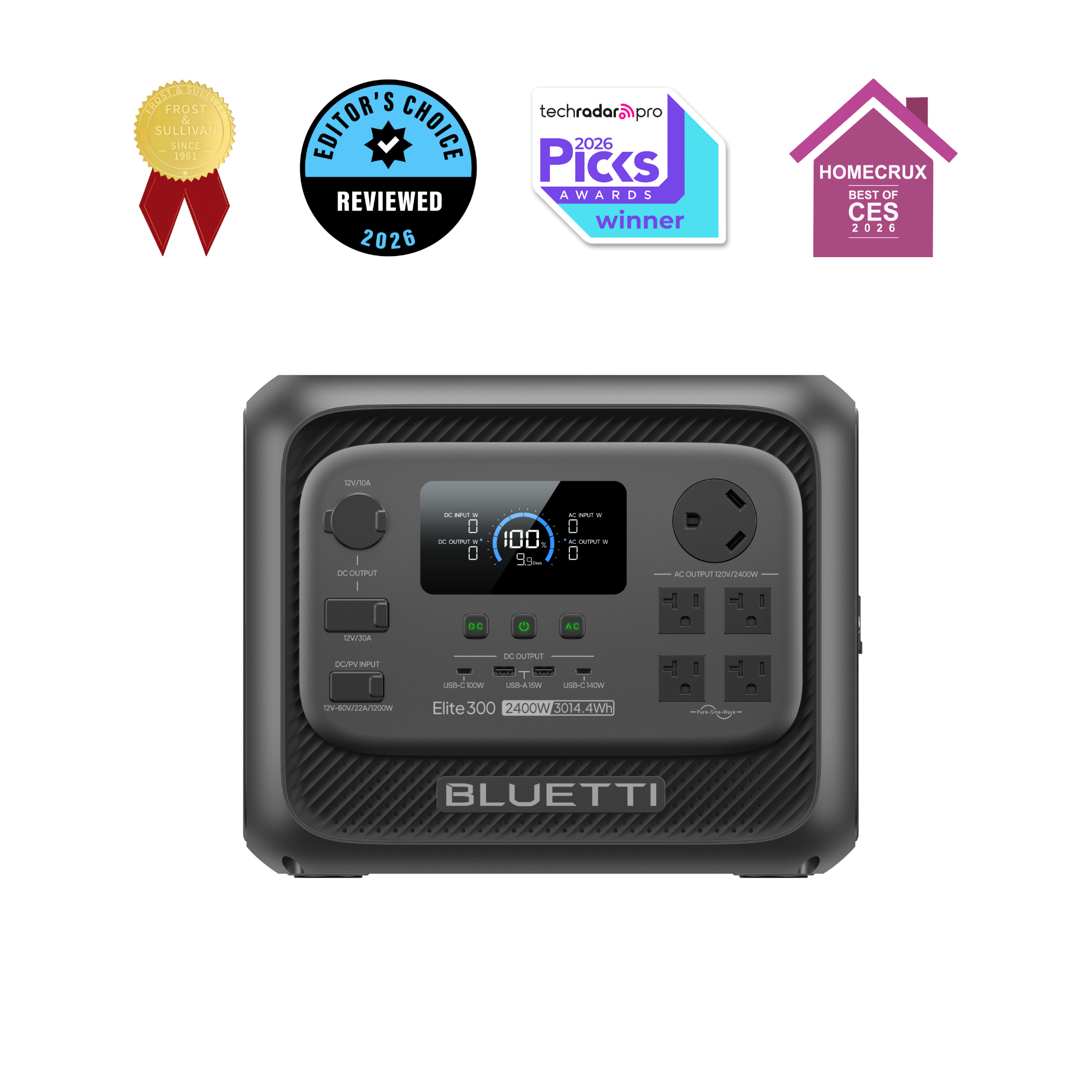
The AC300 is the most popular choice for mid-size food trucks that don’t need electric griddle power. 3,000W runs a refrigerator + blenders + POS + lights + exhaust fan simultaneously. Add up to 4 B300S batteries (12,288Wh total) for all-day power. 240V bonding with two AC300 units gives you 6,000W for heavy-duty setups. 2,400W solar input recharges fast — pair with 4–6 panels on your truck roof and you’re recharging while you serve.
Best for: Smoothie trucks, coffee trucks, taco trucks with propane griddles, mobile bars. Any food truck where cooking is propane-based and electricity handles refrigeration, blending, and operations.
Check Price at BLUETTI Full Comparison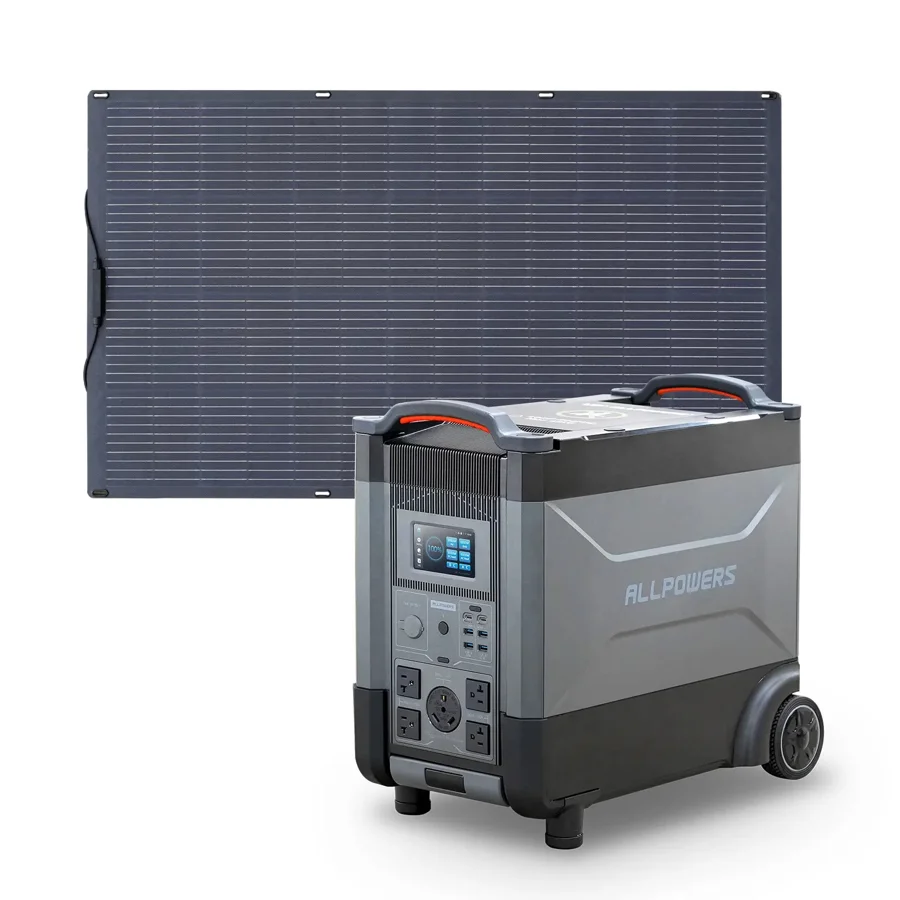
ALLPOWERS doesn’t get the brand recognition of EcoFlow or BLUETTI, but the R4000 delivers serious value. 4,000W continuous output matches or exceeds units costing $1,000 more. 3,600Wh of LiFePO4 storage runs a typical food truck (minus electric griddle) for 5–6 hours without recharging. The 6,000W surge rating handles compressor startups from commercial freezers without blinking. If you need raw output on a budget, this is the pick.
Best for: Budget-conscious food truck owners who need high output. Ice cream trucks with multiple freezers. Mobile catering operations.
Check Price at ALLPOWERS ALLPOWERS Review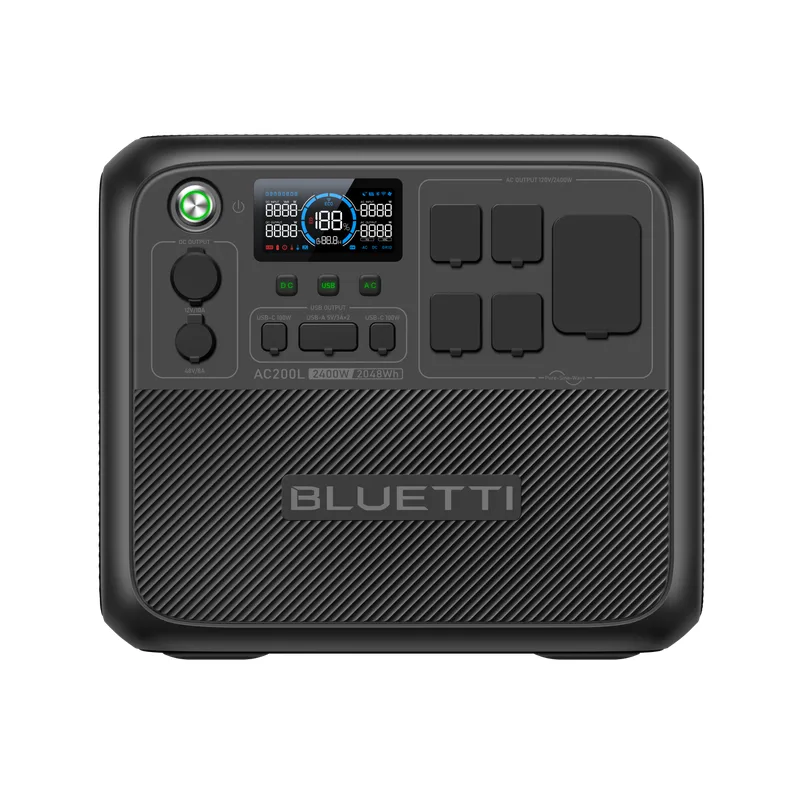
The AC200L is perfect for small food operations: coffee carts, lemonade stands, farmers market booths, or food trucks that only need power for refrigeration and a POS system. 2,400W handles a commercial fridge + coffee maker or blender (not both simultaneously). At $1,399, it’s the most affordable LiFePO4 option that can genuinely serve a small food business. Expandable to 8,192Wh with add-on batteries for longer event days.
Best for: Coffee carts, juice bars, farmers market vendors, food trucks with minimal electrical equipment. Great starter unit you can expand over time.
Check Price at BLUETTI Full Review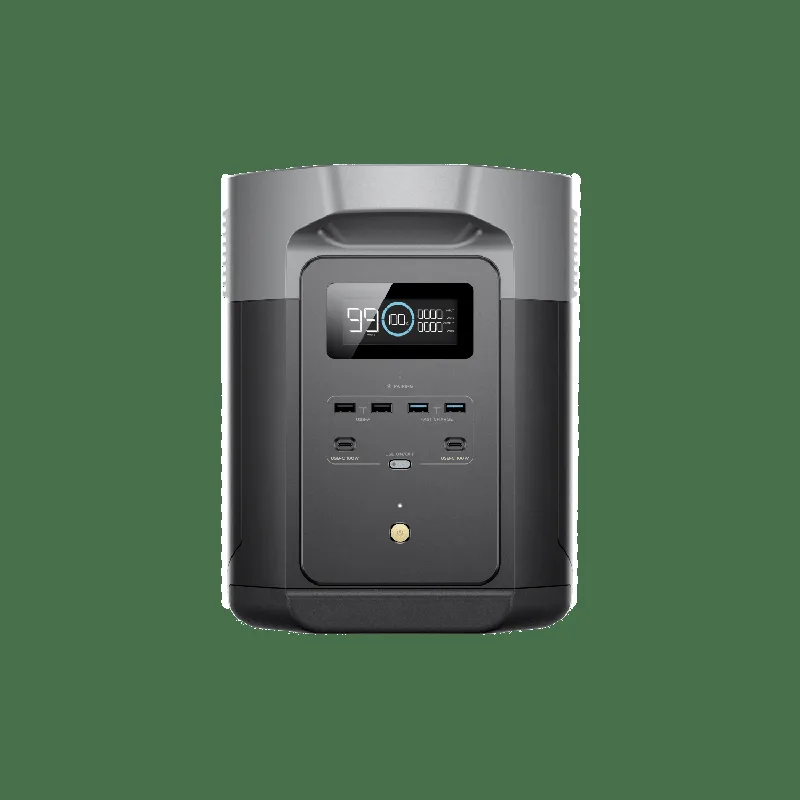
The Delta 2 Max earns a spot for its ultra-fast charging: 0–80% in 43 minutes from a wall outlet. If you forgot to charge overnight, you can get a usable charge during morning prep. 5,000W surge handles compressor startups. 2,400W continuous runs refrigeration + lights + POS + phones easily. Not enough output for commercial cooking, but excellent for food trucks where propane handles the heat. Our full review gave it 4.9/5.
Best for: Food truck owners who want fast-charge capability as a safety net. Mobile businesses where reliability and fast recharge matter more than maximum output.
Check Price at EcoFlow Full Review| Model | Output | Battery | Max Expand | Price | Best For |
|---|---|---|---|---|---|
| EcoFlow DELTA Pro Ultra | 7,200W | 6,144Wh | 90kWh | $3,999+ | Full-service trucks |
| BLUETTI AC300 + B300S | 3,000W | 3,072Wh | 12,288Wh | $2,799 | Mid-size trucks |
| ALLPOWERS R4000 | 4,000W | 3,600Wh | — | $2,499 | Budget powerhouse |
| BLUETTI AC200L | 2,400W | 2,048Wh | 8,192Wh | $1,399 | Small operations |
| EcoFlow DELTA 2 Max | 2,400W | 2,048Wh | 6,144Wh | $1,499 | Fast-charge need |
This is where the business case becomes undeniable. Let’s run the numbers on what a gas generator actually costs your food truck over 5 years vs. a solar generator.
| Cost Factor | Gas Generator (5 yr) | Solar Generator (5 yr) |
|---|---|---|
| Equipment Cost | $800–$2,000 | $1,499–$3,999 |
| Fuel Cost (200 days/yr) | $3,500–$7,500 | $0 |
| Maintenance (oil, plugs, carb) | $1,000–$2,000 | $0 |
| Replacement (gas units die in 3–5 yr) | $800–$2,000 | $0 (LiFePO4 lasts 10+ yr) |
| Lost Revenue (noise bans) | $500–$2,000+ | $0 |
| 5-Year Total Cost | $6,600–$15,500 | $1,499–$3,999 |
Even taking the most conservative estimates, a solar generator saves a food truck operator $3,000–$11,000 over 5 years. The payback period on a $3,000 solar generator is 2–3 years vs. a gas generator’s ongoing costs. After that, every operating day is pure savings.
And that doesn’t include the revenue you gain from events that ban gas generators. A growing number of farmers markets, brewery taprooms, and urban festivals prohibit combustion engines entirely. If one of those events is worth $500–1,000/day to your business, a single banned event that you can now attend pays for 25–50% of the solar generator. For more on this comparison: Gas vs. Solar Generator — Full Breakdown.
A solar generator purchased for business use qualifies as a Section 179 deduction under the IRS code. This allows you to deduct the full purchase price of business equipment in the year you buy it, rather than depreciating it over several years.
What this means in practice:
A solar generator without solar panels is just a battery on wheels. Adding panels to your truck roof turns it into a self-recharging power system that extends runtime by 30–50% during service hours.
Most food truck operators start with 2 panels ($400–$600) and add more if they need longer runtime. The panels mount semi-permanently to the truck roof using adhesive or bolt-on brackets. For panel recommendations, see our best solar panels guide.
Yes. Modern LiFePO4 solar generators deliver 2,400–7,200W of continuous output, which is enough for most food truck setups. The EcoFlow DELTA Pro Ultra (7,200W) can power an entire commercial kitchen. Mid-range units like the BLUETTI AC300 (3,000W) handle refrigeration, blenders, POS systems, and lighting simultaneously. The key is matching your total wattage draw — including compressor startup surges — to the generator’s output and surge ratings.
A gas generator costs food truck operators $600–$1,200/year in fuel (2–4 gallons/day × 200 operating days at $3.50–$4.50/gallon) plus $200–$400/year in maintenance. Over 5 years, total gas generator costs run $6,600–$15,500 including equipment replacement. A solar generator costs $1,499–$3,999 once with $0 ongoing fuel or maintenance costs, and lasts 10+ years. The payback period is typically 2–4 years. See our full cost comparison.
It depends on your equipment. A basic coffee/smoothie truck needs 1,500–2,500W. A full-service truck with an electric griddle needs 3,000–5,000W. For battery capacity, multiply your average draw by your operating hours: a 2,000W average draw over 8 hours = 16,000Wh. Use our wattage calculator table above to add up your specific appliances. Start with the continuous output requirement (what runs simultaneously), then check the surge rating for compressor startups.
Yes. A solar generator used for business qualifies as a Section 179 deduction, allowing you to deduct the full purchase price in the year you buy it. A $3,999 solar generator could save $880–$1,480 in federal taxes depending on your bracket. Solar panels and expansion batteries are also deductible. This applies to sole proprietors, LLCs, and corporations. Keep your receipt and document the business purpose. Consult your tax professional for your specific situation.
Yes. The battery stores energy regardless of weather — charge it from a wall outlet overnight (1–3 hours for most units) and you’re ready for the next day. Solar panels are supplementary daytime charging, not your only power source. In winter or heavy clouds, solar panel output drops 30–60%, but most food truck operators charge fully at home and use panels to extend runtime during service. LiFePO4 batteries operate down to -4°F, so cold weather performance isn’t a concern.
Find the right solar generator for your food truck. Compare all models side-by-side or take our quiz to get a personalized recommendation.
Check EcoFlow DELTA Pro Ultra Compare All Models Gas vs Solar — Full Cost Breakdown → How to size your solar generator →47 pages. Plain English. No fluff. Covers every major brand, real-world runtime tests, and our top picks for every budget.
No spam. Unsubscribe anytime. We hate junk mail as much as you do.