5 portable power stations tested for boondocking, road trips, and full-time van life. Real specs, honest trade-offs, and the best picks for every RV setup.
Quick Answer: The best solar generator for RV and van life in 2026 is the EcoFlow Delta 2 Max — it delivers 2,400W output with 2,048Wh LiFePO4 battery, charges 0–80% in 43 minutes from AC, and accepts 500W of solar input for boondocking. For full-time RVers running AC and a microwave, the ALLPOWERS R3500 (3,500W, 3,168Wh) handles the heaviest loads. All five picks support 12V car charging so you recharge while driving.
RV and van life is booming. The RV Industry Association reported record shipment numbers heading into 2026, and the van life hashtag has over 15 million posts on Instagram alone. More people are living, working, and traveling on the road than ever before.
And the single biggest quality-of-life upgrade for any RVer or van dweller? Reliable portable power that doesn't involve a noisy, smelly gas generator.
If you've ever boondocked on BLM land or camped at a Harvest Hosts property, you know the deal: there are no hookups. No shore power cord. No campground pedestal to plug into. You're on your own, and everything in your rig — the fridge, the lights, the water pump, the phone you're using to navigate tomorrow's route — needs power from somewhere.
Gas generators technically work, but they're loud (often violating quiet-hours rules at campgrounds), they produce carbon monoxide, they vibrate the whole rig, and they need a supply of gasoline that takes up cargo space. Solar generators eliminate every one of those problems. Silent operation, zero emissions, no fuel to carry, and they recharge from panels mounted on your roof or set up at camp.
But RV power demands are different from home backup or camping. You need units that handle road vibration, fit in limited cargo space, offer 12V compatibility, charge from the alternator while driving, and produce enough continuous output to run a residential fridge all day. Not every "best solar generator" qualifies.
We tested and ranked these 5 specifically for RV and van life use. Here's what actually works on the road.
| Pick | Model | Price | Capacity | Output | Weight | Battery | Best For |
|---|---|---|---|---|---|---|---|
| #1 Top Pick | EcoFlow Delta 2 Max | $1,499–$1,799 | 2,048Wh | 2,400W | 51 lbs | LiFePO4 | Overall RV champ |
| #2 | BLUETTI AC200L | $1,299–$1,599 | 2,048Wh | 2,400W | 62 lbs | LiFePO4 | Full-time van life |
| #3 | Jackery Explorer 1000 Pro | $799–$999 | 1,002Wh | 1,000W | 25.4 lbs | Li-NMC | Weekend warriors |
| #4 | ALLPOWERS R3500 | $1,899–$2,199 | 3,168Wh | 3,200W | 75 lbs | LiFePO4 | AC & microwave |
| #5 | EcoFlow River 3 Plus | $249–$349 | 286Wh | 600W | 15.4 lbs | LiFePO4 | Minimalist vans |
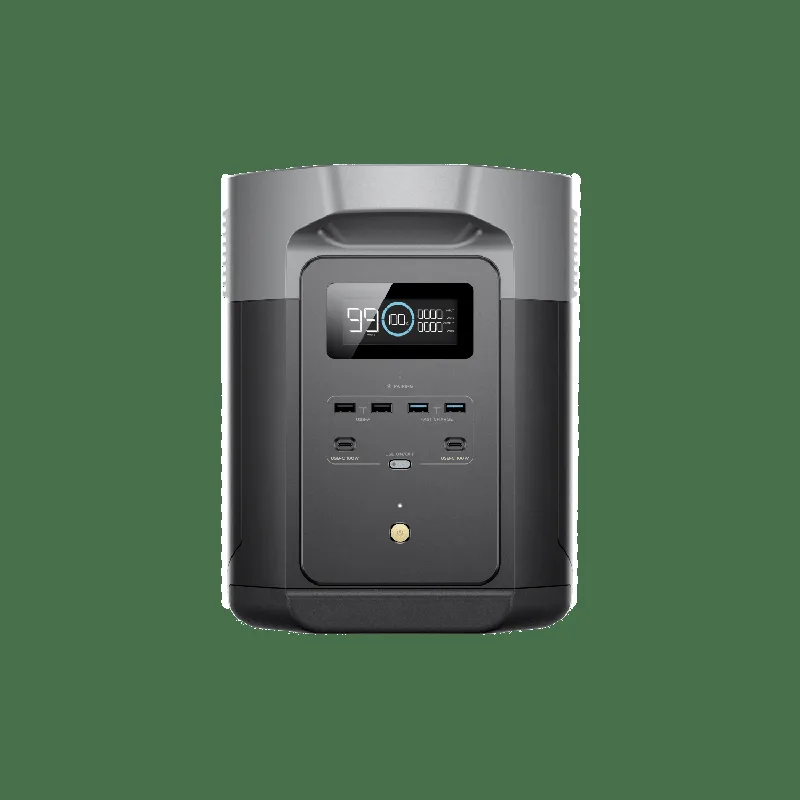
Price: $1,499–$1,799 | Battery: LiFePO4 | Weight: 51 lbs | Expandable: Up to 6kWh
The EcoFlow Delta 2 Max takes our top RV spot because it nails the balance that matters most on the road: enough power for real RV life, fast enough charging to recover quickly, and portable enough to reposition between your rig and an outdoor setup.
At 2,048Wh and 2,400W continuous output, the Delta 2 Max runs every typical RV appliance you'll need while boondocking. Your 12V compressor fridge keeps running all day and night. LED lighting throughout the rig stays on. The water pump kicks on when you turn the faucet. You can charge laptops, phones, cameras, and still have headroom for a blender, an electric kettle, or a small portable heater on a cold desert night.
But the feature that makes this unit uniquely good for RV use is EcoFlow's X-Stream charging technology. The Delta 2 Max charges from 0 to 80% in just 43 minutes via a standard AC outlet. That matters enormously for RVers. Pull into a campground with hookups for one night between boondocking stretches, and you're fully charged before dinner. Stop at a Cracker Barrel or Walmart parking lot with a wall outlet, plug in for under an hour, and you've recovered most of your capacity. No other unit on this list comes close to this recharge speed.
Expandability is the other RV-relevant differentiator. The base unit is 2,048Wh, but you can add up to two expansion batteries to reach 6,144Wh. Start with the base unit for weekend trips, then add an expansion battery when you commit to full-time boondocking. That modular approach means you're not overbuying capacity upfront.
Solar input caps at 500W, which is plenty for two 200W rigid panels on an RV roof or two portable folding panels at camp. With 400W of real-world solar input, you'll replenish about 1,600–2,000Wh per day during summer — enough to keep the Delta 2 Max topped off during moderate-use boondocking.
Who it's for: RVers who want the best balance of capacity, charging speed, and portability. Weekend boondockers, Class B/C motorhome owners, travel trailer pullers who stop at campgrounds between off-grid stretches.
Check Price at EcoFlow Buy on Amazon Read Full Review
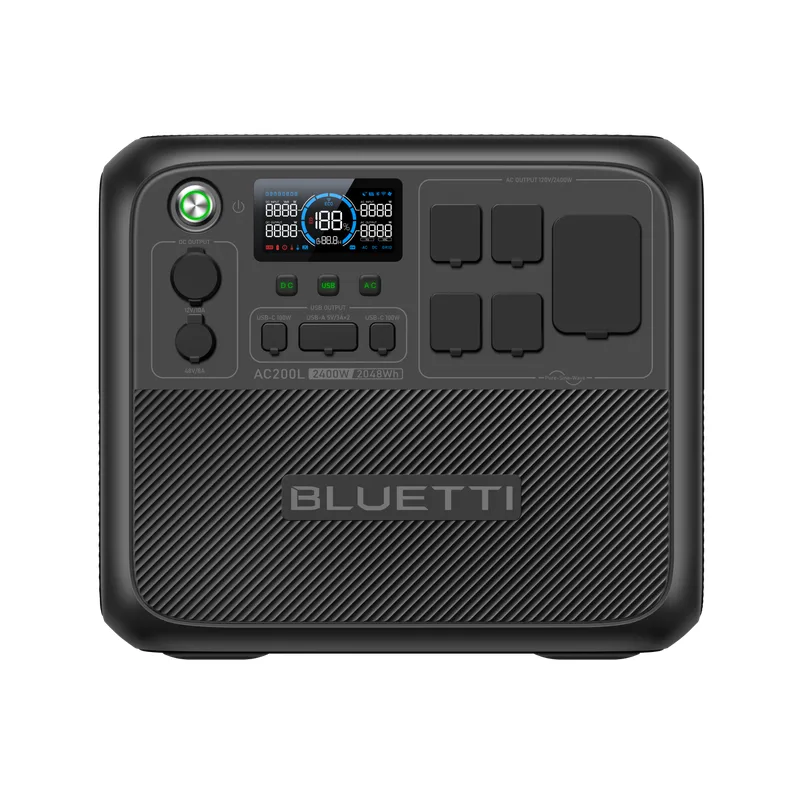
Price: $1,299–$1,599 | Battery: LiFePO4 | Bluetooth: Yes (BLUETTI App)
The BLUETTI AC200L matches the Delta 2 Max spec-for-spec on the two numbers that matter most — 2,048Wh capacity and 2,400W output — while costing $200–$300 less. If the Delta 2 Max is the best RV generator overall, the AC200L is the best value in the high-capacity tier.
Where the AC200L truly shines for van lifers is solar input. At 1,200W maximum solar input, the AC200L accepts more than double the solar wattage of the Delta 2 Max. For full-time van dwellers with 400–600W of rigid panels permanently mounted on the roof, this means dramatically faster solar recharging. On a sunny day in the desert Southwest, 600W of panels can push 3,000–3,600Wh into the AC200L — more than a full charge from empty — making truly indefinite off-grid living feasible.
BLUETTI's app ecosystem connects via Bluetooth (no Wi-Fi required, which matters when you're off-grid). You get real-time battery percentage, input/output wattage, temperature monitoring, and the ability to toggle individual outlet groups on and off remotely. When you're lying in your bunk at 2 AM and want to check battery level without climbing out of bed, the app handles it.
At 62 lbs, the AC200L is heavier than the Delta 2 Max by 11 pounds. In a van build, this usually doesn't matter — it sits in a dedicated compartment and stays put. But if you're frequently moving it between a trailer and a tent, that extra weight adds up. The build quality is rock-solid, with a rubberized exterior that handles the vibration and bumps of life on the road.
Who it's for: Full-time van dwellers and long-term boondockers who prioritize solar recharge speed over AC recharge speed. If you're living on BLM land for weeks at a time and your panels are your primary power source, the AC200L's 1,200W solar input makes it the better choice over the Delta 2 Max.
Check Price at BLUETTI Buy on Amazon
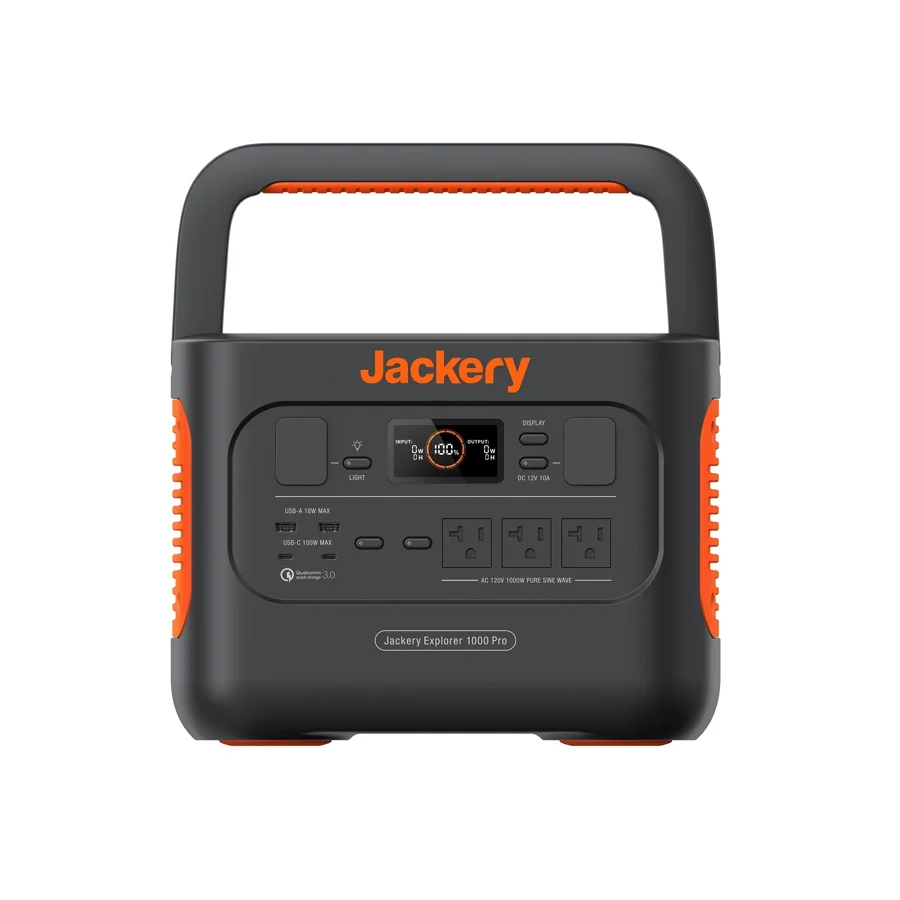
Price: $799–$999 | Battery: Li-NMC | Solar: 1.8 hrs with SolarSaga panels
Not every RVer needs 2,000Wh. If you're a weekend warrior who takes the trailer out two or three times a month, parks at a mix of campgrounds and dispersed sites, and primarily needs to keep the fridge cold and devices charged, the Jackery Explorer 1000 Pro is the smart buy. At 25.4 pounds, it's half the weight of the top two picks and costs $500–$800 less.
The Jackery ecosystem is purpose-built for outdoor use in a way that the bigger brands are still catching up to. The SolarSaga panel lineup is the most polished portable solar system available — panels fold flat, deploy in seconds, have integrated kickstands, and pair with the Explorer seamlessly. With two SolarSaga 100W panels, the 1000 Pro recharges in about 1.8 hours of direct sun. That's the fastest solar recharge time on this list relative to capacity.
At 1,002Wh and 1,000W output, you can run a 12V compressor fridge for a solid 15–20 hours, charge phones and laptops all weekend, power LED lights through two nights, and run a small fan continuously. You won't be making coffee with an electric kettle (that draws 1,200–1,500W, over the 1,000W limit), but for a weekend at a dispersed site in the national forest, you'll have everything you need.
The trade-off is battery chemistry. The Explorer 1000 Pro uses Li-NMC (nickel-manganese-cobalt) rather than LiFePO4. That means a cycle life of roughly 800 charges versus 3,000+. For a weekend-use RVer doing 50–80 cycles per year, that's still 10–16 years of life. But if you're a full-timer cycling the battery daily, the math changes — go with the LFP-based Delta 2 Max or AC200L instead.
Who it's for: Weekend RVers, weight-conscious van builds, anyone who values portability and solar ecosystem quality over raw capacity. Ideal for couples who split their time between campgrounds (where you top off on shore power) and occasional boondocking.
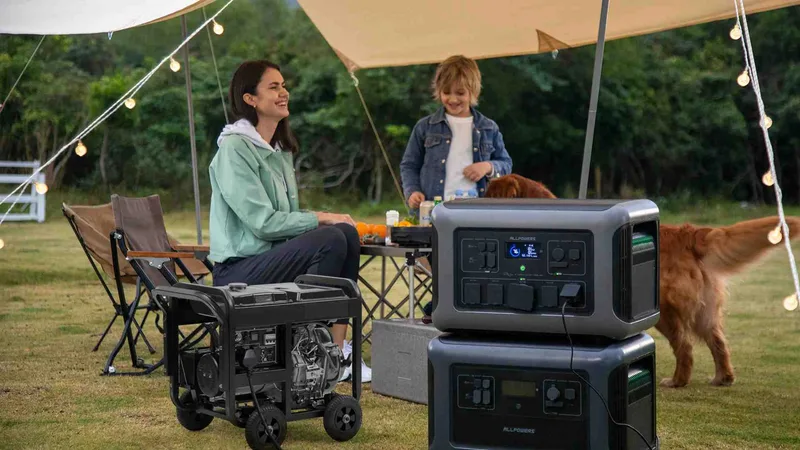
Price: $1,899–$2,199 | Battery: LiFePO4 | Surge: 6,000W peak
If you're the kind of RVer who asks "can I run the air conditioner and the microwave at the same time?" — the ALLPOWERS R3500 is your answer. At 3,200W continuous output with a 6,000W surge rating, this unit handles the heaviest appliances you'll find in any RV. Rooftop AC unit? Yes. Microwave? Yes. Both at the same time while the fridge runs in the background? Yes — with headroom to spare.
The 3,168Wh capacity is the largest on this list, and it translates directly to longer runtime between charges. Running a 12V fridge (50W), LED lights (30W), a water pump (intermittent), and charging devices, you'll draw roughly 100–150W average. That's 20–30 hours of runtime on a single charge. Add a few hours of microwave or AC use per day, and you still get 12–16 hours comfortably. For a two-night boondocking trip, that's one charge with plenty of margin.
The value proposition is where the R3500 really stands out. At $1,899–$2,199, you're getting 3,168Wh of LiFePO4 capacity and 3,200W of output. To get comparable specs from EcoFlow, you'd need a Delta Pro at $2,899+, or a Delta 2 Max with expansion batteries pushing past $2,500. ALLPOWERS delivers roughly 50% more capacity than the Delta 2 Max for only 25–30% more money.
The trade-off is polish. ALLPOWERS' app is functional but less refined than EcoFlow's or BLUETTI's. The industrial design is practical but not sleek. Customer support and warranty service, while improving, don't match the responsiveness of the bigger brands. And at 75 pounds, this is not a unit you casually move around — it lives in a dedicated spot in your rig and stays there.
Who it's for: Full-size RV owners (Class A and C motorhomes, fifth wheels) who want to run rooftop AC during boondocking. RVers who cook with a microwave, use an electric kettle, or run power tools for maintenance. Value-focused buyers who want maximum Wh-per-dollar.
Check Price at ALLPOWERS Buy on Amazon
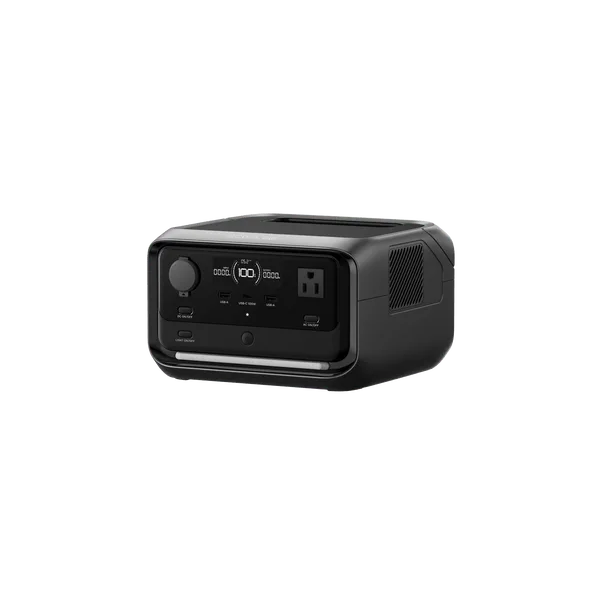
Price: $249–$349 | Battery: LiFePO4 | Fast Charge: 0–80% in 50 min AC
Not every van build needs (or has space for) a 50-pound power station. The EcoFlow River 3 Plus is for the minimalist van lifer — someone who converted a Sprinter or Transit on a budget, runs a simple 12V fridge off the vehicle battery, and just needs a reliable way to charge phones, power a laptop for remote work, run LED strip lights, and maybe keep a small portable fan going overnight.
At 286Wh, the River 3 Plus isn't running a microwave or a rooftop AC. That's not the point. The point is that it handles the daily essentials of van life — phone charging, laptop power, lighting, and a Bluetooth speaker — in a package that weighs 15.4 pounds and tucks under a bench seat or in a cabinet without stealing precious living space.
The LiFePO4 battery is a major advantage at this price point. At $249–$349, most competitors use Li-NMC batteries with 500–800 cycle lifespans. The River 3 Plus gives you 3,000+ cycles of LFP longevity, meaning this unit will last years of daily van life use. At one cycle per day, that's over 8 years before you hit 80% capacity. At weekend use only, it essentially lasts forever.
EcoFlow's fast AC charging works here too: 0 to 80% in about 50 minutes. Stop at a friend's house, a library, or a co-working space, plug in for less than an hour, and you're set for the next couple of days. Pair it with a small 60–100W portable panel, and the River 3 Plus becomes fully self-sustaining for basic van life power needs.
Who it's for: Solo van lifers, minimalist builds, motorcycle/overlanding travelers, and anyone who just needs phone/laptop/lights power. Also an excellent secondary unit — run a Delta 2 Max as your main power and keep a River 3 Plus in the cab for personal device charging and as a backup.
Check Price at EcoFlow Buy on Amazon
Before you buy anything, figure out how much power you actually use in a day of boondocking. Most RVers overestimate or underestimate wildly. Here's how the math works, with real numbers for common RV appliances.
| Appliance | Watts | Hours/Day | Daily Wh |
|---|---|---|---|
| 12V compressor fridge | 50W avg | 24 | 1,200Wh |
| LED lights (4–6 fixtures) | 30W total | 5 | 150Wh |
| Water pump (intermittent) | 60W | 0.5 | 30Wh |
| Laptop | 60W | 4 | 240Wh |
| Phone charging (2 phones) | 20W | 3 | 60Wh |
| 12V fan | 15W | 8 | 120Wh |
| TV / streaming device | 40W | 3 | 120Wh |
| Subtotal | 1,920Wh | ||
| + 20% buffer (inverter loss) | ~2,300Wh | ||
A typical RVer running all of the above needs roughly 2,000–2,300Wh per day. That puts the EcoFlow Delta 2 Max (2,048Wh) and BLUETTI AC200L (2,048Wh) right in the sweet spot for one-day boondocking without solar recharge. With 200–400W of solar panels adding 800–1,600Wh back during the day, these units sustain multi-day boondocking comfortably.
If you skip the TV and limit laptop use, you can cut daily consumption to 1,400–1,600Wh — within range of the Jackery 1000 Pro with supplemental solar.
If you add a rooftop AC unit (800–1,500W) for even a few hours, daily consumption jumps to 4,000–6,000Wh. That's ALLPOWERS R3500 territory, and even then you'll need aggressive solar recharging to sustain more than one night.
RV use puts demands on a solar generator that home backup and casual camping don't. Here's what to prioritize when shopping for your setup.
Every pound in an RV matters. Motorhomes have gross vehicle weight ratings (GVWR) that limit how much you can carry. Travel trailers have tongue weight and payload limits. Van builds are even more constrained — a Ram ProMaster 1500 has roughly 3,000 lbs of payload capacity, and a 75-pound power station eats a meaningful chunk of that.
The Wh-per-pound ratio tells you how efficiently each unit converts weight into energy:
For most RVers, the Delta 2 Max hits the sweet spot: enough capacity for a full day of moderate use, light enough to reposition if needed, and expandable for when you need more.
RV roofs are prime real estate for solar panels. Unlike portable panels that you set up and angle at camp, roof-mounted rigid panels charge passively — while you drive, while you sleep, while you're inside making lunch. For serious boondocking, roof solar is the single best upgrade you can make.
200W rigid panels bolt to the RV roof via Z-brackets or mounting rails. They're always working, require zero setup, and handle highway wind loads. Two 200W panels (400W total) is the sweet spot for most rigs — enough to replenish 1,600–2,000Wh per day. Make sure your generator's solar input can handle the wattage.
100–200W folding panels travel inside the rig and deploy at camp. The advantage: you can angle them directly at the sun and move them throughout the day, getting 20–30% more output than flat roof panels. The downside: setup effort, theft risk, and no charging while driving. Best as a supplement to roof panels.
Every unit on this list charges from a 12V vehicle outlet. At 100–150W typical draw from a cigarette lighter circuit, a 5-hour drive adds roughly 500–750Wh. Some RVers install a dedicated higher-amperage 12V charging circuit from the alternator for 300–500W, cutting charge time significantly.
Pure sine wave output matters for RV use. All five picks on this list produce clean pure sine wave AC power, safe for sensitive electronics, CPAP machines, and laptop chargers. Cheaper generators with modified sine wave output can damage sensitive devices over time and produce audible buzzing in fans and chargers.
For most RVers, 1,000–2,000Wh handles a typical day of boondocking: running a 12V fridge (40–60W continuous), charging phones and laptops, powering LED lights, and running a water pump intermittently. Full-timers who run a microwave, coffee maker, or rooftop AC will need 3,000Wh+ and should look at the ALLPOWERS R3500 or a dual-unit setup. The rule of thumb: calculate your daily watt-hour draw, add a 20% buffer for inverter losses, and make sure your solar panels can replenish at least 80% of that during daylight hours. Our calculator can run these numbers for your specific rig.
Yes, and this is one of the biggest advantages of a portable solar generator for RV use. Every unit on this list supports 12V car/vehicle charging. Most Class C and B motorhomes have a cigarette lighter or auxiliary 12V outlet that provides 100–150W of charging power. At that rate, a 2,000Wh unit gains about 500–700Wh during a 5-hour drive — not a full charge, but a meaningful supplement. Some RVers install a dedicated high-amperage 12V circuit from the alternator to charge faster. If you have roof-mounted solar panels, those work while driving too, giving you two passive charging sources simultaneously.
Portable solar generators use standard household 120V/15A or 20A outlets, not the TT-30 (30A RV plug) or 14-50 (50A RV plug) connectors used at campgrounds. You cannot plug your RV's shore power cord directly into a portable solar generator. Instead, you run individual appliances from the generator's AC outlets using standard plugs, or wire them into specific circuits. Some RVers install a manual transfer switch to feed the generator's output into their RV's 120V distribution panel, but this requires professional installation. For most boondockers, running appliances directly from the generator's outlets is the simplest and safest approach.
For RV use, aim for panels that can replenish 50–80% of your daily usage during 4–5 hours of peak sun. A 200W panel produces roughly 800–1,000Wh per day in good conditions. For a 2,000Wh generator, 200–400W of panels (one or two panels) is the sweet spot. Rigid panels mounted to the RV roof are ideal for drive-and-charge convenience, while portable folding panels let you angle toward the sun at camp. The EcoFlow Delta 2 Max accepts up to 500W of solar input, and the BLUETTI AC200L handles up to 1,200W — meaning you can wire multiple panels for faster recharging. Start with one 200W panel and add more if you find yourself running low during extended boondocking trips. For detailed sizing math, try our solar calculator.
Every RVer who buys a solar generator ends up ordering these accessories within the first trip. Get them now and skip the campground Wi-Fi Amazon order.
Run your portable panels 20–50 feet from the rig to catch full sun while you park in the shade. UV-rated and weatherproof.
Shop Solar CablesThe universal solar connector standard. A spare kit means you can extend, repair, or reconfigure your panel wiring at any campsite.
Shop MC4 KitsMount rigid panels flat to your RV roof. Z-brackets are the standard — low profile, secure, and compatible with most roof-mount setups.
Shop Mounting BracketsTurn one AC outlet into 6–8 protected outlets inside the rig. Essential for charging everything at the same time while boondocking.
Shop Power StripsOnce you're parked, an electric tricycle lets you run to the store, explore trails, or cruise the campground — all powered by the same solar setup charging your generator. No gas, no noise, folds into your RV storage bay.
Browse Mooncool Electric TrikesUse our free tools to match the right solar generator to your rig — no guesswork, no pressure.
Calculate Your Power Needs Take the 2-Min Quiz Or compare all models side by side →