No hookups? No problem. These 4 solar generators keep your RV powered off-grid — quietly, cleanly, and without a gas can in sight.
Quick Answer: The best solar generator for RV use in 2026 is the EcoFlow Delta 2 Max — it delivers 2,400W output with 2,048Wh LiFePO4 battery, charges to 80% in 43 minutes, and accepts 500W of solar input for boondocking. For full-timers running AC and heavy appliances, the BLUETTI AC200L (2,400W, 2,048Wh) handles up to 1,200W of solar input. All picks support 12V vehicle charging so you recharge while driving between campsites.
If you boondock, dry camp, or just hate paying $50/night for a hookup site, a solar generator changes the math entirely. No more running a loud gas generator at 6 AM while your neighbors glare at you through their curtains. No more hauling gas cans. No campground restrictions on generator hours.
A solar generator gives you silent, fume-free power that recharges from the sun. Park it, plug it into your RV's shore power inlet, and everything inside works — fridge, lights, outlets, fans, even the AC if you size it right. And unlike a gas generator, the fuel cost is $0, permanently.
The catch? You need the right unit. RV use demands more capacity, more output, and faster solar charging than weekend camping. Here's what to look for, and the 4 units that deliver.
Not every power station is built for RV use. Here's what separates an RV-ready unit from a camping gadget:
| Rank | Generator | Capacity | Output | Solar Input | 30A RV | Weight | Price |
|---|---|---|---|---|---|---|---|
| #1 | BLUETTI AC300 + B300 | 3,072Wh | 3,000W | 2,400W | w/ adapter | ~137 lbs | ~$2,799 |
| #2 | ALLPOWERS R3500 | 3,168Wh | 3,200W | 2,000W | Built-in | 93 lbs | ~$1,424 |
| #3 | EcoFlow Delta Pro | 3,600Wh | 3,600W | 1,600W | w/ adapter | 99 lbs | ~$2,299 |
| #4 | BLUETTI AC200L | 2,048Wh | 2,400W | 1,200W | w/ adapter | 62 lbs | ~$1,199 |
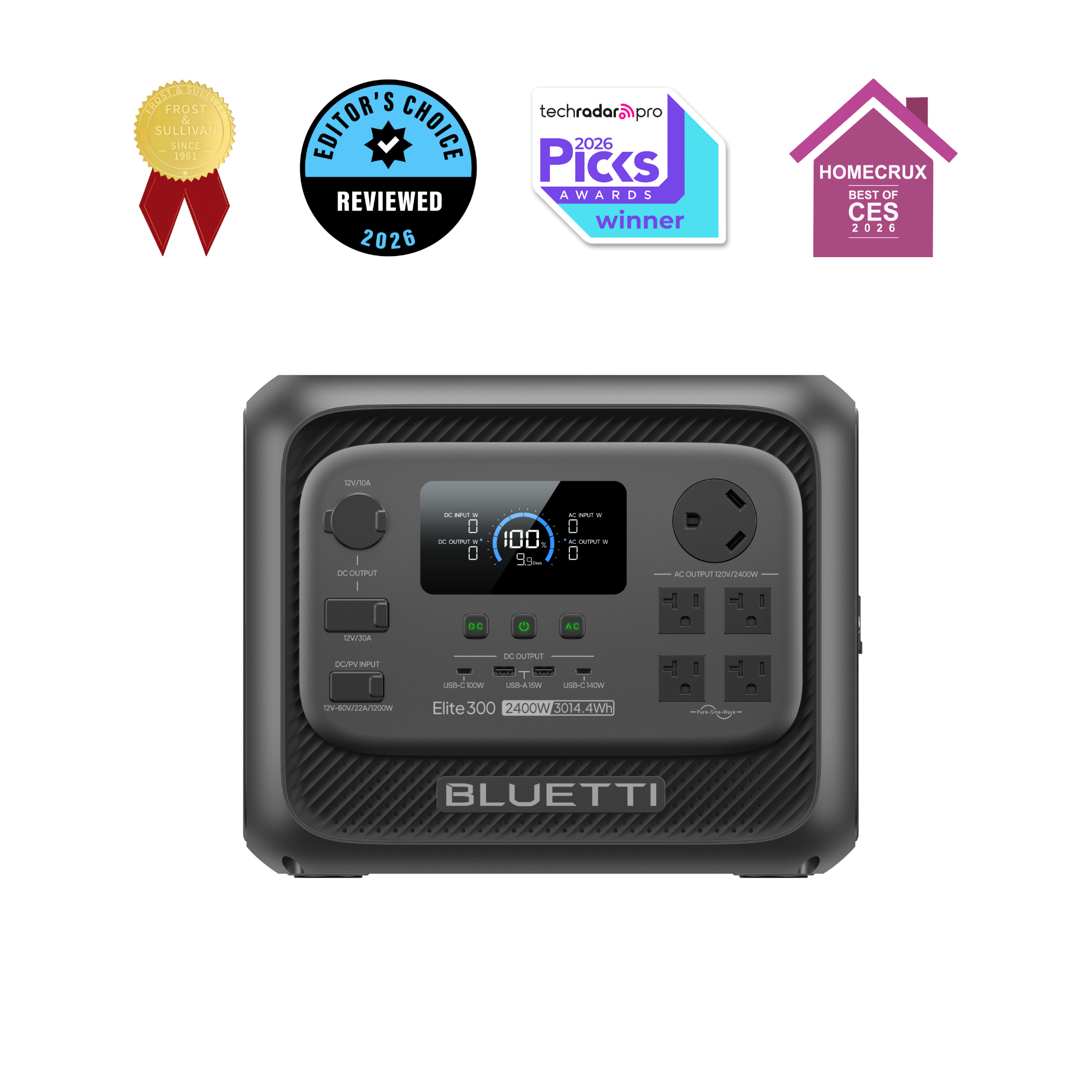
The modular powerhouse for serious RV setups
The AC300 is a pure inverter that pairs with B300 battery modules. Start with one B300 (3,072Wh) and scale to 12,288Wh with four. For full-time RVers who boondock for weeks at a time, nothing else gives you this kind of expandability.
The 2,400W solar input ceiling is the highest on this list. With a 2,000W panel array and good sun, you'll fully recharge in under 2 hours. Even with 800W of roof-mounted panels, you're looking at a full recharge during a single day of sunshine.
Built-in 30A RV outlet, best price-per-Wh
The R3500 is the only unit on this list with a built-in 30A RV outlet. No adapters, no splitters — plug it directly into your RV's shore power inlet and everything inside works immediately. For the price-conscious RV owner, this is the one to beat.
At $1,424, you're getting 3,168Wh of LiFePO4 capacity for roughly half the price of the BLUETTI AC300 system. The 2,000W solar input means a 4-panel rooftop array can fully recharge it during a single day. Expandable to 6,336Wh with one B3000 battery.

Highest output and capacity in a single unit
The Delta Pro packs the most raw capacity (3,600Wh) and output (3,600W) into a single unit. It handles RV AC startup surges without blinking and has enough capacity for a full day of moderate use on a single charge.
EcoFlow's optional Smart Home Panel lets you hardwire it into your RV's electrical system for seamless integration. The tradeoff is a lower solar input ceiling (1,600W vs 2,000-2,400W on competitors), which means slower solar recharges.
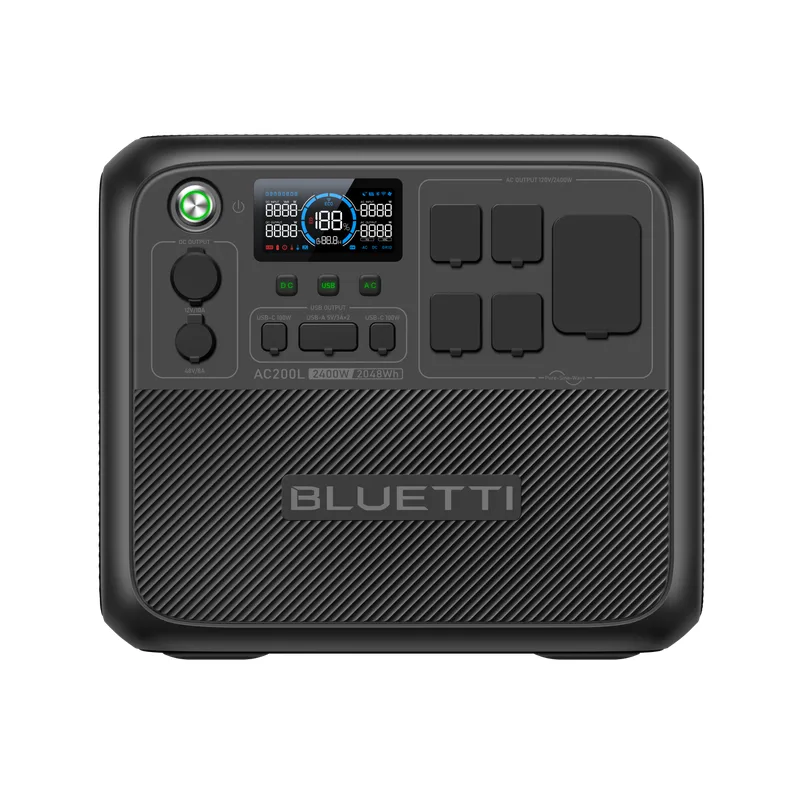
Expandable mid-range for weekend boondockers
If you boondock for weekends rather than weeks, the AC200L delivers solid RV performance without the price tag of the 3,000Wh units. 2,048Wh keeps your fridge, lights, fans, and devices running for a full day. And at 62 lbs, it's the most portable option here.
The expandability is key: add up to three B300 batteries (8,192Wh total) as your needs grow. Start with the base unit for $1,199 and scale when you're ready.
Here's the counterintuitive truth about RV solar: your panel array matters more than your battery size for extended boondocking.
A 3,000Wh battery with 200W of panels will take 15+ hours to recharge — you'll never catch up. But a 3,000Wh battery with 800W of panels recharges in 4-5 hours of good sun, giving you a full cycle every day.
The math is simple:
This is why the solar input ceiling matters so much. The BLUETTI AC300 (2,400W) and ALLPOWERS R3500 (2,000W) can actually use a large panel array. Units capped at 1,000W waste half a 2,000W array.
Yes, but you need at least 2,400W continuous output and 3,000Wh+ capacity. A 13,500 BTU rooftop AC draws 1,200-1,500W running with a 2,800-3,500W startup surge. The BLUETTI AC300, ALLPOWERS R3500, and EcoFlow Delta Pro all handle this. Expect 2-3 hours of runtime on a single charge. Pair with 400W+ of solar panels to extend runtime through the day.
For serious boondocking, aim for 400-800W of solar panels. A 400W array paired with a 3,000Wh battery replenishes about 2,000Wh per day in good sun (5-6 peak sun hours). That covers fridge, lights, fans, and devices. For heavy AC use, go 800W+. The ALLPOWERS R3500 (2,000W max solar input) can use a massive panel array; most competitors cap at 1,200W.
Not required, but it simplifies everything. A 30A outlet lets you plug directly into your RV's shore power inlet — powering all circuits at once. Without it, you need an adapter and may be limited to running individual appliances. The ALLPOWERS R3500 is the only unit on this list with a built-in 30A RV outlet.
With a 3,000Wh battery and moderate use (fridge, lights, fans, devices — no AC), you can run 2-3 days on a single charge. Add 400W of solar panels and you can boondock indefinitely with 4-5 hours of daily sun. Running the AC cuts runtime to 2-3 hours per charge — that's the biggest draw by far.