From the ultra-fast-charging C1000 to the whole-home E10 battery system, we ranked Anker's entire SOLIX lineup by real-world value, output, and use case — so you don't have to guess which one fits your life.
Quick Answer: The best Anker SOLIX solar generator depends on your use case. For camping and emergency kits, the C1000 ($899) charges to 80% in 43 minutes and runs a full-size fridge. For extended outages and RV use, the F2600 ($1,399) offers 2,560Wh of expandable capacity. For whole-house backup, the F3000 ($2,099) delivers 3,072Wh and 3,600W output. For a permanent home battery that replaces your gas generator, the E10 (from $3,999) scales to 90kWh with seamless grid switchover. All models use LiFePO4 chemistry. First-time buyers can use code USAFF5 for an extra 5% off.
Anker is better known for phone chargers and cables, but their SOLIX division has quietly built one of the most competitive solar generator lineups on the market. The range spans from a $899 portable unit to a whole-home battery system that competes directly with the Tesla Powerwall — and every model uses LiFePO4 chemistry with fast-charging speeds that embarrass most of the competition.
We ranked these four models on five factors:
Short on time? Here's every current Anker SOLIX model side by side. Jump to any section below for the full breakdown.
| Rank | Model | Capacity | Output | Solar Input | Weight | Price |
|---|---|---|---|---|---|---|
| #1 Top Pick | C1000 | 1,056Wh | 1,800W (2,400W surge) | 600W | 27.8 lbs | ~$899 |
| #2 | F3000 | 3,072Wh | 3,600W (6,000W surge) | 2,400W | 66.1 lbs | ~$2,099 |
| #3 | F2600 | 2,560Wh | 2,400W (3,600W surge) | 1,200W | 53.6 lbs | ~$1,399 |
| #4 Premium | E10 | 6–90 kWh | Whole-Home | Solar Panel Compatible | Installed | From $3,999 |
All portable models run LiFePO4 (lithium iron phosphate) cells rated for 3,000+ charge cycles. The E10 is rated for 6,000+ cycles. If you're not sure how to translate capacity into runtime, our sizing guide walks through the math.
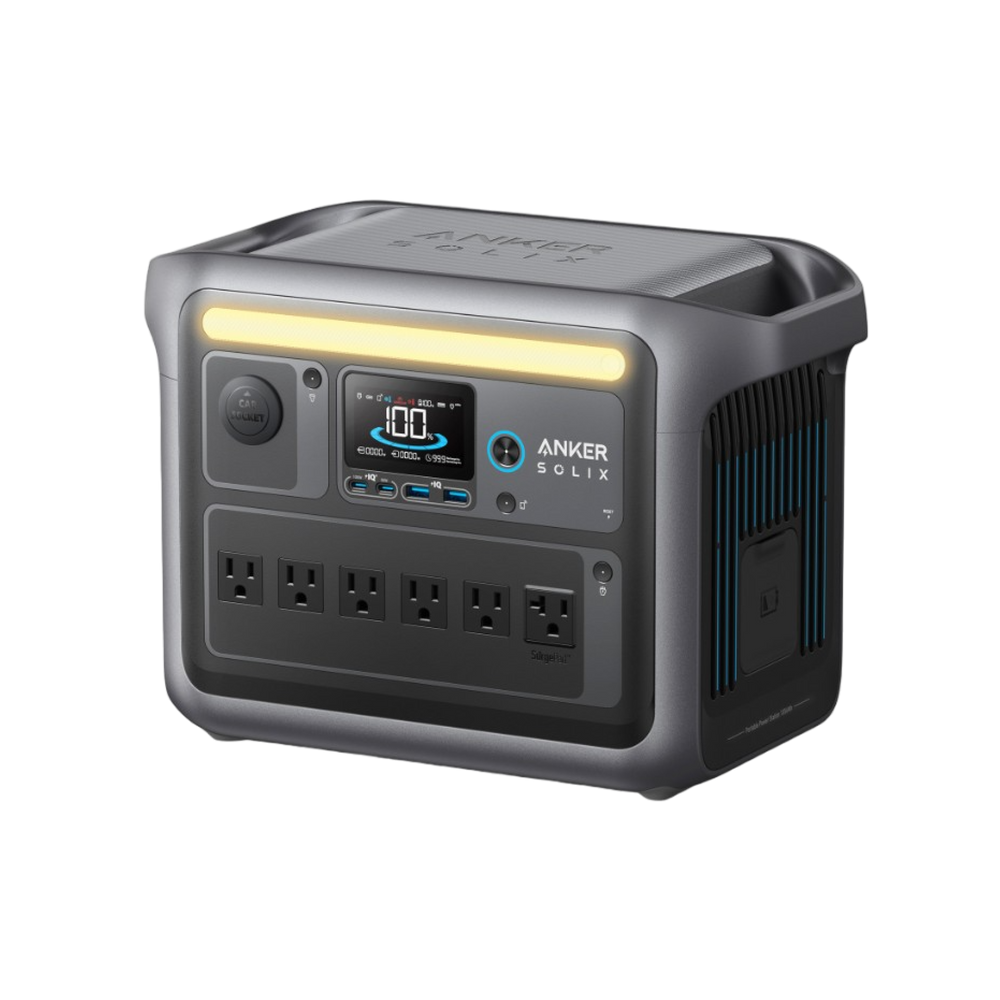
Price: ~$899 • 0–80% Charge: 43 minutes
The C1000 is our top pick because it does something almost no other power station in its price range can: charge from empty to 80% in 43 minutes. That's not a theoretical number — it's Anker's HyperFlash technology delivering 1,300W of AC charging speed in a 27.8 lb package. When a storm warning drops and you have an hour to prep, that speed matters.
At 1,056Wh and 1,800W continuous output, the C1000 comfortably runs a full-size refrigerator for 8–10 hours, a CPAP machine all night, or a laptop and router setup for 24+ hours. It accepts up to 600W of solar input, so a pair of 200W panels can top it off in about 3.5 hours of direct sun.
For a camping trip, emergency kit, or apartment-dweller's backup plan, the C1000 hits a sweet spot that most competitors miss: it's light enough to carry, fast enough to charge on short notice, and powerful enough to actually run a fridge.
Check Price at Anker SOLIX Check Amazon Price
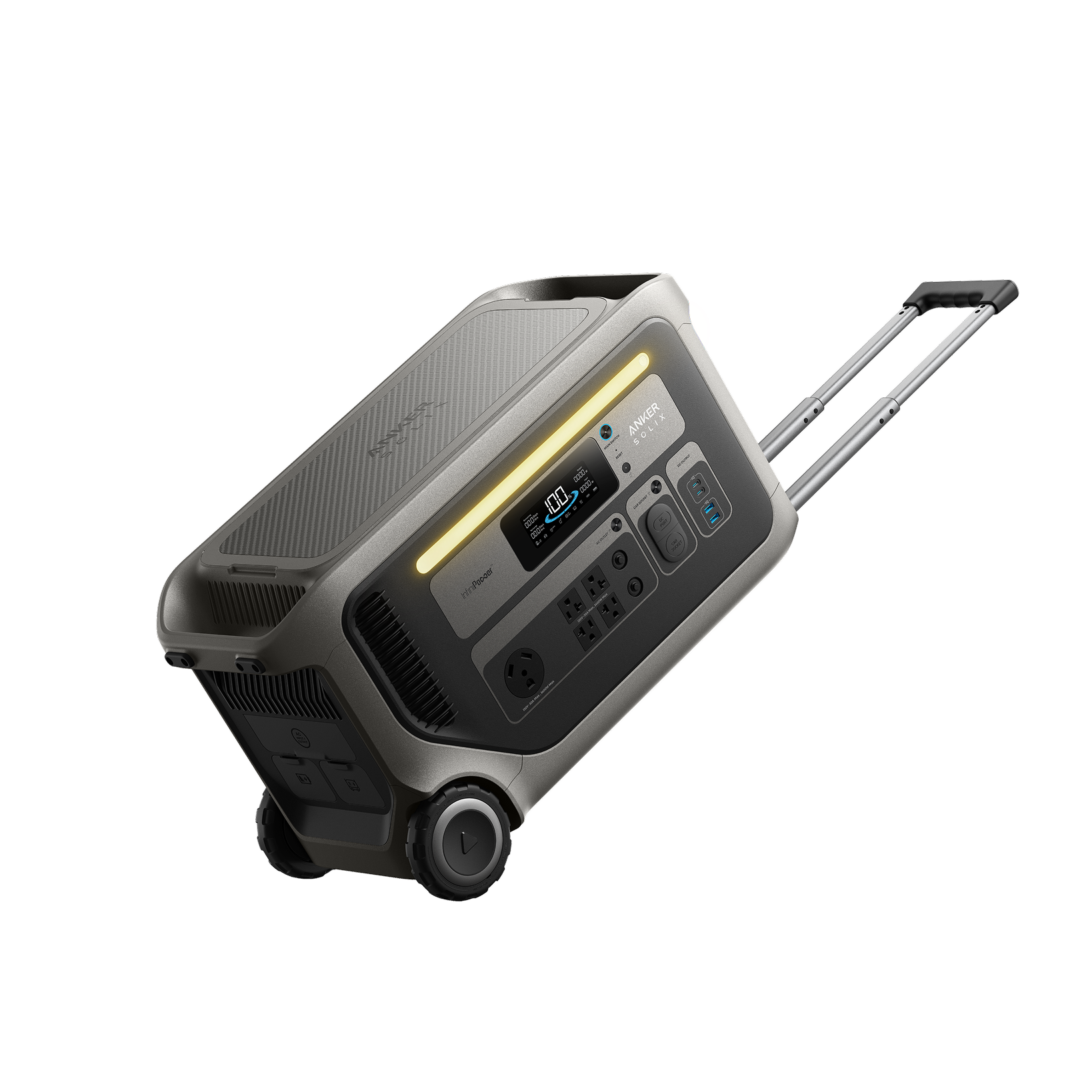
Price: ~$2,099 • Surge: 6,000W
When you need to run a refrigerator, a window AC unit, and your router all at the same time, the F3000 is the unit that actually does it without tripping. 3,072Wh of LiFePO4 capacity and 3,600W of continuous output (6,000W surge) put it in direct competition with the EcoFlow DELTA Pro — and it wins on solar input with 2,400W versus EcoFlow's 1,600W.
For a homeowner in hurricane country or anyone who needs multi-day outage coverage, the F3000 can run your essential circuits for 24–48 hours depending on load, and recharge from solar in just over an hour with a high-wattage panel array. It's not portable in the way the C1000 is — at 66.1 lbs, it's meant to live in the garage or basement — but it packs genuine home-backup capability into a single unit.
Check Price at Anker SOLIX Check Amazon Price
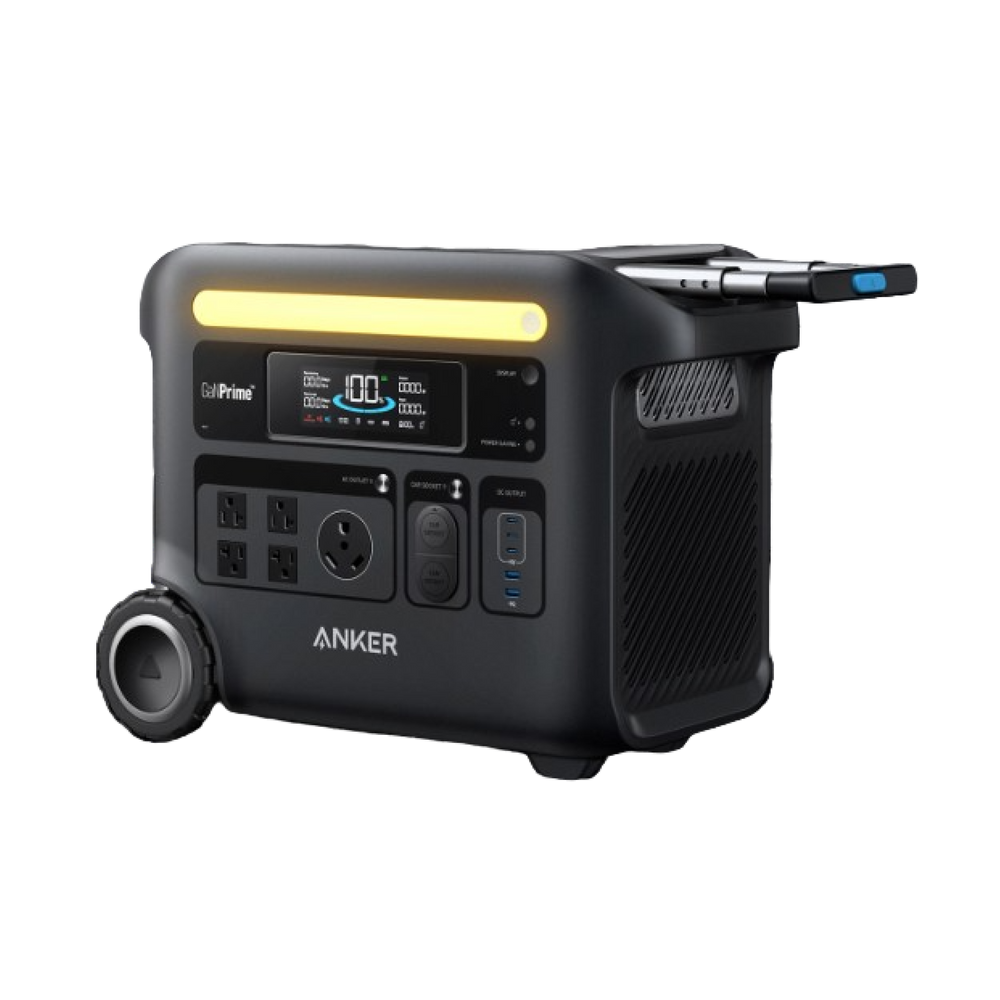
Price: ~$1,399 • Expandable: Yes
The F2600 fills the gap between the compact C1000 and the powerhouse F3000. At 2,560Wh and 2,400W continuous output, it runs most of what the F3000 does — just not as many heavy appliances simultaneously. Where it earns its spot is on value: you get roughly 2.5x the capacity of the C1000 for about 1.6x the price, and it's expandable with add-on batteries.
For extended RV trips, weekend cabins, or homeowners who want more than emergency-level backup without spending $2,000+, the F2600 is the sensible pick. The 1,200W solar input means a 400W panel array recharges it in about 4 hours of good sun — practical for off-grid use.
Check Price at Anker SOLIX Check Amazon Price
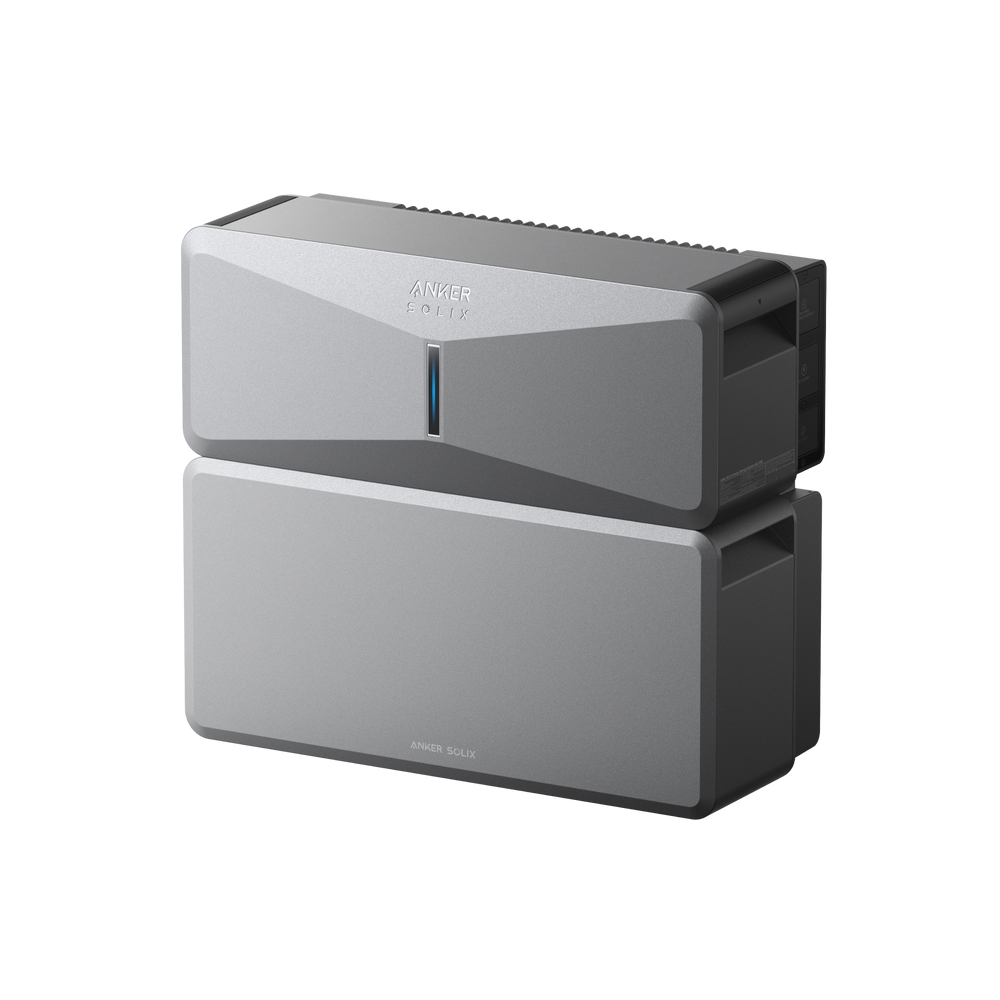
The E10 is a different category entirely. This isn't a portable power station — it's a permanent whole-home battery system that competes directly with the Tesla Powerwall and Enphase IQ. Starting at 6kWh and expandable to a staggering 90kWh, the E10 connects directly to your home's electrical panel and provides seamless grid switchover. When the power goes out, your lights don't even flicker.
At $3,999 for the base system, the E10 undercuts the Tesla Powerwall on price while offering more flexible scaling. It integrates with rooftop solar panels for true energy independence, and the 6,000+ cycle LiFePO4 battery means a 15–20 year lifespan with daily cycling. For homeowners in hurricane zones, wildfire areas, or anywhere with unreliable grid power, the E10 is the "set it and forget it" solution.
This ranks #4 not because it's worse — it's arguably the most capable product on this list — but because the $3,999+ price and professional installation requirement put it in a different buying decision than portable power stations. If you're comparing it to a gas generator or a Tesla Powerwall, it wins. If you're comparing it to a C1000 for camping, they're different tools for different jobs.
Check Price at Anker SOLIX Check Amazon Price
| Spec | C1000 | F2600 | F3000 | E10 |
|---|---|---|---|---|
| Battery | 1,056Wh LiFePO4 | 2,560Wh LiFePO4 | 3,072Wh LiFePO4 | 6–90 kWh LiFePO4 |
| AC Output | 1,800W | 2,400W | 3,600W | Whole-Home |
| Surge | 2,400W | 3,600W | 6,000W | — |
| Solar Input | 600W | 1,200W | 2,400W | Panel Compatible |
| AC Charge Speed | 43 min (0–80%) | ~75 min (0–80%) | ~80 min (0–80%) | — |
| Cycle Life | 3,000+ | 3,000+ | 3,000+ | 6,000+ |
| Weight | 27.8 lbs | 53.6 lbs | 66.1 lbs | Installed |
| Expandable | No | Yes | No | Up to 90 kWh |
| Price | ~$899 | ~$1,399 | ~$2,099 | From $3,999 |
Free Download
Get our free Solar Generator Buyer's Guide — 47 pages, real specs, no fluff. We'll send it straight to your inbox.
No spam. Unsubscribe anytime.
It depends on your use case. For camping, tailgating, and emergency kits, the C1000 ($899) is the best entry point with 1,056Wh and an 80% charge in just 43 minutes. For extended power outages and RV trips, the F2600 ($1,399) offers 2,560Wh of expandable capacity. For serious home backup and running heavy appliances, the F3000 ($2,099) delivers 3,072Wh and 3,600W output. For a permanent whole-home battery system, the E10 (from $3,999) scales to 90kWh with seamless grid switchover. Take our 2-minute quiz for a personalized recommendation.
The Anker SOLIX C1000 charges from 0 to 80% in just 43 minutes via AC wall outlet, making it one of the fastest-charging portable power stations in its class. Full 100% charge takes about 58 minutes. It also accepts up to 600W of solar input for off-grid recharging.
The Anker SOLIX E10 is a whole-home battery backup system, not a portable power station. It installs in your garage or utility room and connects directly to your home's electrical panel. Starting at 6kWh and expandable to 90kWh, it provides seamless grid switchover — your lights don't even flicker when the power goes out. Unlike portable units, the E10 is a permanent installation that can also integrate with rooftop solar panels for energy independence.
Yes. Every model in Anker's SOLIX lineup — the C1000, F2600, F3000, and E10 — uses LiFePO4 (lithium iron phosphate) battery chemistry. The portable models are rated for 3,000+ charge cycles to 80% capacity, while the E10 home battery is rated for 6,000+ cycles. LiFePO4 is safer, more thermally stable, and lasts significantly longer than the NMC lithium-ion cells found in older or cheaper power stations.
Yes. First-time buyers can use code USAFF5 at checkout on ankersolix.com for an extra 5% off their first order. This stacks with existing sale pricing. Anker also runs seasonal sales — check our Hurricane Season Sale page for the latest deals.
Take our 2-minute quiz for a personalized pick, or compare every solar generator brand side by side.
Take the 2-Min Quiz Or compare all models side by side →47 pages. Plain English. No fluff. Covers every major brand, real-world runtime tests, and our top picks for every budget.
No spam. Unsubscribe anytime. We hate junk mail as much as you do.