Grid failures during hurricanes are inevitable. We compared capacity, output, recharge speed, and storm-readiness to find the solar generators that keep your family safe when the power goes out.
Quick Answer: The best solar generator for hurricane season 2026 is the BLUETTI AC300 + B300 (3,072Wh, expandable to 12,288Wh) for whole-home storm coverage. For faster setup at a lower price, the ALLPOWERS R3500 (3,168Wh, $1,899) is the best value pick. All five generators on this list run safely indoors, recharge from solar panels after the storm passes, and require zero fuel — solving the three biggest problems with gas generators during hurricanes.
Hurricane season 2026 runs from June 1 through November 30, and NOAA is forecasting above-average activity for the Atlantic basin this year. That means more named storms, more landfalls, and more power outages — potentially lasting days or even weeks for hard-hit areas.
Here is the reality most people learn too late: the grid is the first thing to fail during a hurricane. High winds snap power lines. Flooding takes out substations. Fallen trees tear transformers off poles. In 2024, Hurricane Helene left over 6 million customers without electricity across the Southeast. Hurricane Milton knocked out power to 3.4 million in Florida just two weeks later. Some areas waited 10–14 days for restoration. In 2025, Hurricane Rafael caused multi-day blackouts across the Gulf Coast.
If you wait until a storm is announced to buy a generator, you are already too late. Units sell out within 48 hours of a hurricane watch being issued. Prices spike. Shipping delays push delivery past the storm window. The time to prepare is before hurricane season peaks — which means right now.
A solar generator for hurricane preparedness solves the three biggest problems with traditional gas generators: it runs safely indoors (zero emissions), it recharges from free sunlight after the storm passes, and it requires zero fuel during the exact situation when gas stations are closed or out of fuel. You charge it from a wall outlet before the storm, ride out the outage on battery power, then deploy solar panels to recharge once skies clear.
We evaluated the current crop of high-capacity power stations specifically for hurricane and storm scenarios — looking at battery capacity for overnight coverage, output wattage for running fridges and medical devices, solar recharge speed for multi-day outages, and overall durability. These are the five we would trust to keep our own families powered through a Category 3 landfall.
Short on time? Here is the summary. Click any model to jump to the full breakdown below.
| Pick | Capacity | Output | Battery | Price | Best For |
|---|---|---|---|---|---|
| #1 Top Pick BLUETTI AC300 + B300 | 3,072Wh up to 12,288Wh |
3,000W 6,000W surge |
LiFePO4 | $2,599–$3,199 | Overall hurricane backup |
| #2 EcoFlow Delta Pro | 3,600Wh up to 25kWh |
3,600W 7,200W surge |
LiFePO4 | $2,899–$3,499 | Whole-home auto backup |
| #3 Best Value ALLPOWERS R3500 | 3,168Wh | 3,200W 6,400W surge |
LiFePO4 | $1,899–$2,199 | Best value for storm prep |
| #4 Mid-Range EcoFlow Delta 2 Max | 2,048Wh up to 6kWh |
2,400W 4,800W surge |
LiFePO4 | $1,499–$1,799 | Fast-recharge mid-range |
| #5 Nature's Generator Elite 3600 | 3,600Wh | 3,600W | LiFePO4 | $2,499–$2,999 | Wind + solar hybrid charging |
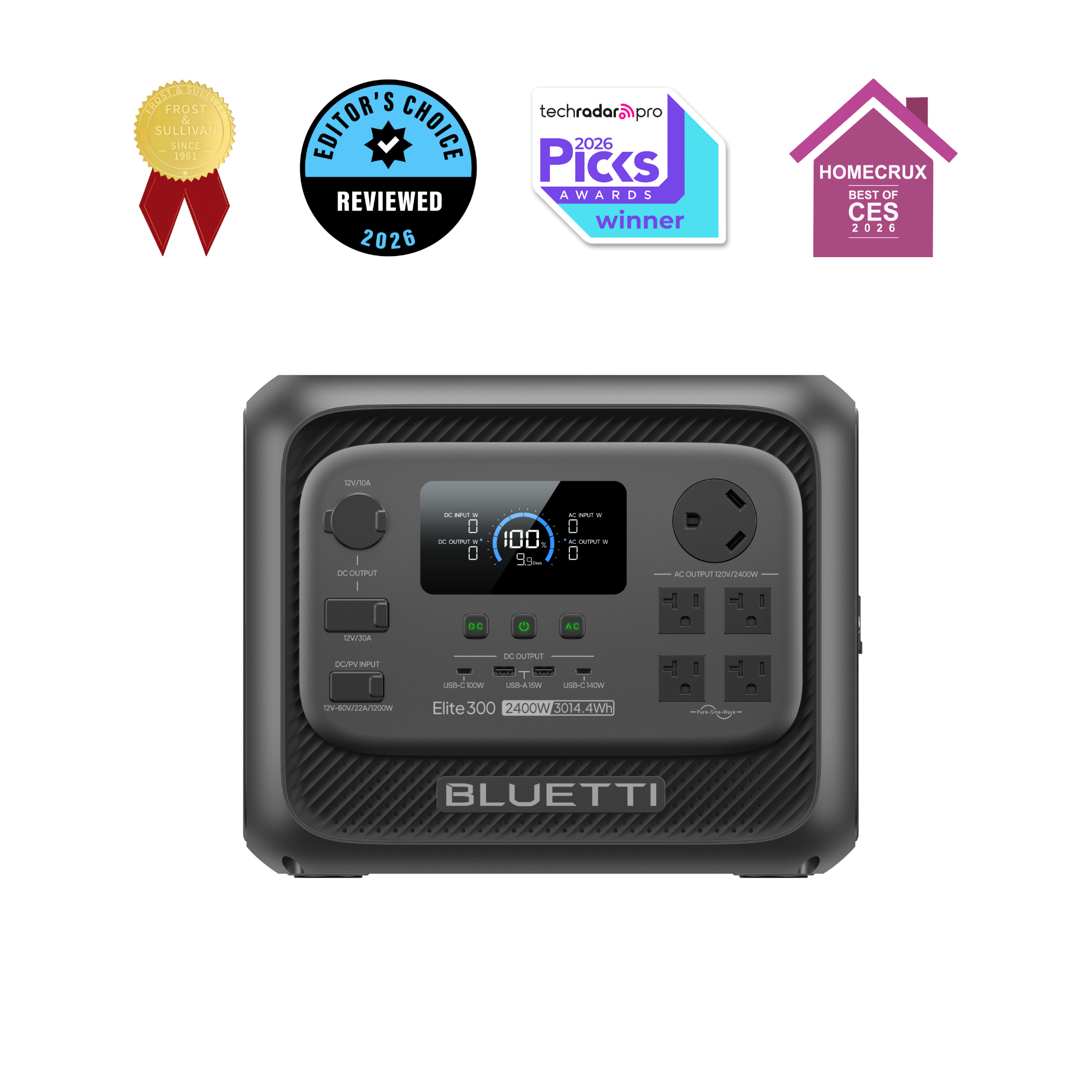
Price: ~$2,599–$3,199 (station + 1 B300 battery) | Expandable: up to 12,288Wh with 240V split-phase via Fusion Box Pro
The BLUETTI AC300 is the generator we would grab first if a Category 3 hurricane was bearing down on our house — and the reason comes down to one word: modularity.
The AC300 is a pure inverter/charger with no internal battery. It pairs with external B300 battery modules (3,072Wh each, LiFePO4). Start with one B300 for a 3,072Wh system, then add a second B300 to double your capacity to 6,144Wh. Connect a second AC300 and two more B300s through the Fusion Box Pro, and you are looking at 12,288Wh of storage with 240V split-phase output — enough to rival a small whole-home battery installation.
Why does modularity matter for hurricanes specifically? Because you can scale your system to the threat. A tropical storm that might knock power out for 6 hours? One B300 handles that easily. A major hurricane with a 3–5 day outage forecast? Add a second battery and pair it with solar panels. You buy what you need today and expand as your situation demands.
The 3,000W continuous output (6,000W surge) handles all critical hurricane loads simultaneously: a full-size refrigerator (150W), chest freezer (100W), LED lights (50W), Wi-Fi router (15W), phone chargers, a CPAP machine (30–60W), and a box fan or window AC unit. The 6,000W surge means your fridge compressor kicks on without tripping the system.
The 2,400W solar input is the fastest on this list. With 800W of solar panels (four 200W panels, around $800–$1,200), you can fully recharge the 3,072Wh base battery in roughly 1.5–2 hours of peak sun. After a hurricane passes and the sky clears, that recharge speed means you can run your essentials 24/7 indefinitely — pulling from the battery overnight and topping it off during the day. That is the difference between rationing power and living normally during a multi-day grid outage.
The LiFePO4 battery chemistry delivers 3,500+ charge cycles before dropping to 80% capacity. That translates to nearly a decade of regular use. LFP cells are also inherently more thermally stable and safer than NMC lithium-ion — important when you are operating the unit inside your home during a storm.
Check Price at BLUETTI Buy on Amazon Read Full Review

Price: ~$2,899–$3,499 | Expandable: up to 25kWh via Smart Home Panel 2
If you want your hurricane backup to feel like the power never went out, the EcoFlow Delta Pro with the Smart Home Panel 2 is the closest you will get to that experience without installing a permanent home battery system.
Here is how it works for hurricane scenarios: the Smart Home Panel 2 wires directly into your home's electrical panel. You designate which circuits to back up — fridge, kitchen lights, master bedroom, router. When the grid drops, the system switches to battery power automatically. No running extension cords through hallways in the dark. No unplugging and replugging appliances. Your fridge keeps running. Your lights stay on. Your router never reboots. You might not even realize the grid went down until you check the app.
The 3,600Wh built-in LiFePO4 battery is the largest base capacity among the top picks. Running storm essentials at ~265W, you get roughly 12–13 hours of runtime on a single charge. The system is expandable to a staggering 25kWh with extra batteries — enough for 3–4 days of essential-load coverage without any solar recharging at all.
The 3,600W continuous output with a 7,200W surge rating gives it the edge over the AC300 for running heavier loads. That 7,200W surge handles the startup draw of a full-size refrigerator, a chest freezer, and a window AC unit all kicking on within seconds of each other — a realistic scenario when the power first drops.
EcoFlow's app is the best in the industry. Real-time monitoring shows input/output wattage, battery state of charge, estimated remaining runtime for each circuit, and firmware updates. During a hurricane, having that runtime estimate visible on your phone gives you confidence to manage your power budget without guessing.
The trade-off versus the AC300 is solar input speed: the Delta Pro maxes out at 1,600W of solar input compared to the AC300's 2,400W. That means longer recharge times once the sun comes back out. For a 1–2 day outage, this does not matter. For a week-long grid-down scenario, the AC300's faster solar recharge gives it the edge.
Check Price at EcoFlow Buy on Amazon
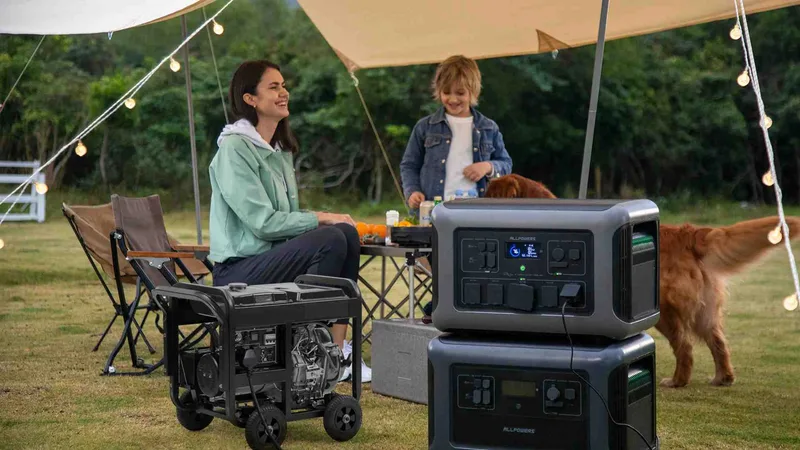
Price: ~$1,899–$2,199
Here is a question worth asking: do you actually need $3,000+ worth of solar generator to survive a hurricane? For many households, the honest answer is no. The ALLPOWERS R3500 delivers 90% of the capability at 60% of the price of the top two picks.
Look at the numbers. The R3500 packs 3,168Wh of LiFePO4 battery capacity — virtually identical to the AC300 + B300 combo's 3,072Wh. It outputs 3,200W continuous (6,400W surge) — slightly more than the AC300's 3,000W. And it does this as a single, self-contained unit for $1,899–$2,199. No separate battery purchases. No modular complexity. Plug it in, charge it up, and you are hurricane-ready.
For a standard hurricane outage scenario — keeping your fridge running, lights on, phones charged, router alive, and a fan going — the R3500 delivers 10–11 hours of runtime on a single charge. With solar panels, you extend that indefinitely. The R3500 accepts up to 2,000W of solar input, which puts it ahead of the Delta Pro's 1,600W limit.
The 3,200W output handles every essential hurricane load, including window AC units (typically 800–1,200W running). The 6,400W surge ensures the compressor startup on your fridge or AC does not trip the system. You can realistically run a fridge, a window AC in one room, LED lights, a router, and charge devices all at the same time.
Where the R3500 falls short versus the premium picks is expandability and ecosystem. This is a standalone unit — you cannot add external batteries to increase capacity. There is no smart home panel integration. The app is functional but not as polished as EcoFlow's. But if your hurricane plan is straightforward — keep essentials running, recharge from solar when the storm passes — the R3500 does everything you need for $700–$1,000 less than the competition.
Check Price at ALLPOWERS Buy on Amazon
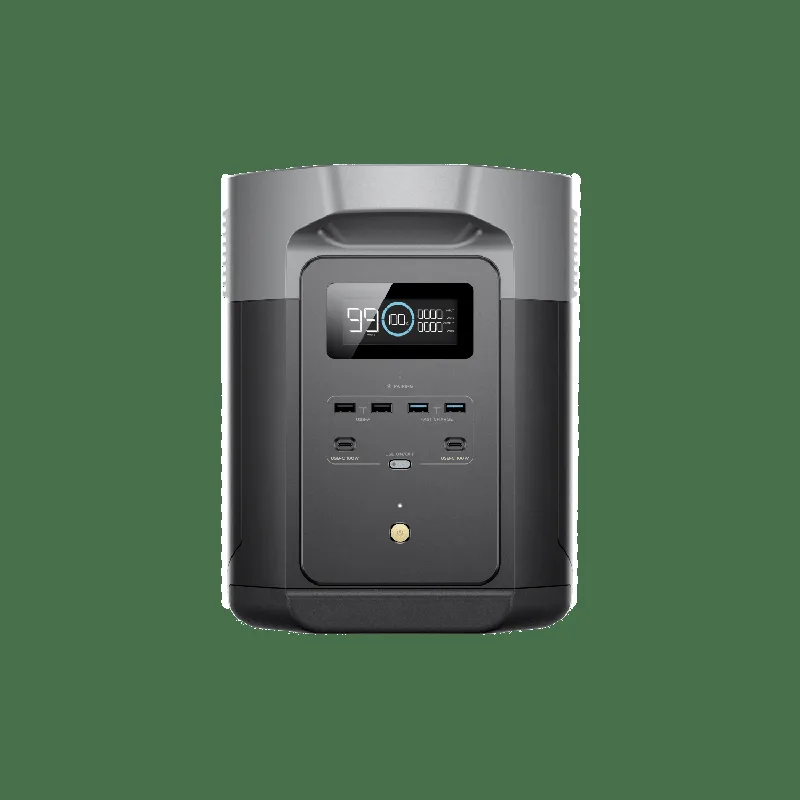
Price: ~$1,499–$1,799 | Expandable: up to 6kWh with extra batteries
The EcoFlow Delta 2 Max has a hidden superpower that makes it uniquely valuable for hurricane season: its recharge speed.
EcoFlow's X-Stream technology charges the Delta 2 Max from 0 to 80% in just 43 minutes via a standard wall outlet. From 0 to 100% takes about 75 minutes. That speed matters enormously in a hurricane scenario, and here is why.
Hurricanes do not knock power out in one clean break. The grid often flickers — going down for 30 minutes, coming back for an hour, dropping again for six hours, returning briefly, then dying for the long haul. If your generator recharges slowly, those brief windows of grid power are wasted. The Delta 2 Max can recover 80% of its capacity in under 45 minutes. Every time the power blinks back on — even briefly — you are banking stored energy for the next blackout.
The 2,048Wh base capacity is smaller than the top three picks. Running core storm essentials at ~265W, you get about 7 hours of runtime. That is enough for overnight coverage but tight for a full 12–24 hour outage on a single charge. The solution is expansion batteries: you can add up to two extra batteries to reach 6,144Wh — which stretches your runtime to 20+ hours on essentials.
The 2,400W continuous output handles all standard hurricane loads except the most demanding appliances. A fridge, LED lights, router, phones, a CPAP machine, and a fan all run simultaneously without issues. A window AC unit (800–1,200W) works too, though it will cut your runtime significantly. The 4,800W surge handles motor startups cleanly.
At 51 lbs, the Delta 2 Max is also the lightest unit on this list — important if you need to move it between floors during flooding or carry it to a neighbor's house. And EcoFlow's app gives you real-time monitoring and charge scheduling, so you can optimize your power strategy as the storm develops.
Check Price at EcoFlow Buy on Amazon
Price: ~$2,499–$2,999
Every other generator on this list recharges from two sources: wall outlets and solar panels. The Nature's Generator Elite 3600 Platinum adds a third: wind. And for hurricane preparedness, that distinction matters more than you might think.
Here is the problem with solar-only recharging after a hurricane: the storm may be over, but the skies often stay overcast for 1–3 days after a major system passes. Cloud cover, rain bands, and residual tropical moisture can cut solar panel output by 60–80%. Meanwhile, post-storm winds often remain strong — 15–30 mph gusty conditions are common for days after landfall. A wind turbine charges when your solar panels cannot.
The Elite 3600 Platinum pairs with Nature's Generator proprietary wind turbines, giving you a hybrid recharging system that works in the exact post-hurricane conditions that defeat solar-only setups. On an overcast but windy day after a hurricane, you can pull hundreds of watts from wind while your solar panels contribute whatever partial sunlight is available. That combined input can keep your battery topped off even when skies are gray.
The base specs are strong on their own. The 3,600Wh LiFePO4 battery matches the Delta Pro's capacity. The 3,600W continuous output handles all storm essentials plus a window AC unit. At ~265W of essential loads, you get roughly 12–13 hours of runtime on a single charge — competitive with the best on this list.
The trade-off is ecosystem maturity. Nature's Generator is a smaller company than BLUETTI or EcoFlow. The app experience is more basic, the accessory ecosystem is smaller, and you will find fewer user reviews and community resources. The wind turbine is also an additional purchase ($400–$800 depending on the model) and requires proper mounting. But if you live in a coastal area where post-hurricane wind is reliable and post-hurricane sun is not, this hybrid approach is a genuinely smarter strategy.
Check Price at Nature's Generator Buy on Amazon
Owning a solar generator is step one. Having it ready to perform when you need it is what actually keeps your family safe. Here is the checklist we recommend the moment a hurricane watch or warning is issued for your area.
The most common question we get before hurricane season: "What size solar generator do I need?" The answer depends on exactly what you plan to power. Here is how to calculate your requirements.
Running: 100–200W (avg ~150W). Surge: 400–600W on compressor startup. This is your #1 priority — losing a full fridge of food costs $300–$500.
Running: 30–60W total. Minimal draw but critical for safety and sanity during multi-day outages. LED bulbs use a fraction of the power of incandescents.
Running: 15–25W combined. Keeps you connected to weather updates, emergency alerts, and communication with family. Worth every watt.
Running: 10–40W total. Modern phones charge efficiently. A single charge uses roughly 15–20Wh per phone.
Running: 30–60W (without heated humidifier), up to 100W with humidifier. If anyone in your household uses a CPAP, power backup is a medical necessity, not a convenience.
Running: 500–1,200W depending on BTU rating. Surge: 1,500–2,500W. This is the biggest single draw. Powering a 5,000 BTU unit in one room keeps conditions safe during heat events.
Running: 30–75W. A low-draw alternative to AC. Three fans across the house use less power than one small AC unit.
Running: 50–100W. Surge: 200–400W. If you have stocked up on frozen food pre-storm, keeping the freezer alive prevents hundreds of dollars in waste.
Essential-only setup (fridge + lights + router + phones + fan): ~265W continuous draw. A 3,000Wh battery lasts ~10–11 hours. With 400W of solar panels providing daytime recharging, this setup runs indefinitely.
Comfort setup (essentials + window AC + CPAP): ~1,000–1,500W continuous draw. A 3,000Wh battery lasts ~2–3 hours. You will need to cycle the AC on and off, or expand your capacity to 6,000Wh+ for extended coverage. Solar panels are essential here — aim for 800W+ of panels.
Full household setup (essentials + AC + multiple rooms + chest freezer): ~1,500–2,000W continuous. This is where expandable systems like the AC300 (12,288Wh max) or Delta Pro (25kWh max) earn their premium. Budget for 1,000W+ of solar panels.
Not sure where you fall? Use our solar calculator to plug in your specific appliances and get an exact capacity recommendation, or take the 2-minute generator quiz for a guided recommendation.
Runtime depends on your battery capacity and total wattage draw. A 3,000Wh unit powering storm essentials — fridge (150W), router (15W), LED lights (30W), phone chargers (20W), and a fan (50W) — roughly 265W total — will last about 10–11 hours on a single charge. A larger 3,600Wh unit under the same load stretches to about 12–13 hours. The key to riding out a multi-day hurricane outage is solar recharging: with 400W of panels and decent sun between storm bands, you can recover 2,000–2,400Wh per day, making indefinite runtime realistic for essential loads. Our solar calculator can run these numbers for your specific setup.
Yes — this is one of the biggest advantages solar generators have over gas generators during hurricanes. Solar generators produce zero emissions, so they are completely safe to operate inside your home, garage, or storm shelter. Gas generators produce carbon monoxide and must be placed outdoors at least 20 feet from any window or door — which is extremely dangerous during a hurricane with high winds and flooding. Every year, carbon monoxide poisoning from improperly placed gas generators kills dozens of people during and after hurricanes. A solar generator eliminates that risk entirely. For a full comparison, see our guide on solar generators vs. gas generators.
Absolutely — charge it to 100% as soon as a hurricane watch or warning is issued for your area. Do not wait until the storm is imminent. Most solar generators charge from a wall outlet in 1.5–3 hours, so this is a quick task. The EcoFlow Delta 2 Max is the fastest at 0–80% in 43 minutes. Also charge any expansion batteries, portable battery banks, laptops, and rechargeable flashlights. If you have solar panels, test them in advance to confirm they are working, but do NOT deploy them outside during the storm — set them up after the storm passes for recharging. Pre-storm preparation is the single most important factor in how well a solar generator performs during a hurricane.
For a typical household running storm essentials — refrigerator, lights, router, phone chargers, and a fan — you need a minimum of 2,000Wh for overnight coverage (8–10 hours). For 24-hour coverage without recharging, aim for 3,000–3,600Wh. If you also need to power a window AC unit, CPAP machine, or medical equipment, go for 3,000Wh minimum with 3,000W+ output to handle the surge loads. For multi-day outages common after major hurricanes, an expandable system (BLUETTI AC300 or EcoFlow Delta Pro) with solar panels is ideal because you can recharge during breaks in the weather and extend your runtime indefinitely. Use our calculator to get a personalized recommendation based on your specific appliances.
Your generator handles the power. These accessories handle everything around it — connecting panels, distributing outlets, and keeping devices charged during an outage. Order them before hurricane season, not during.
After the storm passes, your panels go outside. Your generator stays inside. You need 20–50 feet of weatherproof cable to connect them safely through a window or door.
Shop Solar CablesUniversal solar panel connectors. A spare kit means you can repair or extend panel wiring on the spot — no waiting for shipping during an active outage.
Shop MC4 KitsTurn one AC outlet on your generator into 6–8 protected outlets. Plug in the fridge, router, phone chargers, and a lamp from a single extension run.
Shop Power StripsCharge 4–6 devices from a single AC outlet. Phones, tablets, laptops, battery banks — one hub handles the whole family's charging during a blackout.
Shop Charging HubsAfter a hurricane, gas stations close and roads flood. An electric tricycle lets you run essential errands, check on neighbors, and navigate debris — charged from the same solar panels recharging your generator. No fuel needed.
Browse Mooncool Electric TrikesUse our free tools to match the right solar generator to your household — before the storm hits.
Take the 2-Min Quiz Compare All Models Or calculate your exact power needs →