You don't need a $2,000 portable power station to go solar at camp. From a $25 solar shower to a 120W foldable panel, these 6 picks cover every category of solar camping gear — tested, ranked, and ready to pack.
Quick Answer: The best solar camping gear depends on your needs. For charging a portable power station, the Jackery SolarSaga 100X (~$300) delivers 100W of foldable solar power at 9.1 lbs. For ultralight backpacking, the BigBlue SolarPowa 28 (~$55) charges phones directly via USB-C at just 1 lb 5 oz. For camp lighting, the BioLite AlpenGlow 500 (~$60) is a USB-C rechargeable lantern that pairs with any solar charger. For hot showers off-grid, the Advanced Elements Solar Shower (~$25) heats 5 gallons in 3 hours of sun. For a mid-range foldable panel, the BLUETTI PV120 (~$250) gives 120W with ETFE coating. And for fuel-free cooking, the GoSun Sport Solar Oven (~$200) reaches 550°F in direct sunlight.
Camping has changed. Your phone is your GPS, your camera, your weather radar, and your emergency lifeline. Your headlamp is USB-rechargeable. Your camp fridge runs on 12V. Your satellite communicator needs daily charging. Power is no longer optional in the backcountry — it's infrastructure.
Solar camping gear solves this without adding fuel weight, fire risk, or noise. A foldable panel and a power bank replace a bag full of batteries. A solar shower replaces heating water over a stove. A solar oven eliminates propane canisters entirely. And all of it runs on the one resource every campsite has: sunlight.
This guide covers 6 categories of solar camping gear — not just panels, but everything solar-powered that makes life better in the field. Each pick is chosen for durability, pack weight, real-world performance, and value.
| Category | Product | Power | Weight | Best For | Price |
|---|---|---|---|---|---|
| Solar Panel | Jackery SolarSaga 100X | 100W | 9.1 lbs | Power station charging | ~$300 |
| USB Charger | BigBlue SolarPowa 28 | 28W | 1 lb 5 oz | Backpacking / phone charging | ~$55 |
| Lantern | BioLite AlpenGlow 500 | 500 lumens | 12.7 oz | Camp lighting | ~$60 |
| Camp Shower | Advanced Elements Solar Shower | Solar heated | 11 oz (empty) | Hot showers off-grid | ~$25 |
| Mid-Range Panel | BLUETTI PV120 | 120W | 13.2 lbs | Higher-wattage station charging | ~$250 |
| Solar Oven | GoSun Sport Solar Oven | 550°F | 7 lbs | Fuel-free cooking | ~$200 |
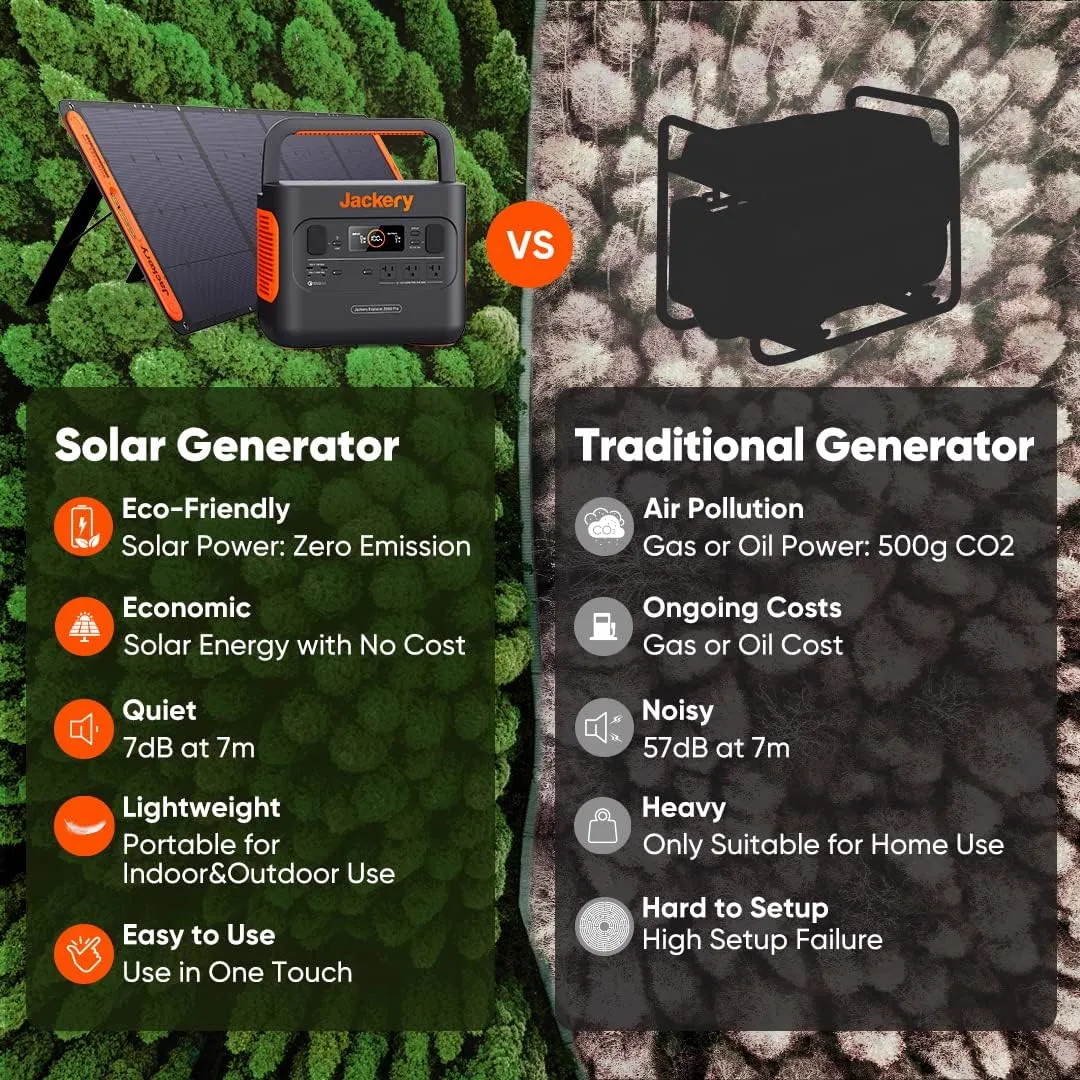
The SolarSaga 100X is the panel that set the standard for portable camping solar. At 100W and 9.1 lbs, it hits the sweet spot between power output and packability. It folds in half to roughly the size of a briefcase, has a built-in kickstand for angle adjustment, and connects to every Jackery power station plus most third-party stations via standard MC4 or Anderson connectors.
In real-world conditions (not just lab specs), expect 70–85W of actual output in direct sunlight. That's enough to fully charge a 500Wh power station in 6–7 hours, or a 1000Wh station in about 12 hours. Pair two SolarSaga 100X panels with a Jackery Explorer 1000 Plus for a true all-day camp power system.
The ETFE laminated surface resists scratches, handles light rain, and is easier to clean than glass. The monocrystalline silicon cells deliver higher efficiency per square inch than polycrystalline alternatives, which means more watts in a smaller footprint.
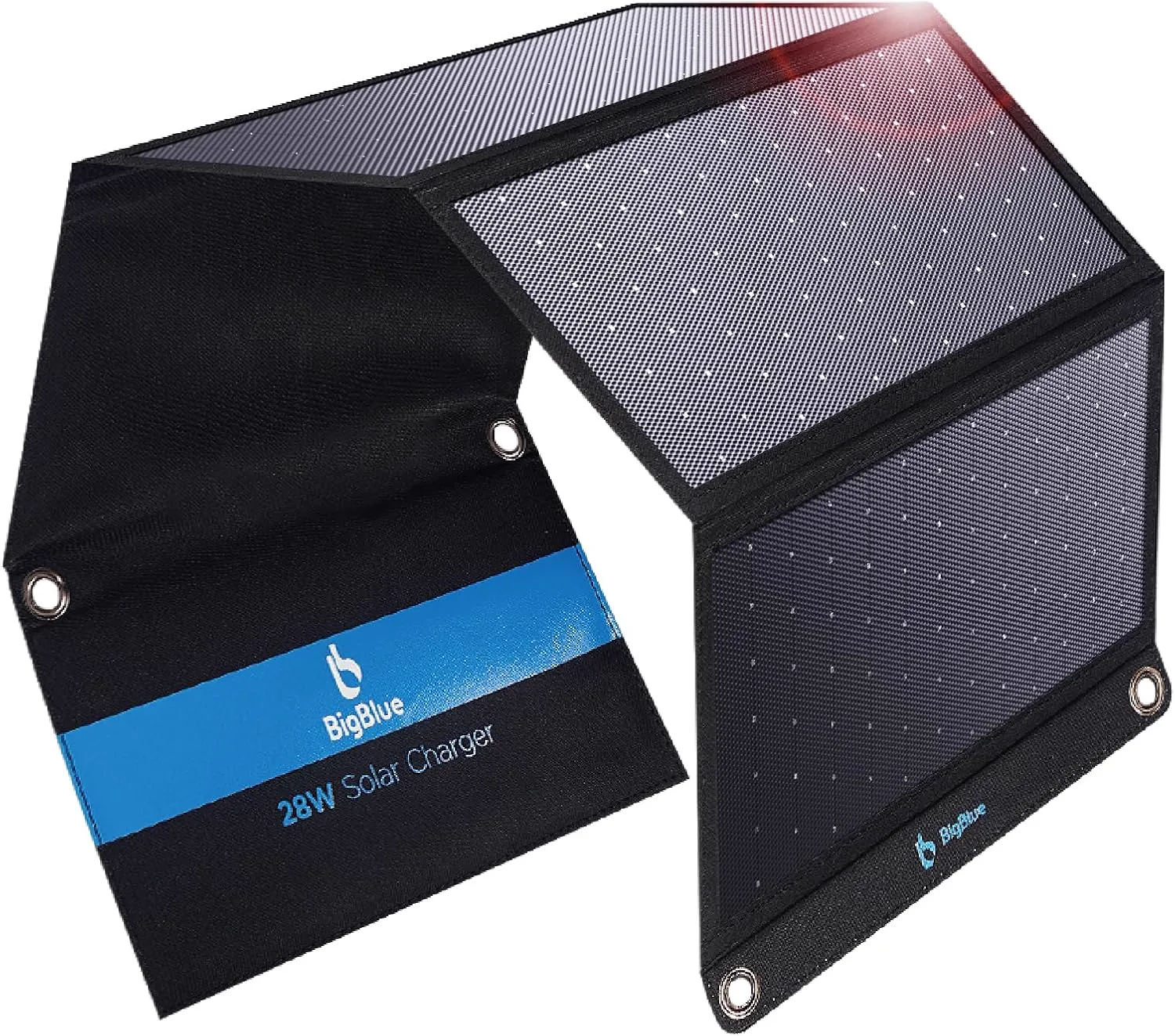
When every ounce counts, the BigBlue SolarPowa 28 is the charger you want clipped to your pack. At 1 lb 5 oz, it adds almost nothing to your base weight, yet delivers 20–22W of real-world output — enough to charge a smartphone from dead to full in about 2 hours in direct sun.
The three-port setup (USB-C + dual USB-A) means you can charge your phone, headlamp battery, and GPS unit simultaneously. Smart IC technology auto-detects each connected device and delivers the optimal charging speed. No power station required — just clip the panel to your pack, run the USB cable into a hip belt pocket, and charge while you hike.
The foldable design packs down to roughly 11” x 6”, and the IPX4 splash-proof rating handles light rain. For thru-hikers, weekend backpackers, and anyone who needs USB power without carrying a power station, this is the move.
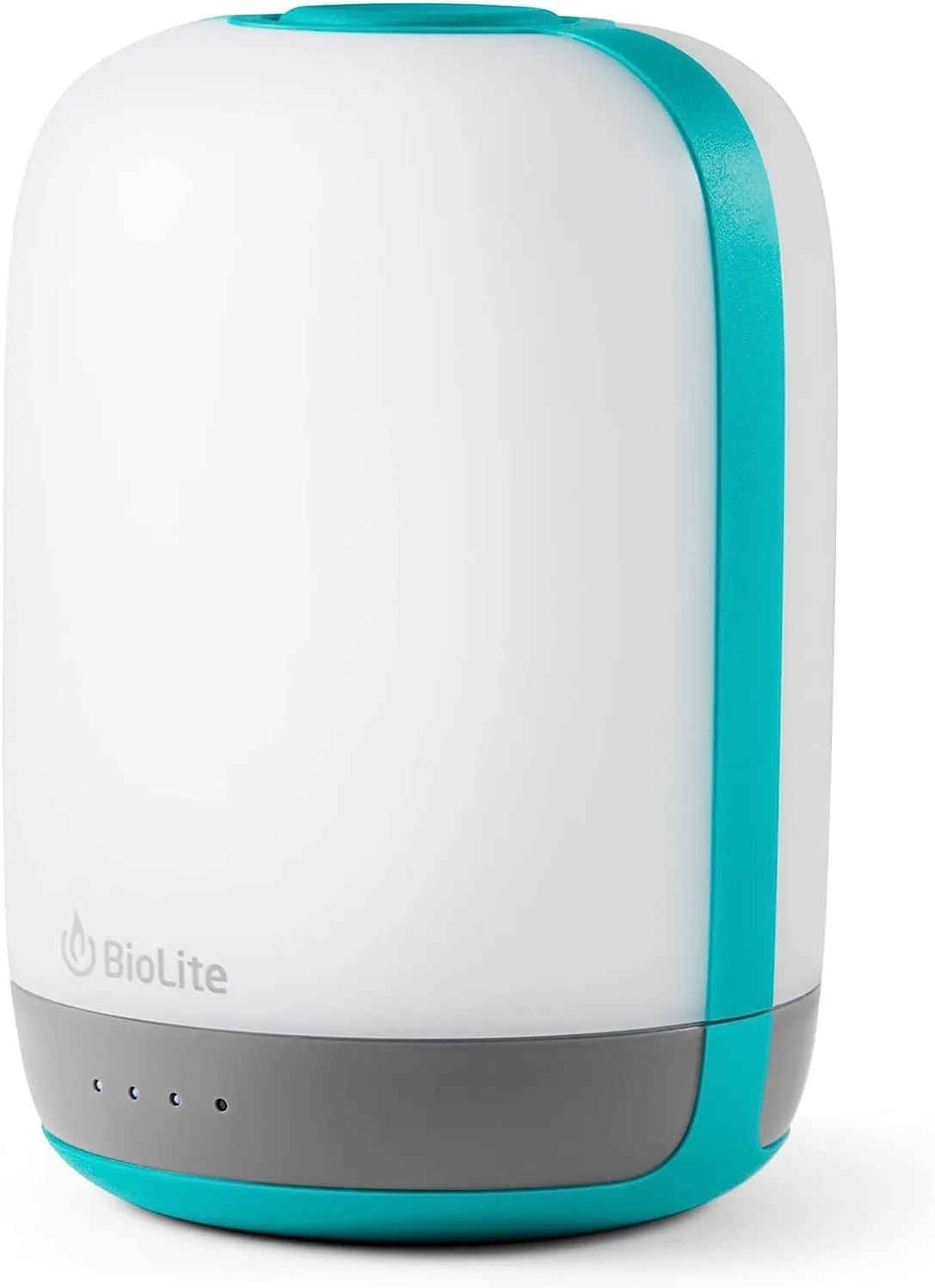
The AlpenGlow 500 isn't a "solar lantern" with a built-in panel that takes three days to charge. It's a premium USB-C rechargeable lantern that charges in about 3 hours from any USB source — including the BigBlue SolarPowa 28 or any portable solar charger on this list. That's the smarter approach: a dedicated solar panel charging a dedicated lantern performs far better than an all-in-one solar lantern with a tiny integrated panel.
BioLite's ChromaReal LED technology produces natural-looking warm light that doesn't wash everything out in blue-white. The 500-lumen high mode lights up an entire campsite, while the low mode stretches runtime to 200+ hours. Shake the lantern to cycle through color modes for ambient vibes without pressing buttons.
The built-in carabiner clip lets you hang it from a ridgeline, branch, or tent loop. The dimming range goes from barely-there nightlight to full-blast task lighting. And at 12.7 oz, it's lighter than most water bottles.

At $25, this might be the highest-value piece of camping gear you'll ever buy. Fill it with water, lay it flat in direct sunlight for 3 hours, and you've got 5 gallons of 100–110°F water — enough for two comfortable showers or one luxurious one. No batteries. No electricity. No propane. Just physics.
The Advanced Elements version is the category standard for a reason. The 4-layer construction with a reflector panel and insulator layer heats water significantly faster than single-layer solar shower bags. The built-in temperature gauge tells you exactly when the water is ready. And the on/off showerhead with adjustable flow lets you control your water usage.
For car campers, van lifers, and anyone who hates cold morning rinses, this is essential gear. Hang it from a tree branch, rooftop rack, or camp shower tripod, and you've got a pressurized hot shower in the middle of nowhere.
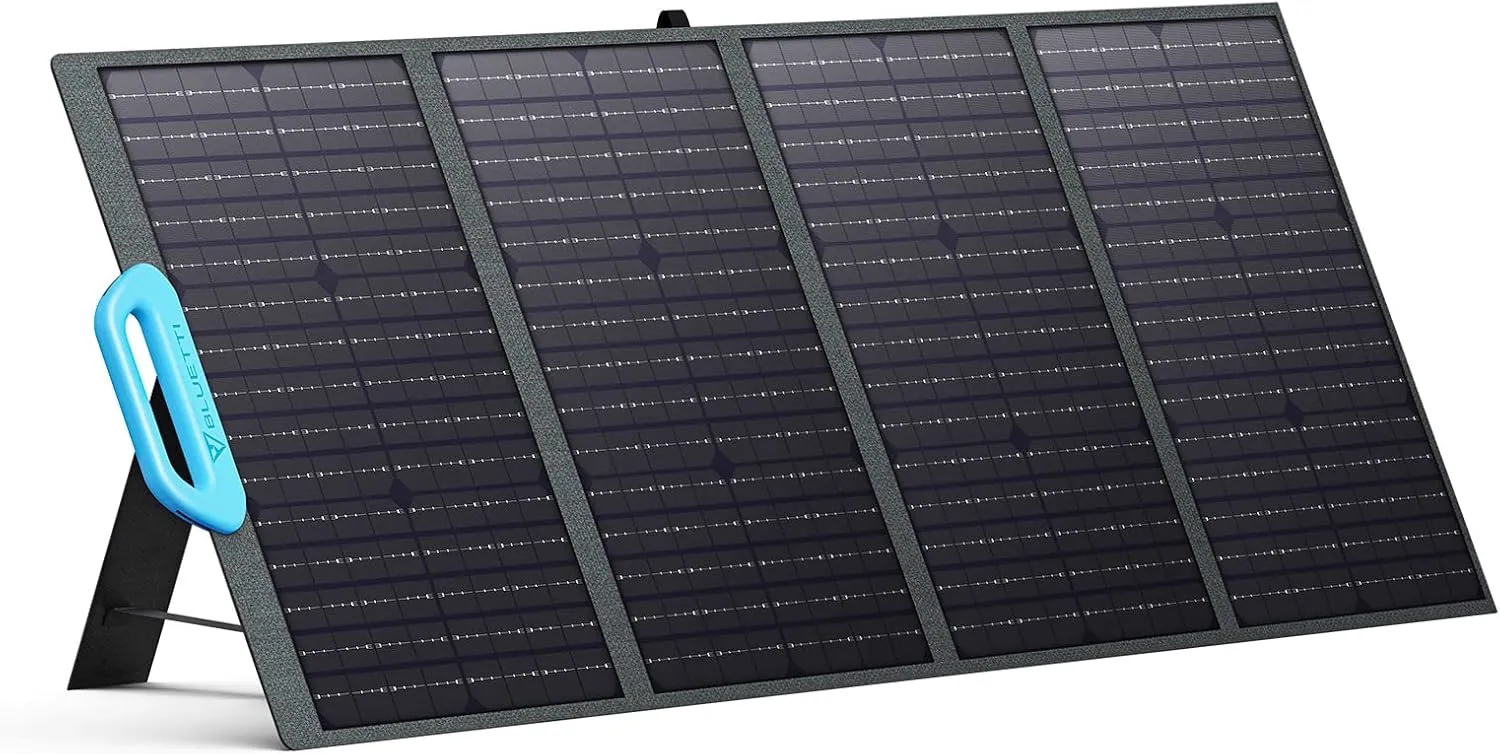
If 100W isn't quite enough for your setup, the BLUETTI PV120 delivers 20% more power for a small weight and size increase. At 120W and 13.2 lbs, it charges a BLUETTI AC200L (2,048Wh) from empty to full in roughly 16 hours of direct sun — or pair two PV120 panels for a full charge in 8 hours.
The ETFE lamination is scratch-resistant and more durable than PET-coated panels. The compact 4-panel fold design is tighter than many competitors, fitting easily into a car trunk or behind a van seat. Adjustable kickstands let you angle the panel toward the sun for maximum exposure throughout the day.
Compatible with BLUETTI, EcoFlow, Jackery, and most third-party power stations via MC4 connector. For campers who want more output without jumping to a 200W panel's size and weight, the PV120 sits in the sweet spot.
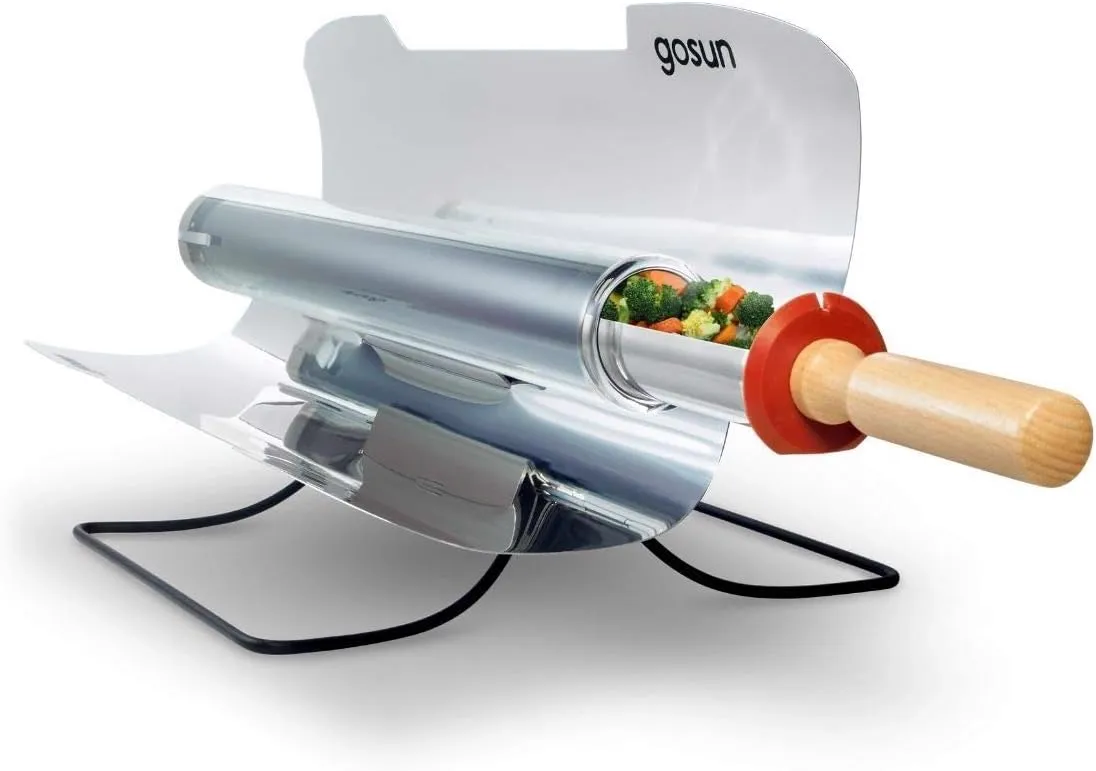
No fuel. No fire. No smoke. No fire-ban worries. The GoSun Sport cooks meals using nothing but concentrated sunlight, reaching temperatures up to 550°F in its evacuated glass tube cooking chamber. Hot dogs in 10 minutes. Rice in 20. A full stew in 30–40 minutes. Eggs, vegetables, fish, even baked bread — if it fits in the tube, the sun cooks it.
The parabolic reflector panels focus sunlight onto the central cooking tube, which traps heat in a vacuum-insulated chamber (the same principle as a thermos). This means it works even in cool weather — as long as you have direct sun between 10am and 3pm, the GoSun Sport performs.
For campers in fire-restricted areas, Leave No Trace practitioners, and anyone tired of hauling propane canisters, the GoSun Sport is a genuine game-changer. It's also dead simple: load food, aim at sun, wait 20 minutes, eat. No pots to wash, no soot to scrub, no fuel to pack out.
You don't need everything on this list. Here's how to build a solar camping kit based on your style:
Total weight: 2 lbs 2 oz. Covers your two biggest needs: staying connected and having light at camp. Perfect for weekend warriors and car camping beginners.
Pair the SolarSaga with a portable power station (sold separately) and you can run a camp fridge, charge multiple devices, and power LED string lights. Add the solar shower for comfort.
Pair the PV120 with a portable power station under $1,000 and you have a fully solar-powered camp — cooking, lighting, hot water, and unlimited device charging with zero fuel.
For phone and device charging only, a 20–30W foldable solar charger like the BigBlue SolarPowa 28 is enough. For running a portable power station (charging laptops, drones, CPAP machines, or a camp fridge), you need a 100–200W panel like the Jackery SolarSaga 100X or BLUETTI PV120. Match the panel wattage to your power station's solar input — a 100W panel fully charges a 500Wh station in about 6–7 hours of direct sun.
Yes. Solar ovens like the GoSun Sport reach up to 550°F and cook meals in as little as 20 minutes using only sunlight — no propane, no charcoal, no fire risk. They work best between 10am and 3pm in direct sun. You can cook hot dogs, rice, eggs, stews, and even bake bread. Solar ovens are ideal for fire-restricted areas, Leave No Trace camping, and reducing pack weight by eliminating fuel canisters.
A 5-gallon solar camp shower like the Advanced Elements model heats water to a comfortable 100–110°F in about 3 hours of direct sunlight. Fill it in the morning, lay it flat on a dark surface in the sun, and it's ready by early afternoon. In overcast conditions, expect 4–5 hours or lukewarm water. Pro tip: set the bag on your car's dashboard or hood for faster heating.
Most portable solar panels are water-resistant but not fully waterproof. Panels with ETFE coating (like the BLUETTI PV120 and Jackery SolarSaga 100X) handle light rain and splashes fine, but should not be submerged. The junction boxes and USB ports are the most vulnerable to water damage. Pack panels away during heavy rain, and never leave them face-down in puddles. For heavy-rain environments, look for IP65-rated panels or higher.
Start with two essentials: a 20–30W USB solar charger (BigBlue SolarPowa 28, ~$55) for phone and headlamp charging, and a USB-C rechargeable lantern (BioLite AlpenGlow 500, ~$60) that you charge from the solar panel. Total cost: under $120. This covers your two biggest camping needs — staying connected and having light at camp. When you're ready to scale up, add a portable power station and a 100W panel for running bigger gear.
A solar panel is only half the equation. Pair it with a power station for all-day power at camp.
Compare Solar Generators → Best Generators for Camping →New product launches, exclusive deals, and honest reviews — delivered weekly. No spam, ever.
No spam. Unsubscribe anytime. We respect your inbox.