Your phone dies 6 miles into a trail. Your laptop runs out during a layover. A solar backpack charges your devices hands-free, using nothing but sunlight. Here are the 5 best options in 2026.
Quick Answer: The best solar backpack in 2026 is the Voltaic Systems Array (~$199). It has three 3.4W monocrystalline panels with a 19,800mAh included battery pack that charges smartphones, tablets, GoPros, and most laptops. For hikers on a budget, the SunnyBAG Explorer+ (~$99) has a 7W panel that charges a phone in 2 hours and comes with a 10-year panel warranty. For maximum rugged output, the Voltaic OffGrid (~$249) is waterproof and built for extended off-grid trips. For budget hikers who need cargo space, the ECEEN 50L (~$60) is the cheapest option with a usable panel. For daily commuters, the SunnyBAG Iconic (~$119) looks professional enough for the office while quietly charging your phone on the walk in.
A solar backpack has photovoltaic cells built into the outer fabric — usually on the front face or a flap that stays angled toward the sun while you walk. These panels convert sunlight into electricity and route it through an internal cable to a USB port (or a dedicated battery pack) inside the bag.
There are two types:
Panel wattage determines charging speed. A 6W panel in full sun produces roughly 1A of USB current — enough to slowly charge a phone over 2–3 hours. A 10W panel produces closer to 2A, which is near wall-charger speed. But real-world output depends on sun angle, cloud cover, and how much the panel is shaded by your body or surroundings.
| Rank | Backpack | Panel Wattage | Battery Included | Laptop Charging | Weight | Price |
|---|---|---|---|---|---|---|
| #1 Best Overall | Voltaic Array | 10W | 19,800mAh | Yes | 3.9 lbs | ~$199 |
| #2 Best for Hiking | SunnyBAG Explorer+ | 7W | No (sold separately) | No | 2.2 lbs | ~$99 |
| #3 Best Max Power | Voltaic OffGrid | 10W | 12,800mAh | Yes | 4.2 lbs | ~$249 |
| #4 Best Budget | ECEEN 50L | 6.5W | No | No | 2.8 lbs | ~$60 |
| #5 Best for Commuters | SunnyBAG Iconic | 7W | No (sold separately) | No | 2.4 lbs | ~$119 |
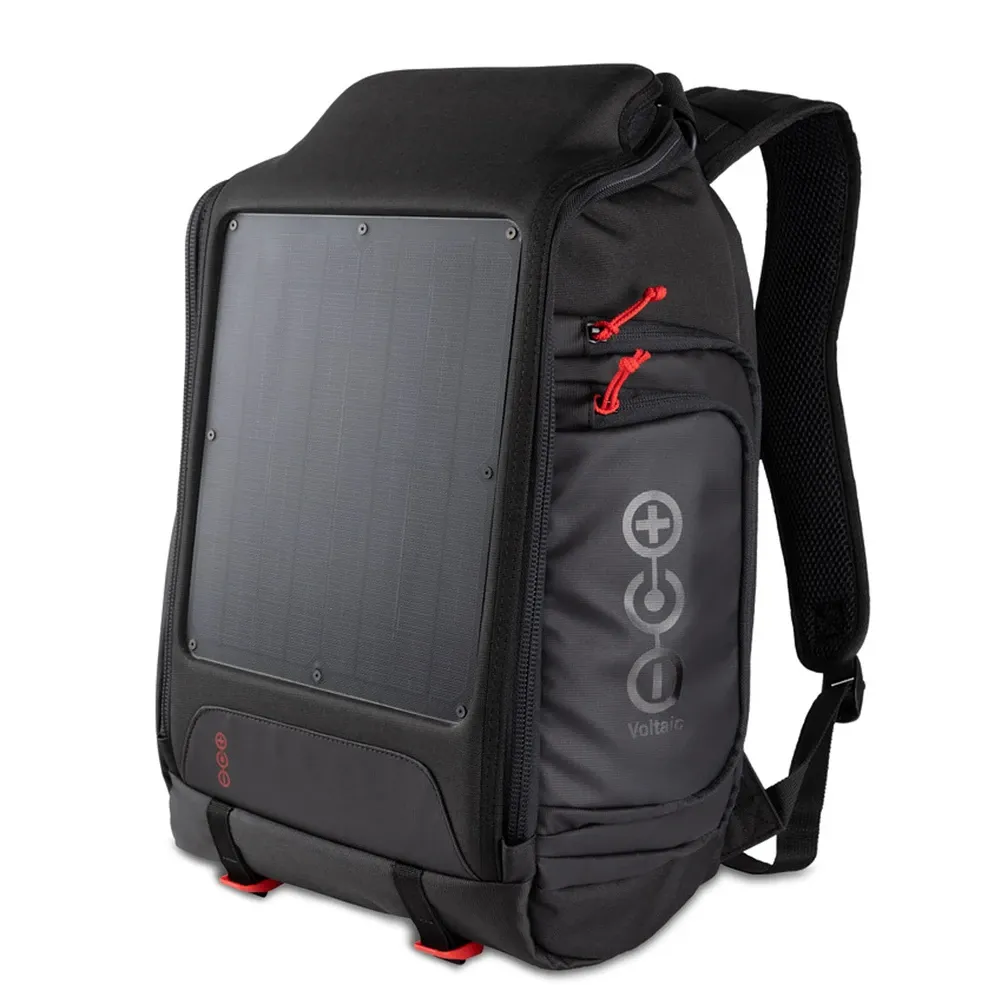
Panel Type: Monocrystalline (3 panels) • Outputs: USB-A, USB-C, laptop adapter • Capacity: 25L
The Voltaic Array is the gold standard for solar backpacks. Three monocrystalline panels generate a combined 10W of output — the highest of any integrated solar backpack on the market. The included 19,800mAh V75 battery pack stores enough energy to charge a smartphone 4–5 times or a tablet once.
What sets the Array apart is laptop charging. The V75 battery pack outputs at 18–20V via a dedicated barrel connector with adapters for most laptop brands. No other solar backpack on this list includes a battery powerful enough to charge a full-size laptop.
The bag itself is a well-designed 25L daypack with padded straps, a laptop sleeve, organizer pockets, and water bottle holders. Voltaic uses recycled PET fabric and designs for repairability — panels and batteries are replaceable, not glued in.
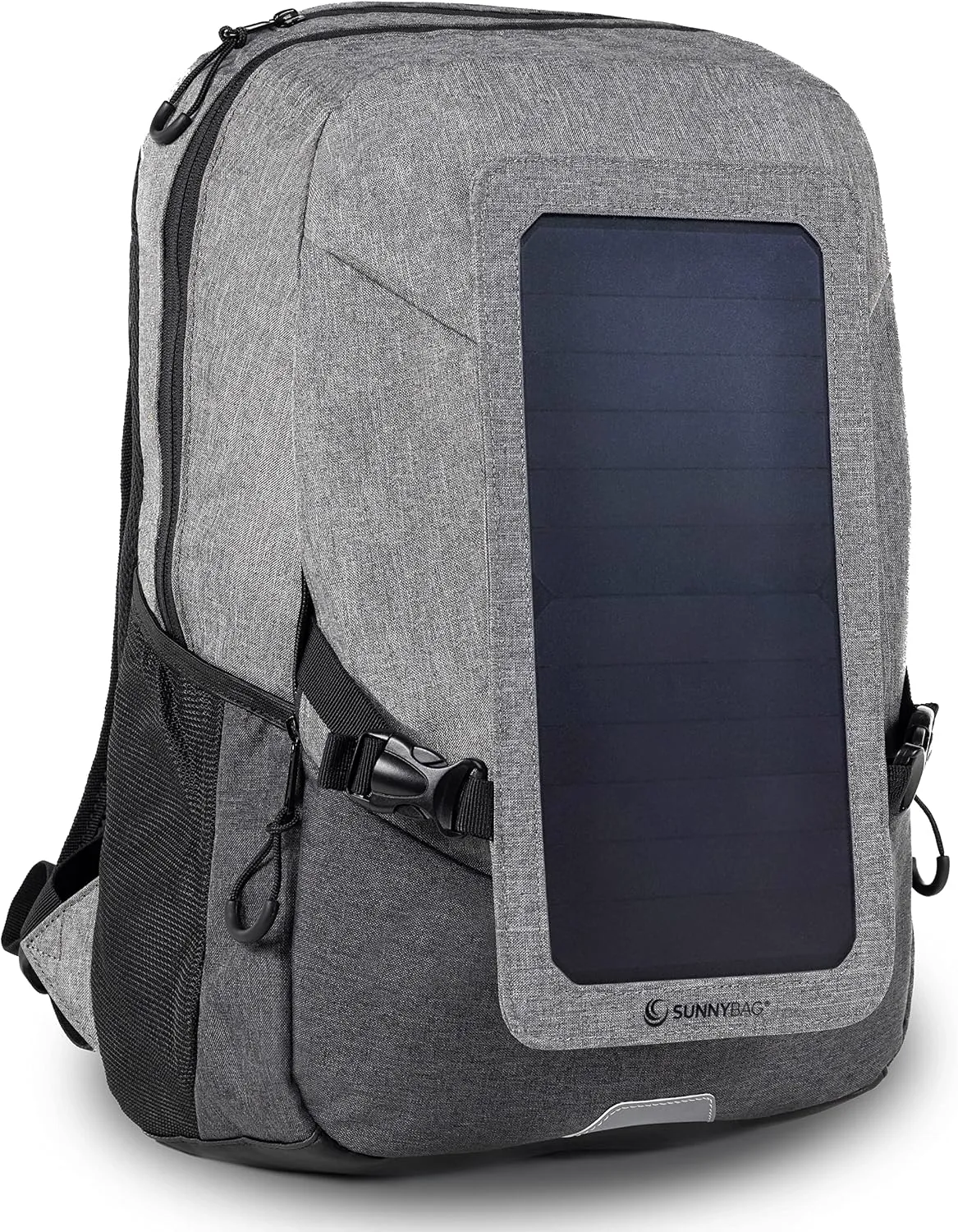
Panel Type: Monocrystalline (single panel) • Outputs: USB-A • Panel Warranty: 10 years • Capacity: 15L
The SunnyBAG Explorer+ is the best lightweight solar backpack for day hikers. At just 2.2 lbs with a 7W award-winning panel, it charges a smartphone from 0 to 100% in about 2 hours in direct sunlight. The panel is detachable — you can clip it to a tent, hang it from a tree, or attach it to a different bag.
SunnyBAG is an Austrian company that has been building solar bags since 2011. The Explorer+ uses a proprietary SunPower cell that achieves 22.4% efficiency — among the highest in any consumer solar product. They back the panel with a 10-year warranty, which is unheard of in this category.
The trade-off: no battery is included. The panel charges your device directly via USB, which means no sun = no charge. Pair it with any 10,000–20,000mAh power bank (sold separately) and you get the best of both worlds at a lower total cost than the Voltaic Array.
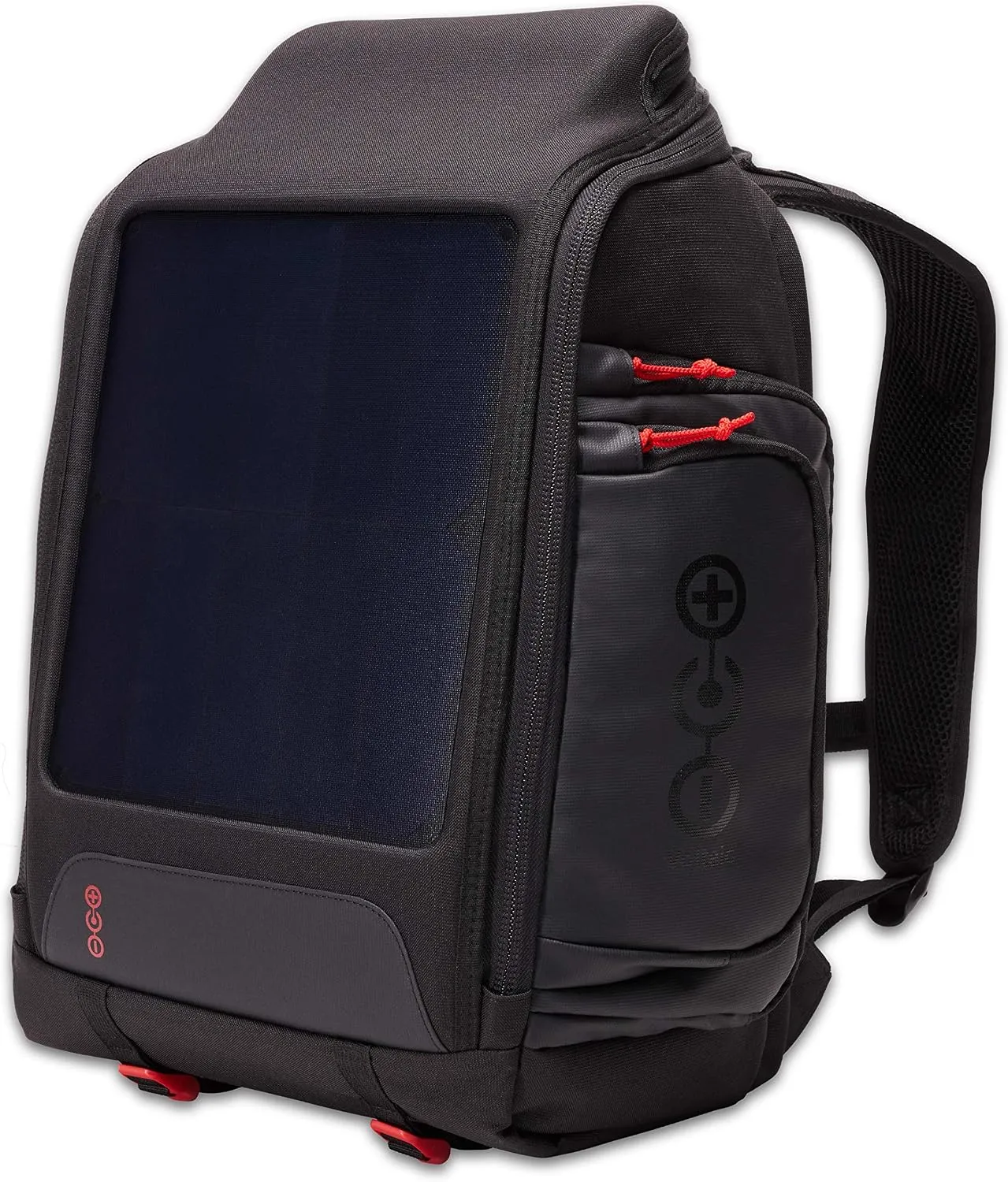
Panel Type: Monocrystalline (waterproof) • Outputs: USB-A, USB-C, laptop adapter • Weather: Waterproof panel, water-resistant bag
The Voltaic OffGrid is built for people who spend days or weeks in the backcountry, on boats, or in environments where weather is unpredictable and power outlets do not exist. The waterproof solar panel shrugs off rain, splash, and trail dust. The 12,800mAh V50 battery stores enough for 3–4 full phone charges.
Like the Array, the OffGrid charges laptops via a dedicated adapter. The key difference is weather resistance — the OffGrid is designed for environments where the Array would need a rain cover. The panel is fully sealed, and the bag fabric is treated for water resistance.
At $249, this is the premium option. It is overkill for daily commuting. But for thru-hikers, field researchers, or international travelers in remote areas, the OffGrid is the solar backpack least likely to fail when you need it most.
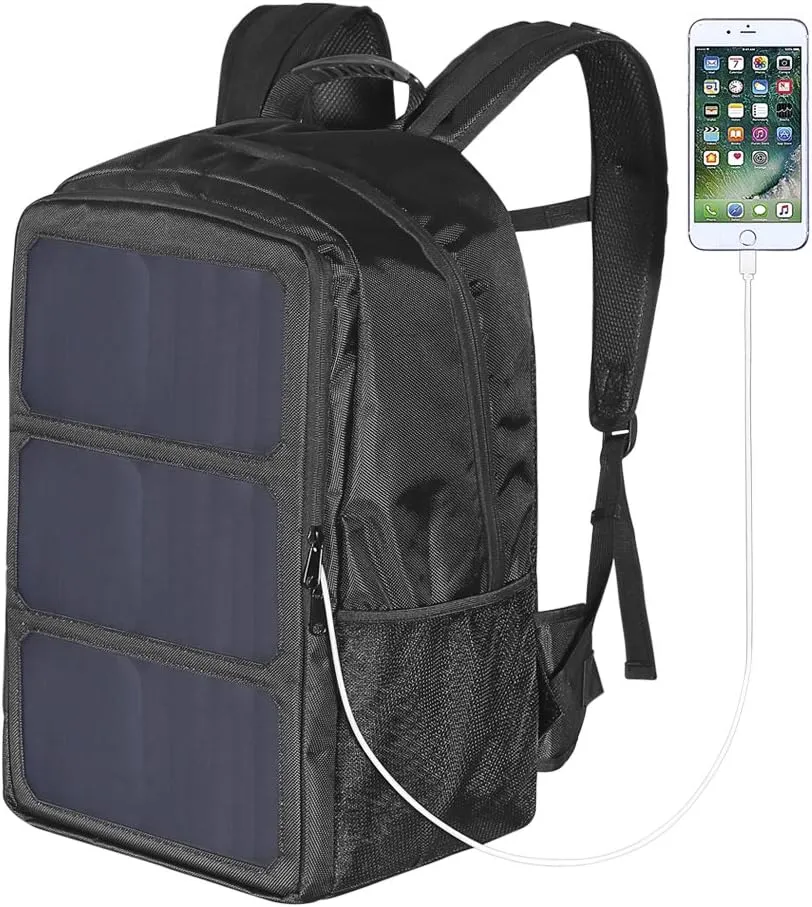
Panel Type: Polycrystalline • Outputs: USB-A • Capacity: 50L • Frame: Internal aluminum
At $60, the ECEEN 50L is the cheapest solar backpack worth buying. It is a full-size 50-liter hiking pack with an integrated 6.5W solar panel on the front flap. The internal aluminum frame, hip belt, and compression straps make this a real hiking backpack — not a solar gimmick stitched onto a school bag.
The 6.5W panel charges phones and small devices via a single USB-A port. It is not fast — expect 3–4 hours for a full phone charge in direct sun — but it is entirely passive. Walk with the pack, and your device charges. No battery is included, so pair it with a $15–$25 power bank to store daytime solar for evening use.
Build quality is a step below Voltaic and SunnyBAG. The panel is polycrystalline (lower efficiency than monocrystalline), and the stitching is not as refined. But for the price, the ECEEN delivers usable solar charging on a backpack you would actually carry on a multi-day trek.
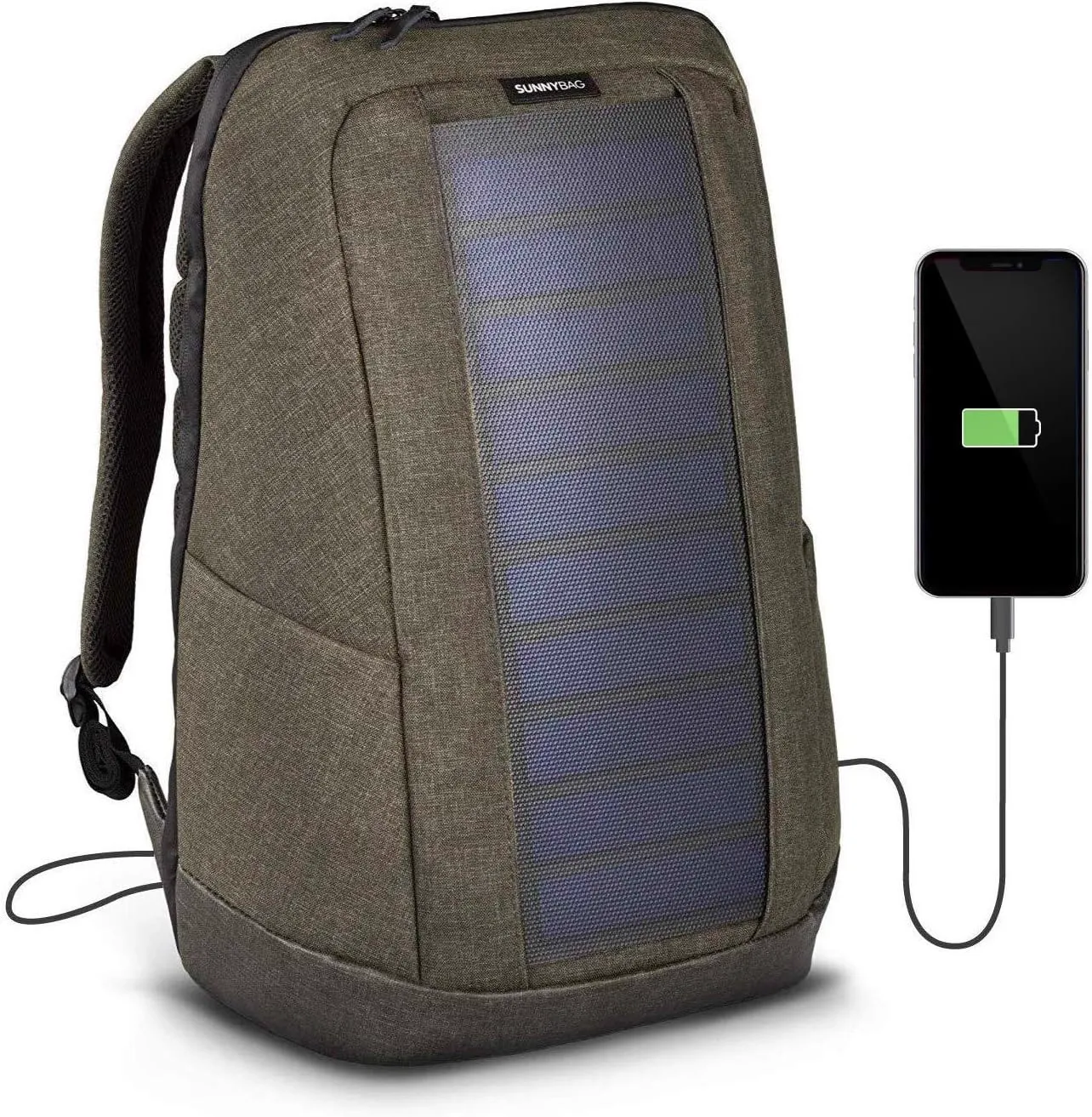
Panel Type: Monocrystalline (high-efficiency) • Outputs: USB-A • Materials: Eco-conscious, recycled • Capacity: 20L
The SunnyBAG Iconic is the solar backpack you can carry into a meeting without anyone raising an eyebrow. It looks like a clean, modern commuter bag that happens to have a high-efficiency 7W solar panel seamlessly integrated into the front face.
Same SunPower cell technology as the Explorer+, same 22.4% efficiency, same USB-A output. The difference is the bag itself — the Iconic is designed for urban professionals, not trail hikers. The 20L capacity holds a 15” laptop, folders, a water bottle, and daily essentials. The materials are eco-conscious and partially recycled.
Like the Explorer+, no battery is included. The panel charges your phone directly during your commute. For city dwellers who walk or bike 30+ minutes each way, the Iconic adds meaningful charge without any extra effort. Pair with a compact power bank for all-day independence from wall outlets.
Manufacturer wattage ratings are measured under ideal lab conditions (1,000 W/m² irradiance, 25°C cell temperature, perpendicular sun angle). In reality, expect 50–70% of rated output during normal outdoor use. A 10W panel realistically delivers 5–7W on a sunny day while mounted on a moving backpack.
If you want consistent, reliable charging regardless of current sun conditions: yes. The Voltaic Array and OffGrid include battery packs. The SunnyBAG and ECEEN models charge directly — you need to buy a separate power bank ($15–$30) if you want stored energy. In total cost, the SunnyBAG Explorer+ ($99) plus a 20,000mAh power bank (~$25) comes to ~$124 — still cheaper than the Voltaic Array ($199) with roughly comparable total capability for phone-only charging.
Yes, but only the Voltaic Array and Voltaic OffGrid, which include battery packs with dedicated laptop output adapters. The SunnyBAG and ECEEN models output USB-A only, which cannot directly charge most laptops. If laptop charging is a priority, the Voltaic Array ($199) is the clear choice.
In direct sunlight: 2–3 hours for a 7W panel (SunnyBAG), 1.5–2.5 hours for a 10W panel (Voltaic). Under cloud cover or partial shade, expect 4–6 hours. Battery-integrated models (Voltaic) store energy during the day and charge at full USB speed anytime.
They generate reduced power — roughly 10–25% of full-sun output. A 7W panel might produce only 1–1.5W under heavy clouds, which is too slow for practical phone charging. Battery-integrated backpacks solve this: the panel charges the battery during any sun exposure, and the battery delivers full-speed charging regardless of weather.
Solar panels are sealed and rain-resistant on all models. Bag fabric varies: the Voltaic OffGrid is the most weather-resistant. SunnyBAG panels are rain-safe. ECEEN uses water-resistant nylon. For heavy rain, bring a rain cover for the bag itself — all models recommend this.
Yes, if you regularly spend time outdoors and your phone is a critical tool (navigation, communication, photography). The passive charging adds up: a 30-minute sunny commute each way gives your phone 15–25% extra charge per day without effort. For multi-day hikers, the value is even higher — it can mean the difference between a dead GPS and a working one on day 3.
Every backpack above is available on Amazon with free shipping for Prime members.
Shop Voltaic Array (Best Overall) → Shop SunnyBAG Explorer+ (Best Value) →Solar generators, home batteries, panels, and now solar lifestyle gear — we cover it all. Get our free buyer’s guide delivered to your inbox.
No spam. Unsubscribe anytime. We respect your inbox.