How to keep heat, lights, and medical devices running when ice storms knock out power — without the carbon monoxide risk of a gas generator.
Winter storms don't send advance notice. An ice storm hits the power lines, and suddenly you're sitting in the dark with a dropping thermostat, a fridge full of food, and no way to charge your phone.
Gas generators seem like the obvious answer — until you remember that the CDC attributes over 400 carbon monoxide poisoning deaths per year to portable generators, most during winter storms when people bring them indoors or park them too close to windows.
Solar generators solve that problem entirely. Zero emissions, silent operation, and they run safely inside your house. Here's how to pick the right one for winter.
Before picking a unit, you need to know what you're powering. Here's what a typical household needs during a winter storm:
| Device | Watts | Hours/Day | Daily Wh |
|---|---|---|---|
| Fridge/Freezer | 150W avg | 24 (cycles) | ~400 Wh |
| Furnace blower fan | 500W | 8–12 | 4,000–6,000 Wh |
| LED lights (5 bulbs) | 50W total | 8 | 400 Wh |
| Phone charging (4 phones) | 80W total | 2 | 160 Wh |
| Wi-Fi router | 15W | 24 | 360 Wh |
| Laptop | 60W | 4 | 240 Wh |
| Electric blanket | 100W | 8 | 800 Wh |
| CPAP machine | 30–60W | 8 | 240–480 Wh |
| Space heater | 1,000–1,500W | 4 | 4,000–6,000 Wh |
This is where winter backup differs from summer backup. LiFePO4 batteries — the type used in all modern solar generators — cannot charge below 32°F (0°C) without a self-heating feature. They can discharge down to about -4°F (-20°C), but if you need to recharge from solar panels during a cold spell, you need a model with built-in battery heating.
Models with self-heating batteries:

The DELTA Pro is the winter backup king. Self-heating battery charges in sub-freezing conditions. 3,600Wh runs your fridge, furnace fan, lights, and electronics for 12+ hours. Expandable to 25kWh with extra batteries for multi-day outages. Smart Home Panel integration lets it automatically switch on when utility power drops. EcoFlow's app gives real-time monitoring from your phone.
Winter runtime: Fridge + lights + Wi-Fi + phones = ~20 hours. Add furnace fan = ~10 hours. Pair with a second DELTA Pro battery ($1,599) for 7,200Wh and 20+ hours of full-house backup.
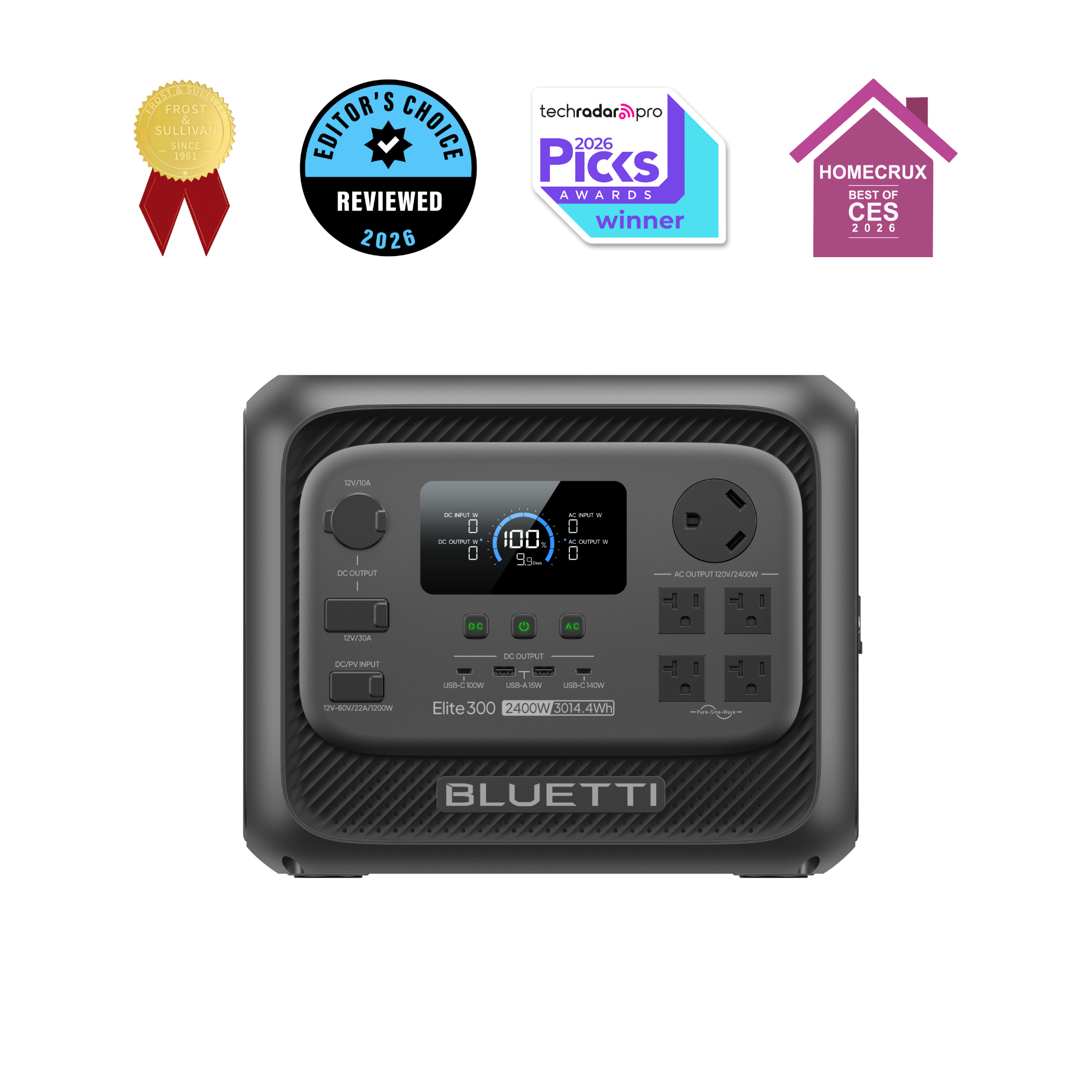
The AC300 is a modular inverter — it has no built-in battery. You pair it with B300 battery modules (3,072Wh each) and can stack up to 4 for a massive 12,288Wh system. That's enough to run a household for 2-3 days during a winter storm. The modular design means you start with one battery and add more as your budget allows.
Winter runtime (1x B300): Fridge + lights + Wi-Fi + phones = ~18 hours. With 2x B300 (6,144Wh): Full essentials + furnace fan = ~18 hours.
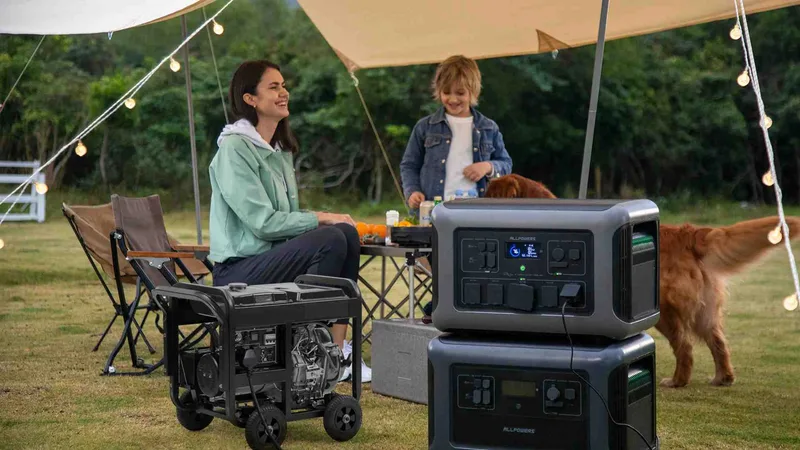
The R3500 delivers DELTA Pro-level capacity and more output power at a significantly lower price. 3,168Wh with 3,500W output handles furnace fans, fridges, and high-draw devices. Self-heating LiFePO4 battery works in freezing conditions. The value proposition is hard to beat: you get 88% of the DELTA Pro's capacity for 75% of the price.
Winter runtime: Fridge + lights + Wi-Fi + phones = ~18 hours. Add furnace fan = ~9 hours. Best watt-per-dollar for serious winter backup.
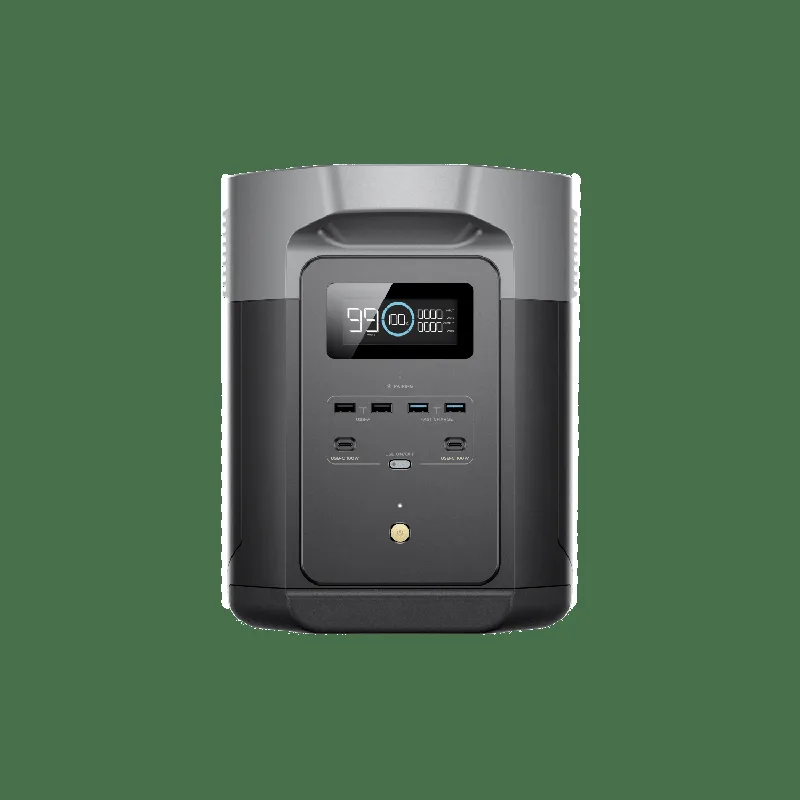
The DELTA 2 Max hits the sweet spot for most households. 2,048Wh is enough for fridge + essentials for a full day. 2,400W output handles furnace fans. X-Stream fast charging fills it from wall power in just 1.7 hours — so if you get a storm warning, you can fully charge it before the power goes out. Expandable to 6,144Wh with extra batteries.
Winter runtime: Fridge + lights + Wi-Fi + phones = ~14 hours. Enough for a typical overnight outage.
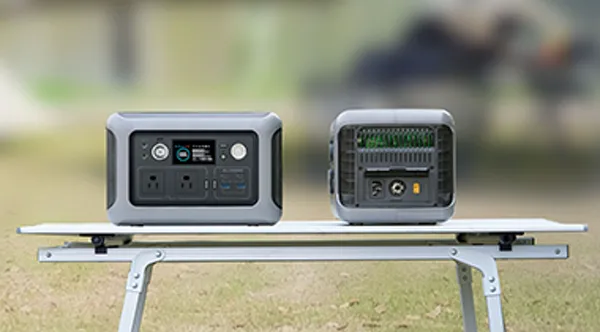
Not everyone needs a whole-home backup system. The R600 is the best "nightstand emergency kit" for winter storms. At 7.7 lbs, it sits in your closet until you need it. Plug in your phone, run a CPAP all night, power LED lights, and keep a laptop going. It won't run your fridge — but for personal essentials during a 12-hour outage, it's all you need at a price anyone can afford.
Winter runtime: CPAP (8 hours) + phone charging (4 phones) + LED light = all night. Enough for one person's essential overnight needs.
Buy the solar generator before storm season. Prices spike and inventory sells out when storms hit the news. Here's how to get ready:
Every winter, the same story: an ice storm knocks out power, families bring gas generators inside or into their garages, and carbon monoxide does the rest. The CDC, CPSC, and every fire department in the country say the same thing: never run a gas generator indoors or in an enclosed space.
Solar generators eliminate that risk entirely:
The tradeoff: gas generators produce more sustained power for heavy loads like central HVAC. But for the 90% of winter outages that last 4–24 hours, a 2,000–3,600Wh solar generator covers everything most households need — safely.
For an in-depth comparison, read our Solar Generator vs Gas Generator guide.
Technically yes, if the unit has 1,500W+ output. But it drains the battery fast — a 1,000W heater empties a 2,000Wh battery in about 2 hours. Better strategy: use an electric blanket (50–200W) which runs 10–20 hours on the same battery, or use a portable propane heater for room heat and save the battery for electronics.
Yes. LiFePO4 batteries can discharge (power your devices) in temperatures as low as -4°F (-20°C). The limitation is charging: most LiFePO4 batteries can't charge below 32°F. Models with self-heating batteries (DELTA Pro, AC300, R3500) handle this automatically. Keep your unit indoors when possible.
For lights, phones, Wi-Fi, and a CPAP: 500–1,000Wh ($219–$500). For those plus a fridge: 1,500–2,000Wh ($1,000–$1,300). For full essentials including a furnace blower: 3,000Wh+ ($1,400–$1,900). For multi-day outages: expandable system or 5,000Wh+ ($2,500+).
Solar generators are safer — zero carbon monoxide, run indoors. Gas generators produce more continuous power but must run outside (even in a storm). For most winter outages (4–24 hours), a 2,000–3,600Wh solar generator covers household essentials safely. Only consider gas if you need to run central HVAC or heavy equipment for extended periods.