Side-by-side at every price point. Specs, charging speed, expandability, and our pick for each budget.
Two brands dominate the portable solar generator market: EcoFlow and BLUETTI. Walk into any "best solar generator" list and they hold half the spots. Both build LiFePO4-powered units with solar charging, app control, and UPS switchover.
But they are not interchangeable. The engineering priorities, pricing strategies, and expansion ecosystems are fundamentally different. This guide compares them head-to-head at three price tiers — budget, mid-range, and premium — so you buy the right brand for your needs.
Here is every major model from both brands, side by side. Scan the table, then read the tier breakdowns below.
| Spec | EcoFlow RIVER 3+ | BLUETTI Elite 30 V2 | EcoFlow DELTA 2 Max | BLUETTI AC200L | EcoFlow DELTA Pro Ultra | BLUETTI Apex 300 + B300K |
|---|---|---|---|---|---|---|
| Price | $299 | $249.99 | $1,029 | $899 | $4,199 | $2,599 |
| Capacity | 286 Wh | 288 Wh | 2,048 Wh | 2,048 Wh | 6,144 Wh | 5,529.6 Wh |
| Output | 600W | 600W | 2,400W | 2,400W | 7,200W | 3,840W |
| Surge | 1,200W | 1,500W (lifting) | 4,800W | 3,600W | 10,800W | 7,680W (lifting) |
| Battery | LiFePO4 | LiFePO4 | LiFePO4 | LiFePO4 | LiFePO4 | LiFePO4 |
| Cycles | 3,000+ | 3,000+ | 3,000+ | 3,000+ | — | 3,500+ |
| Weight | 8.4 lbs | — | 50.7 lbs | 62.4 lbs | 143 lbs | — |
| AC Charge | 56 min (0-80%) | 45 min (0-80%) | 68 min (0-80%) | 1.5 hrs | 2 hrs (0-80%) | — |
| Solar Input | 220W max | — | 1,000W max | 1,200W max | 5,600W max | — |
| Expandable | No | No | Up to 6,144Wh | Up to 8,192Wh | Up to 90kWh | Modular |
| App | EcoFlow App | BLUETTI App | EcoFlow App | BLUETTI App | EcoFlow App | BLUETTI App |
| UPS | 30ms | 10ms | 30ms | — | 10ms (Smart Panel) | 20ms |
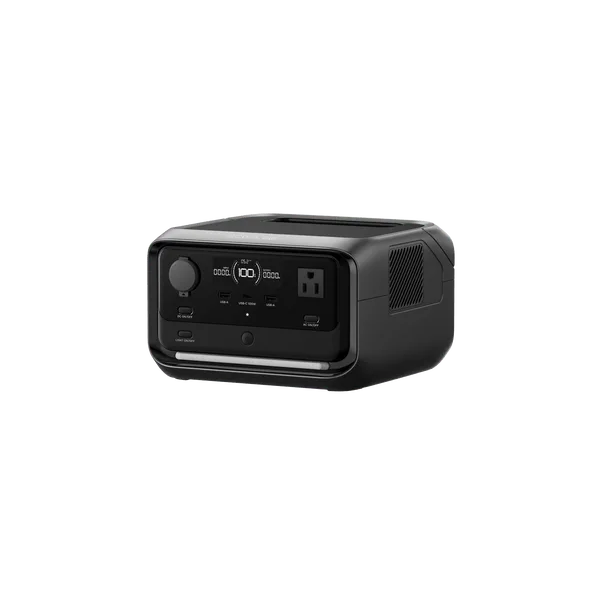
Around $250–$300. You need a backup that charges phones, runs a CPAP, keeps a mini-fridge cycling, or powers a laptop during outages. Both units here fit in a backpack.
EcoFlow's X-Stream charging is the headline: 0 to 80% in under an hour from a wall outlet. No other unit this small can match that. The 600W output handles small appliances, and at 8.4 lbs it is easy to carry.
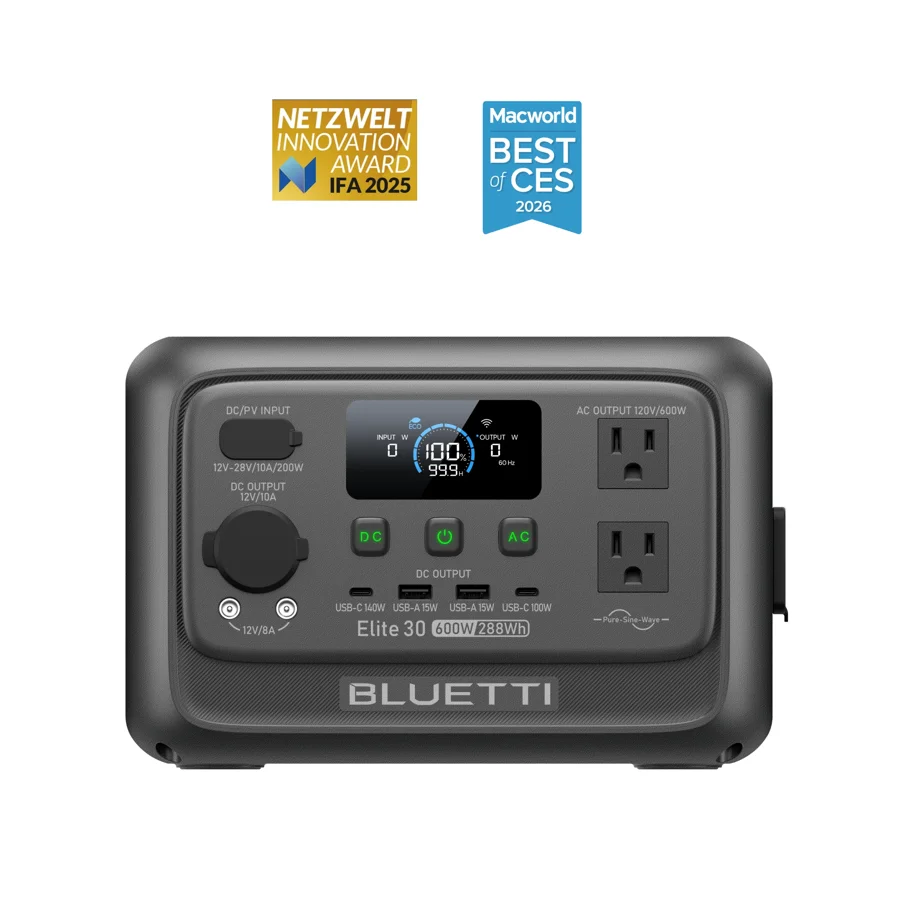
The Elite 30 V2 replaces the discontinued AC2A as BLUETTI’s budget pick, and it closes the gap with the RIVER 3 Plus: the same 600W output, slightly more capacity (288Wh), TurboBoost charging to 80% in about 45 minutes, a 140W USB-C port, and a 10ms UPS switchover for a modem or CPAP — for about $50 less.
Best value: BLUETTI Elite 30 V2 ($249.99). Same 600W output and slightly more capacity than the RIVER 3 Plus for about $50 less, plus a 10ms UPS. Best for portability and app: EcoFlow RIVER 3 Plus ($299). At 8.4 lbs with EcoFlow’s polished app, it’s the better grab-and-go unit.
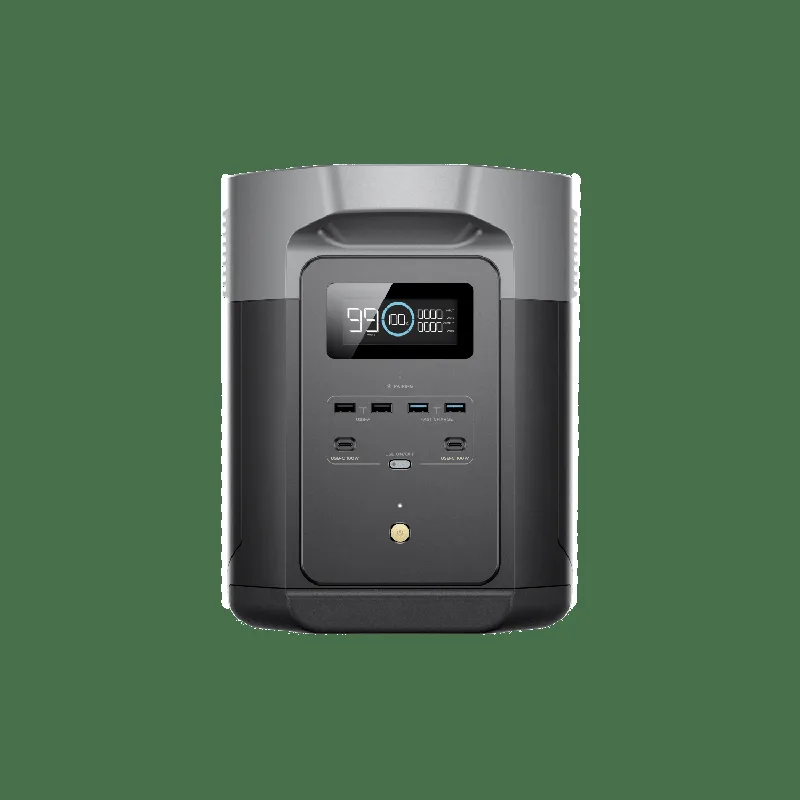
The money tier. $1,000–$1,600 buys enough capacity to run a household during a multi-day outage, power a food truck, or go completely off-grid in a van. This is where most buyers land.
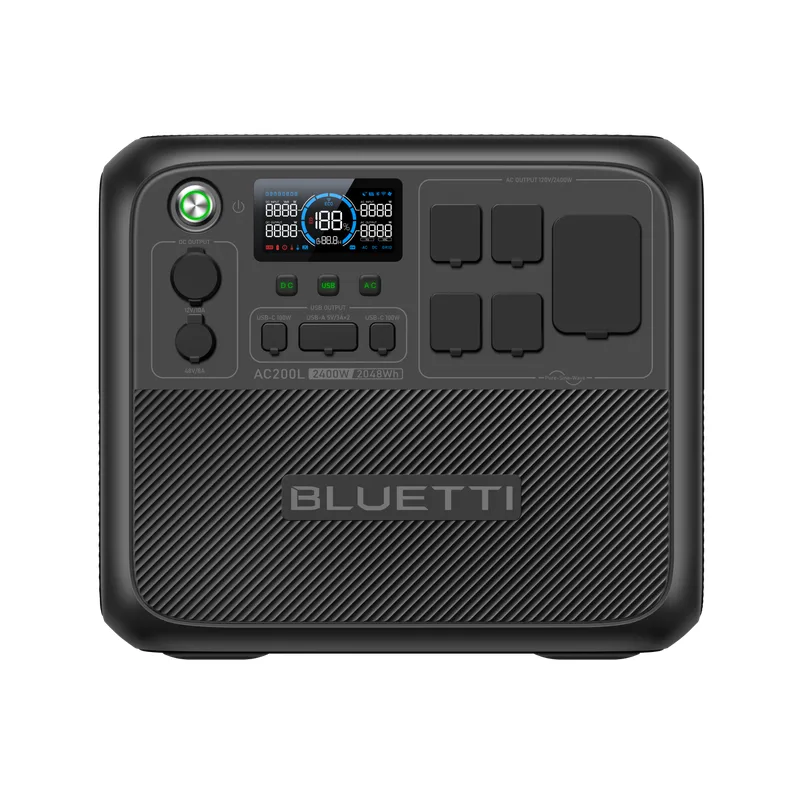
On paper, the DELTA 2 Max and AC200L are twins: 2,048Wh capacity, 2,400W output, LiFePO4. The difference is charging speed. EcoFlow's X-Stream fills this unit from 0 to 80% in 68 minutes — twice as fast as the AC200L. If you're a contractor who needs to top off between job sites or a storm chaser who can't afford to wait, that speed matters.
Expandable to 6,144Wh with two DELTA 2 Max Extra Batteries. Lighter than the AC200L at 50.7 lbs. EcoFlow app is smoother and more reliable than BLUETTI's in our testing.
The AC200L is the unit we recommend most often. Same 2,048Wh, same 2,400W output, same LiFePO4 chemistry — $600 cheaper. It charges to 80% in about 1.5 hours (vs 68 minutes for EcoFlow), and expands to 8,192Wh with B300 expansion batteries ($1,299 each but much higher capacity than EcoFlow's).
The MC4 solar input is a real advantage — you can use any third-party panel without adapters. The 1,200W max solar input is also 200W higher than the DELTA 2 Max's 1,000W cap.
Best value: BLUETTI AC200L ($899). About $130 savings, same core specs, more expansion headroom, better solar input. Unless charging speed is a dealbreaker, the AC200L is the smarter buy. Best for speed: EcoFlow DELTA 2 Max ($1,029). If you need the fastest recharge — contractors, storm chasers, mobile professionals — pay the premium for X-Stream.
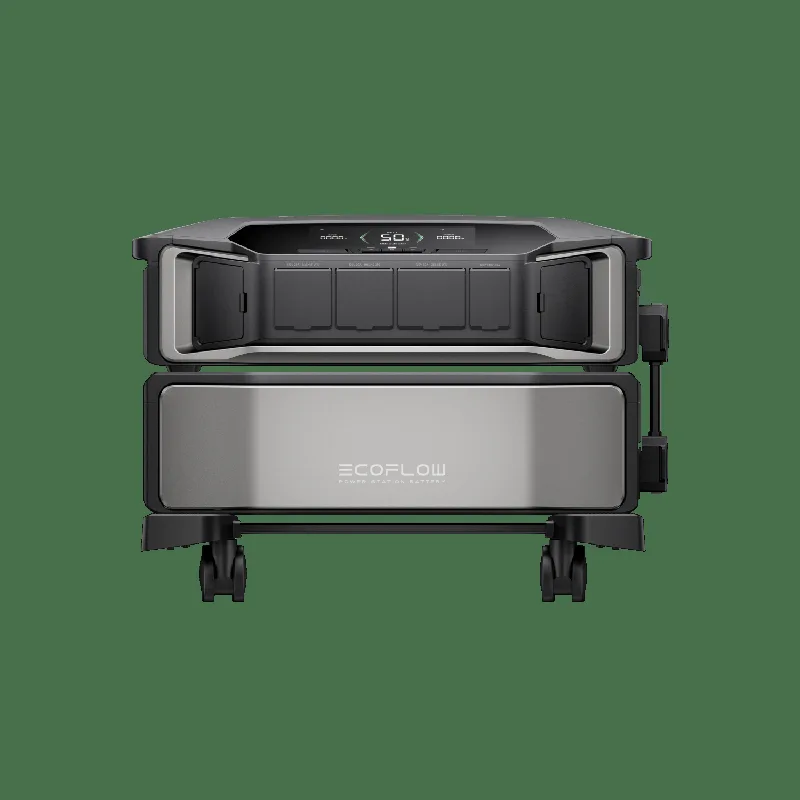
Whole-home backup territory. $2,500–$4,200 buys enough capacity and output to run your house — fridge, router, lights, and (for EcoFlow) even central AC. These are Tesla Powerwall alternatives that ship to your door without an installer.
This is where EcoFlow pulls decisively ahead. The DELTA Pro Ultra outputs 7,200W continuous — nearly double the Apex 300's 3,840W. That's enough to run a 3-ton central AC unit, a well pump, a full kitchen, and every light in your house simultaneously.
The expansion ceiling is absurd: 90kWh with additional battery packs. That's multiple days of whole-home power with solar recharging. The Smart Home Panel ($1,599 separate) provides automatic grid-failover — power drops, the DELTA Pro Ultra kicks in within 10ms. No transfer switch, no manual switchover.
At $4,199 for the base system (one inverter plus one battery), it costs about $1,600 more than the Apex 300 bundle but delivers nearly twice the output. (Note: the 30% federal ITC expired Dec 31, 2025. No federal credit applies in 2026.)
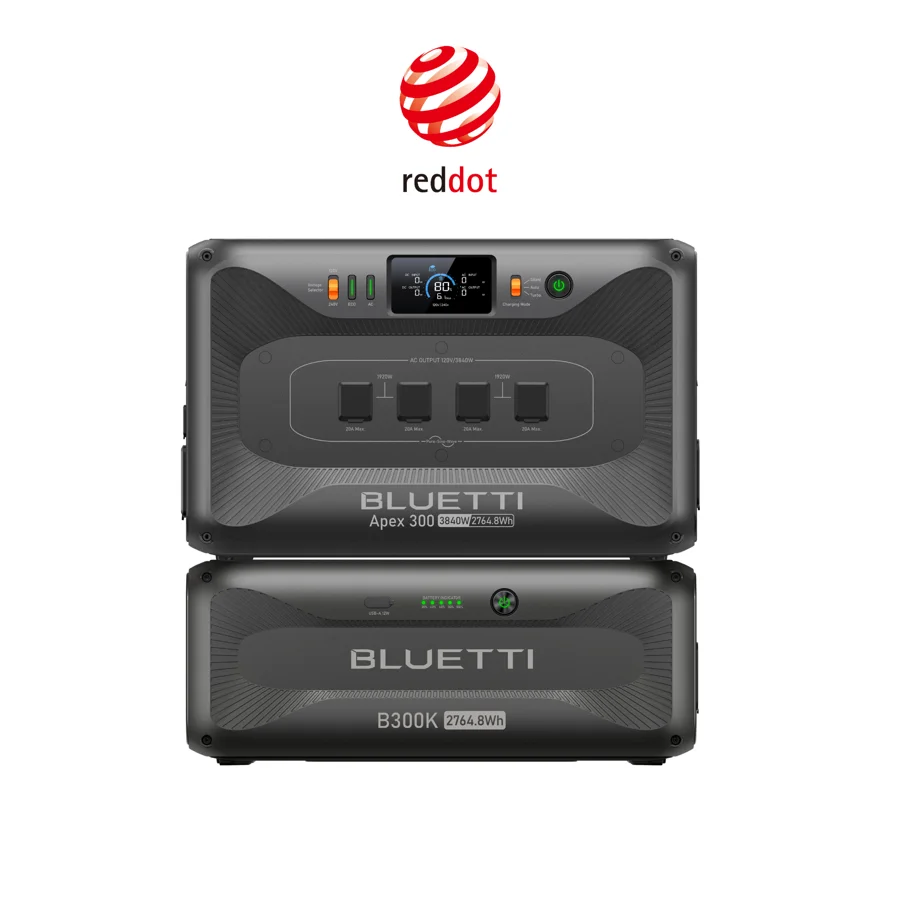
The EP500Pro we compared here before is no longer sold on BLUETTI’s U.S. store. Its replacement, the Apex 300, comes bundled with one B300K expansion battery for 5,529.6Wh of LiFePO4 capacity and 3,840W of output — close to the DELTA Pro Ultra base system’s 6,144Wh, with roughly half the output.
At $2,599, it is about $1,600 less than the DELTA Pro Ultra base system. It covers essential loads — fridge, freezer, router, lights, and electronics — but not the large central AC systems that the DELTA Pro Ultra’s 7,200W can handle.
Best whole-home: EcoFlow DELTA Pro Ultra ($4,199). 7,200W vs 3,840W is the core argument: the DELTA Pro Ultra can run large central AC systems and expands to 90kWh. (Note: the 30% federal ITC expired Dec 31, 2025.) Choose the BLUETTI Apex 300 bundle ($2,599) if you are backing up essential loads and want to save about $1,600.
| Category | Winner | Why |
|---|---|---|
| Charging Speed | EcoFlow WIN | X-Stream is 2x faster at every price point |
| Value / Price | BLUETTI WIN | AC200L $899 vs DELTA 2 Max $1,029; Apex 300 bundle $2,599 vs DELTA Pro Ultra $4,199 |
| Raw Power Output | EcoFlow WIN | 7,200W at premium tier vs 3,840W |
| Expandability | EcoFlow WIN | DELTA Pro Ultra expands to 90kWh |
| Solar Panel Compatibility | BLUETTI WIN | MC4 standard vs proprietary XT60 |
| App Experience | EcoFlow WIN | More responsive, better UI, more reliable connection |
| Whole-Home Backup | EcoFlow WIN | Smart Home Panel + 7,200W = true whole-home |
| Portability | Tie — depends on model. EcoFlow lighter at mid-range. | |
| Customer Support | EcoFlow WIN | US-based support, same-day response, larger community |
| Budget Buyer | BLUETTI WIN | Elite 30 V2 at $249.99 undercuts the RIVER 3 Plus by about $50 |
Score: EcoFlow 6, BLUETTI 3, Tie 1. EcoFlow wins more categories — but BLUETTI wins the two that matter most to budget-conscious buyers: price and panel compatibility. If money is the primary constraint, BLUETTI is the smarter brand.
Both brands use LiFePO4 batteries that last 3,000+ cycles — roughly 8-10 years of daily use. Both have 5-year warranties. Both are legitimate companies with US-based support operations. You can't go wrong with either brand. The question is whether you're optimizing for performance (EcoFlow) or value (BLUETTI).
It depends on your budget and needs. EcoFlow wins on charging speed (X-Stream charges to 80% in under an hour) and whole-home backup (DELTA Pro Ultra + Smart Home Panel). BLUETTI wins on value — the AC200L delivers 2,048Wh for $899, about 13% less than the comparable DELTA 2 Max. Both use LiFePO4 batteries and have 5-year warranties.
BLUETTI is usually cheaper at equivalent capacities. As of October 1, 2026, the BLUETTI AC200L (2,048Wh) costs $899 vs the EcoFlow DELTA 2 Max (2,048Wh) at $1,029. At the entry level, the Elite 30 V2 is $249.99 vs the RIVER 3 Plus at $299.
Not directly. BLUETTI uses MC4 connectors (industry standard), while EcoFlow uses proprietary XT60 connectors. Any MC4 panel works with BLUETTI out of the box. For EcoFlow, you need an MC4-to-XT60 adapter cable (around $15). Both brands accept standard solar voltages.
EcoFlow has a slight edge with California-based support and typically same-day email responses. BLUETTI operates US support from Nevada and averages 1-2 business days. Both handle warranty claims domestically — no shipping to China. Both offer 5-year warranties on LiFePO4 units.
EcoFlow DELTA Pro Ultra — decisively. It outputs 7,200W continuous (runs central AC) vs the Apex 300's 3,840W, and expands to 90kWh. The Smart Home Panel provides automatic grid failover. The DELTA Pro Ultra costs about $1,600 more than the Apex 300 bundle but delivers nearly double the output. Note: the 30% federal ITC expired Dec 31, 2025.
Browse our full guides for each brand with detailed specs and current pricing.
Best EcoFlow Picks → Best BLUETTI Picks → Home Battery Guide →Join 100+ readers who get unbiased reviews, deals, and buying guides before anyone else.
No spam. Unsubscribe anytime. We respect your inbox.