Four electric scooters ranked by range, speed, and value — plus the exact solar panel math to charge each one for free. Bonus: three electric go-karts for kids who want in on the fun.
Quick Answer: The best electric scooter for most riders in 2026 is the Gotrax G4 ($699). It delivers 20 mph, 25-mile range, a 460Wh battery, triple braking, and turn signals — the most complete commuter package under $700. A single 200W solar panel ($150–250) fully recharges it in under 3 hours of sun, making your daily commute completely free to fuel. For budget buyers, the iSinwheel S9 Pro ($280) offers the best value per mile with 18-mile range and dual suspension.
An electric scooter is already the cheapest way to commute — roughly $0.03–$0.10 per charge versus $3–$6 per gallon of gas. But pair it with a solar panel and the running cost drops to literally zero.
Here’s the math most people miss: a typical electric scooter battery is 200–750Wh. A single 200W portable solar panel produces roughly 800–1,000Wh per day in average sun. That means one panel — the same panel you might already own for your portable power station — can fully charge your scooter every single day with energy left over for your phone, laptop, and lights.
The setup is dead simple. Plug your scooter’s stock charger into the AC outlet on any solar generator or portable power station. The solar panel replenishes the generator during the day. You ride at night or the next morning on free sunshine. No wiring. No electrician. No special adapter.
At S.E.T., we cover solar power from panels to power stations to home batteries. Electric scooters are the next logical step — another device that runs on stored electricity, another expense solar can eliminate. These are the four scooters we’d pair with our solar setups, plus three electric go-karts for the family.
| Model | Speed | Range | Battery | Motor | Weight | Price |
|---|---|---|---|---|---|---|
| Gotrax G4 | 20 mph | 25 mi | 460Wh | 500W | 42 lbs | $699 |
| iSinwheel GT1 | 32 mph | 35 mi | 624Wh | 2×800W | — | $619.99 |
| Gotrax GXL V2 | 15.5 mph | 12 mi | 216Wh | 250W | 27 lbs | $300 |
| iSinwheel S9 Pro | 18.6 mph | 18 mi | 360Wh | 350W | 33 lbs | $280 |
Every scooter on this list charges from a standard 110–120V wall outlet — which means it charges from any solar generator with an AC inverter. Here’s exactly how long a 200W solar panel takes to replace the energy for a full charge:
| Gotrax GXL V2 (216Wh) | ~1.5 hrs peak sun |
| iSinwheel S9 Pro (360Wh) | ~2.5 hrs peak sun |
| Gotrax G4 (460Wh) | ~3 hrs peak sun |
| iSinwheel GT1 (624Wh) | ~4 hrs peak sun |
The calculation: A 200W panel produces roughly 160W in real-world conditions (80% efficiency factor). Divide the scooter battery capacity by 160W to get peak sun hours needed. Factor in ~10% inverter loss. In most of the US, you get 4–6 peak sun hours per day — more than enough to charge any scooter on this list in a single day.
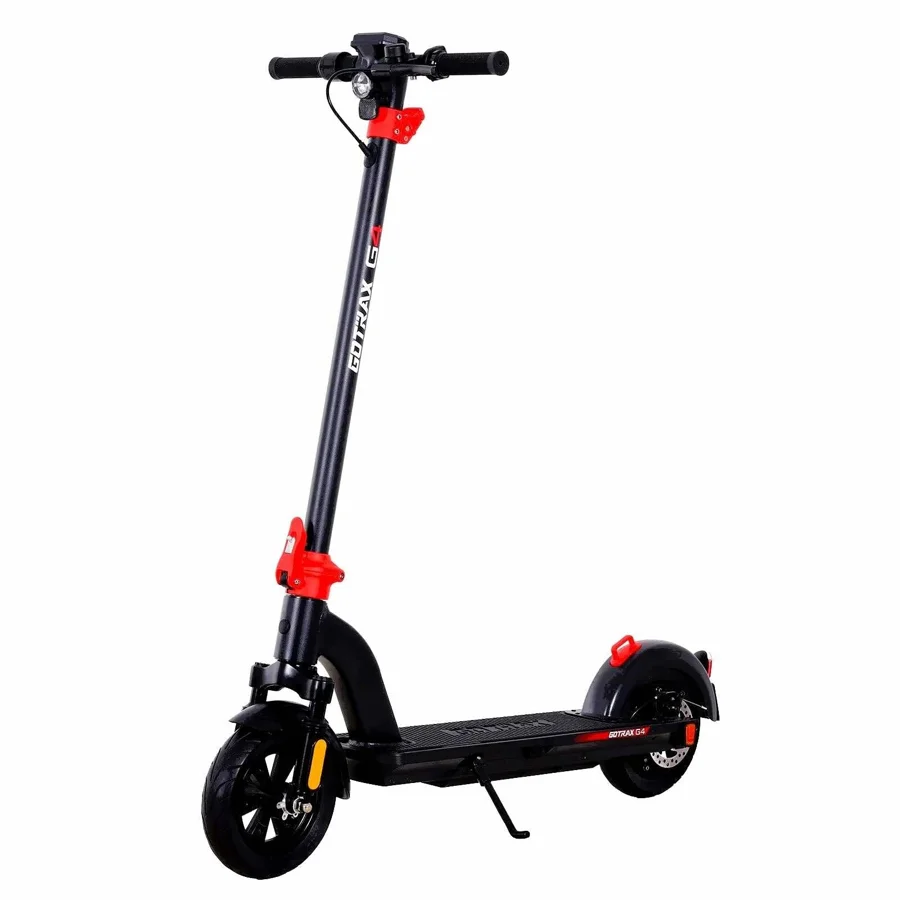
Price: $699 • Motor: 500W brushless • Brakes: Triple (electronic + disc + foot) • Tires: 10″ pneumatic • Features: Turn signals, LED display, cruise control • Solar: ~3 hrs to charge via 200W panel
The Gotrax G4 is the scooter we’d recommend to anyone who commutes under 20 miles round-trip. The 25-mile range (460Wh battery) means you have real margin — even in cold weather or uphill terrain, you’re getting 18–20 actual miles before needing a charge.
Triple braking (electronic regenerative + rear disc + foot brake) is the standout safety feature. Most scooters in this price range have one or two braking systems. Three gives you stopping power in any weather and terrain condition. The 10-inch pneumatic tires absorb road imperfections that would rattle your teeth on cheaper scooters with solid rubber tires.
Turn signals are built in — a feature you won’t find on most competitor scooters. When you’re riding in traffic alongside cars, being able to signal turns without taking a hand off the handlebars is a genuine safety upgrade. The LED dashboard shows speed, battery level, and riding mode in real time.
At 42 lbs, it’s not the lightest scooter, but it folds flat for carrying onto public transit or tucking under a desk. The folding mechanism is quick — one latch and it’s down.
Solar charging: The 460Wh battery needs about 3 hours of peak sun through a 200W panel. A morning-to-noon charge session while you’re at work has you ready for the evening commute. If you have a home backup solar generator like the BLUETTI AC200L (2,048Wh), it can charge the G4 over four times before needing its own recharge.
Buy Gotrax G4 on Amazon — $699 ↓
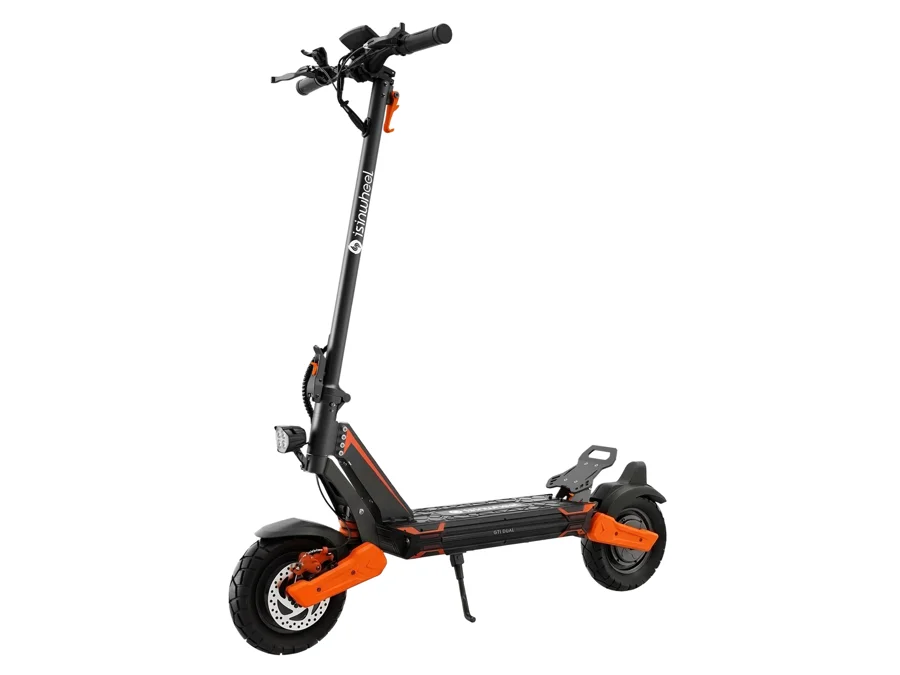
Motor: Dual 800W (1,600W total) • Brakes: E-ABS + disc • Tires: 10″ off-road • Max load: 330 lbs • Solar: ~4 hrs to charge via 200W panel
Update (October 2026): iSinwheel discontinued the GT2 we previously recommended here. The dual-motor GT1, at nearly the same price, replaces it.
The iSinwheel GT1 is the performance pick. Two 800W motors (1,600W combined) deliver a 32 mph top speed and genuine hill-climbing ability, and iSinwheel rates it for up to 35 miles of range from a 48V 13Ah battery. Where single-motor scooters bog down on inclines, dual motors keep pulling.
10-inch off-road tires, a 330 lb max load, and E-ABS plus disc brakes make it the best scooter on this list for rough roads, gravel paths, and uneven pavement. 32 mph demands real caution — check your local laws, since many cities cap scooters at 15 or 20 mph on bike lanes.
Solar charging: The 624Wh battery takes about 4 hours of peak sun on a 200W panel. A larger solar generator like the EcoFlow DELTA 2 Max (2,048Wh) can recharge it about three times.
Shop iSinwheel GT1 — $619.99 ↓
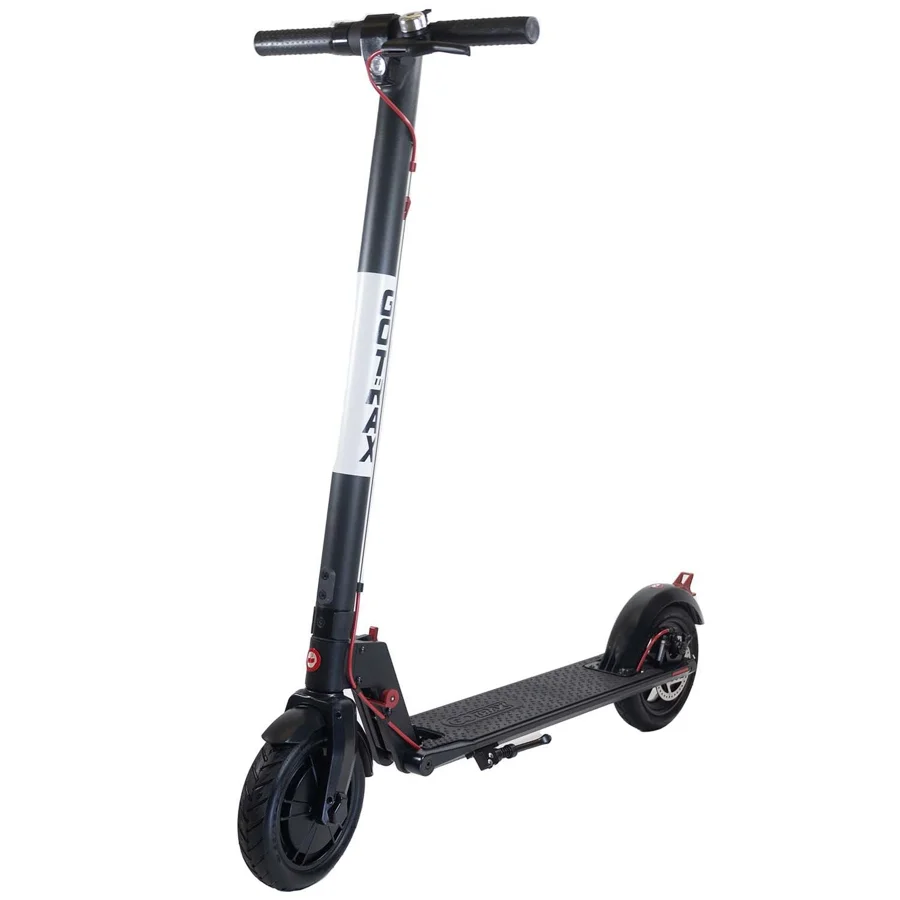
Motor: 250W brushless • Brakes: Electronic + foot • Tires: 8.5″ pneumatic • Weight: 27 lbs • Features: Front LED headlight, cruise control • Solar: ~1.5 hrs to charge via 200W panel
The GXL V2 has been Amazon’s best-selling electric scooter for three consecutive years. At $300, it’s the entry point that works. The 12-mile range is enough for short commutes (under 6 miles each way), campus trips, and neighborhood errands. At 27 lbs, it’s light enough to carry up stairs or onto a bus.
The 8.5-inch pneumatic tires are a key upgrade over cheaper scooters that use solid rubber. Pneumatic tires absorb bumps, provide better traction in wet conditions, and give a noticeably more comfortable ride. The front LED headlight covers evening rides.
Build quality is where Gotrax earns its reputation. The GXL V2 uses an aviation-grade aluminum alloy frame that feels solid without unnecessary weight. The folding mechanism is simple and reliable — one latch folds it flat in under 3 seconds.
Solar charging: The 216Wh battery is the smallest on this list — and that’s an advantage for solar charging. A 200W panel replaces a full charge in just 1.5 hours of peak sun. This is the most solar-friendly scooter you can buy. Even a 100W panel charges it in about 3 hours. If you own any solar panel for any purpose, you can charge this scooter for free.
Buy Gotrax GXL V2 on Amazon — $300 ↓
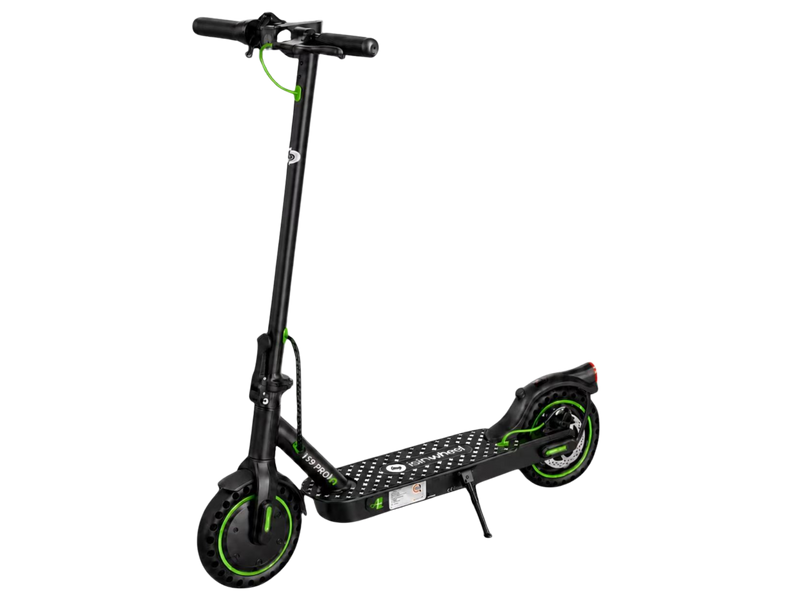
Motor: 350W brushless • Brakes: Electronic + disc • Tires: 8.5″ honeycomb solid • Suspension: Dual (front + rear) • App: Bluetooth • Solar: ~2.5 hrs to charge via 200W panel
At $280, the iSinwheel S9 Pro delivers specs that compete with $500+ scooters. 18-mile range at 18.6 mph — that’s 50% more range than the Gotrax GXL V2 at $20 less. The 350W motor handles moderate inclines without the dramatic slowdown you get on the GXL V2’s 250W motor.
The dual suspension (front and rear) is the feature that punches above this scooter’s price class. Budget scooters almost never include suspension — the Gotrax GXL V2 doesn’t. The S9 Pro does, and it makes a noticeable difference on cracked sidewalks, speed bumps, and rough pavement. Combined with a disc brake (another upgrade over the GXL V2), you get a safer, more comfortable ride for $20 less.
Bluetooth app connectivity lets you lock the scooter remotely, adjust speed settings, view trip history, and check battery health. This is unusual at the $280 price point.
The trade-off: solid honeycomb tires instead of pneumatic. They never go flat (a plus), but they transmit more vibration than air-filled tires (the dual suspension partially compensates). iSinwheel is also a less proven brand than Gotrax — fewer reviews, less US retail presence, and warranty support routes through their online portal.
Solar charging: The 360Wh battery charges in about 2.5 hours of peak sun through a 200W panel. That’s the sweet spot — fast enough for a lunch-break recharge, small enough that even a 100W panel handles it in half a day.
Cost per mile: At $280 for 18 miles of range, the S9 Pro delivers $15.56 per mile of range — the best value on this list. The Gotrax G4 comes to $27.96/mile. For buyers stretching a budget, the S9 Pro is the rational choice.
Shop iSinwheel S9 Pro — $280 ↓ Check Amazon Price
Electric scooters aren’t the only EVs you can charge with solar. If you’ve got kids (or you’re a kid at heart), electric go-karts deliver pure fun — and they run on the same stored electricity your solar panels produce.
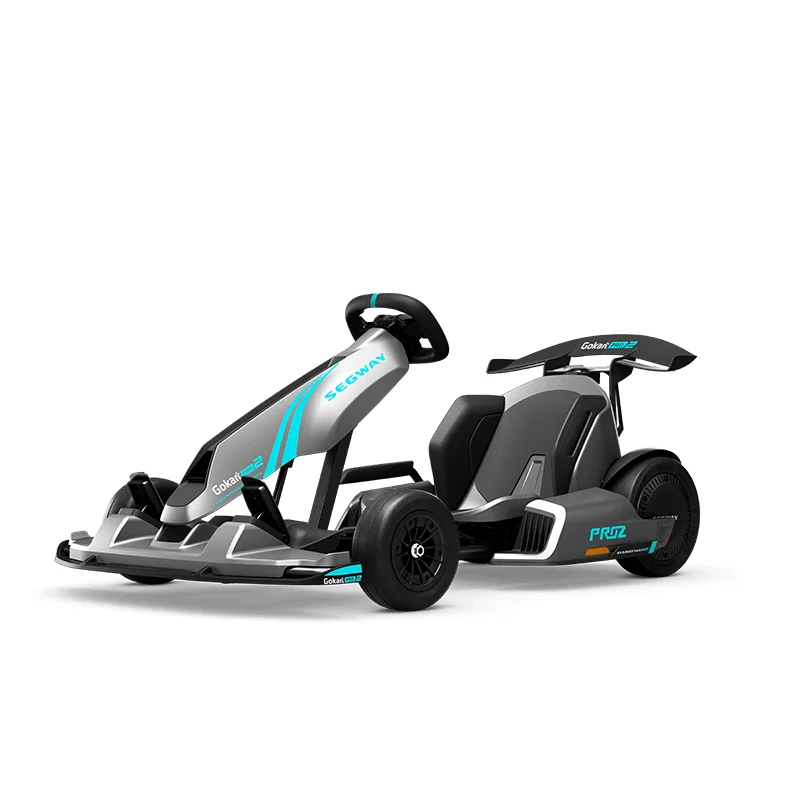
The Segway GoKart Pro 2 is the real deal — a genuine racing-style go-kart with 26 mph top speed, adjustable frame (fits kids and adults up to 6’3″), and a drift mode that lets you slide corners like a motorsport pro. The dual braking system and padded bumpers keep things controlled. At $1,499, it’s a premium choice, but nothing else delivers this combination of speed, build quality, and fun.
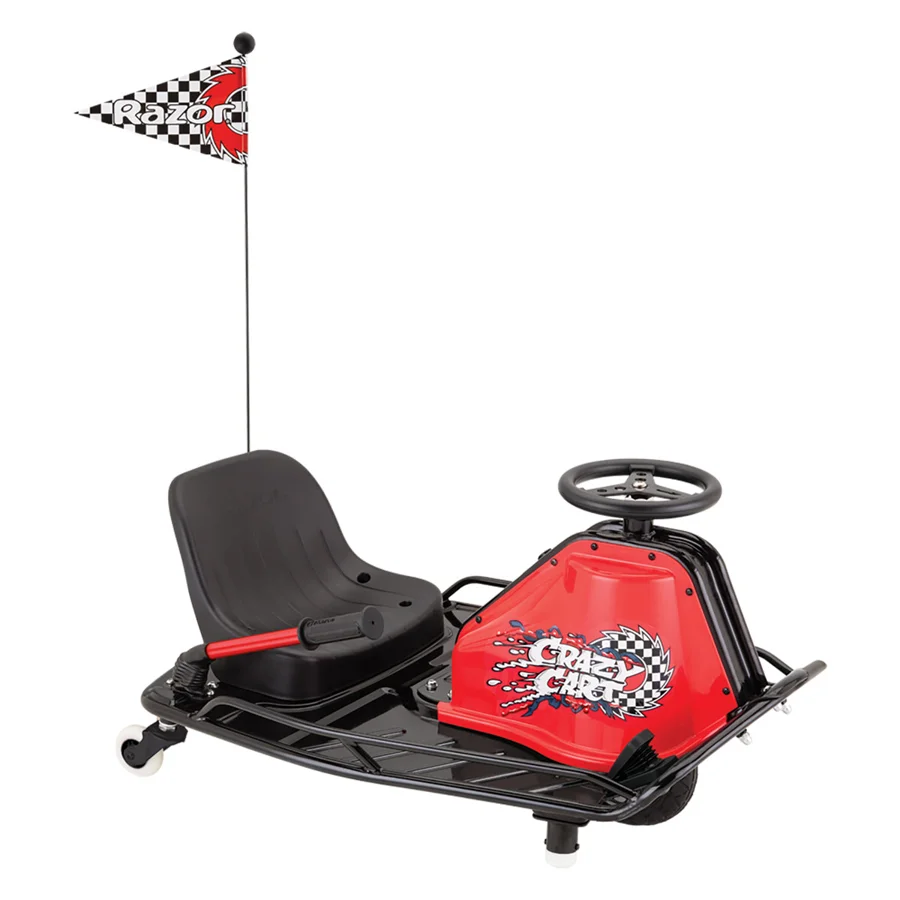
The Razor Crazy Cart is built for one thing: sliding sideways. The caster rear wheels enable full 360-degree spins and drifting at any speed. Variable-speed foot pedal lets riders control exactly how fast they go. The steel frame handles the abuse of drifting, and the low center of gravity keeps it stable through slides. Ages 16+ and riders up to 140 lbs. Pure fun.
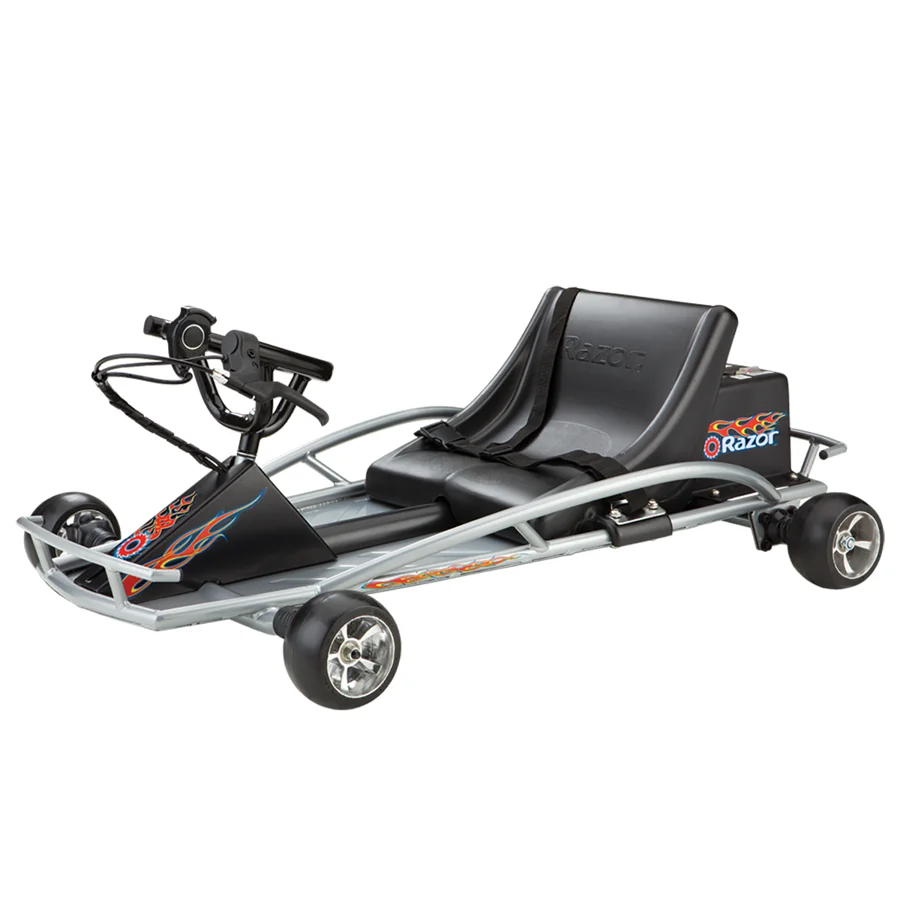
At $175, the Razor Ground Force is the entry point for kids who want an electric go-kart. Rear-wheel drive, hand-operated throttle and brake, steel frame, and a 12 mph top speed that’s fast enough to be exciting without being dangerous for the 8+ age range. The 24V battery provides 40 minutes of continuous runtime — plenty for driveway and backyard sessions. Charge it from your solar generator’s AC outlet in about 12 hours (overnight solar storage is perfect for this).
Get the Gotrax G4. 25-mile range, turn signals, and triple braking make it the complete commuter package. Solar charge in 3 hours.
Get the iSinwheel GT1. Dual motors, 32 mph, and off-road tires conquer terrain and speed that single-motor scooters can’t touch.
Get the Gotrax GXL V2. $300, 27 lbs, proven reliability. The easiest on-ramp to electric scooter commuting. Solar charges in 1.5 hours.
Get the iSinwheel S9 Pro. $280 for 18 miles, dual suspension, disc brake, and app. The most range per dollar on this list.
Yes. Plug the scooter’s stock wall charger into any solar generator’s AC outlet. A 200W solar panel replenishes a typical 200–750Wh scooter battery in 1.5–4.5 hours of peak sun. The solar panel charges the generator during the day; you charge the scooter from the generator at night or any time. No special adapters needed.
The Gotrax GXL V2 ($300) for proven reliability and lightweight portability. The iSinwheel S9 Pro ($280) if you want more range (18 miles vs 12) and dual suspension. Both are excellent choices under $500 and both solar-charge in under 3 hours.
Gotrax G4 for daily commuting — turn signals, triple braking, and Gotrax’s proven reliability. iSinwheel GT1 for raw performance — dual motors, 32 mph, and off-road tires for less money. The G4 is the safer bet; the GT1 is the thrill ride.
From the grid: $0.03–$0.10 per full charge (about $1.50/month for daily use). From solar: $0.00 per charge after the upfront panel cost. A $150–$250 solar panel pays for itself in 2–3 years of daily scooter charging — and immediately if you’re already using the panel for other devices.
In most US states, yes. Electric scooters under 20 mph are legal on roads and bike lanes in 44 states without a license. Scooters over 20 mph may need registration or have road-only restrictions. Always wear a helmet, use bike lanes where available, and check your local city or county ordinances for specific rules.
All four scooters are in the S.E.T. Store alongside the solar panels and generators that charge them for free.
Browse S.E.T. Store ↗ Find a Solar Generator See which solar panel matches your scooter →47 pages. Plain English. No fluff. Covers every major brand, real-world runtime tests, and our top picks for every budget.
No spam. Unsubscribe anytime. We hate junk mail as much as you do.