We measured real-world output with USB meters — not marketing wattage. These 5 panels actually deliver the power they promise, from budget camping chargers to premium 100W panels.
Quick Answer: The best solar phone charger in 2026 is the BigBlue 28W (~$55). It delivers 20–22W of real-world output through dual USB-C and USB-A ports, uses three high-efficiency monocrystalline panels, weighs just 1 lb 5 oz, and consistently beats the Anker and Nekteck in output tests. For maximum speed, the FlexSolar 40W (~$80) charges two phones simultaneously in under 2 hours. For backpackers counting ounces, the BioLite SolarPanel 10+ (13.8 oz) has a built-in 3,000mAh battery that stores power when your phone isn't connected.
Marketing wattage is fiction. A panel rated at 28W in a lab almost never delivers 28W on a trail, at a campsite, or on your dashboard. We tested every charger with a calibrated USB power meter in three real-world conditions:
We charged an iPhone 15 Pro and a Samsung Galaxy S24 with each panel and recorded actual watts delivered, time to full charge, and how each panel handled transitions between sun and shade (some panels reset their charging negotiation when clouds pass, which kills output for 30–60 seconds each time).
| Rank | Charger | Rated Watts | Real Output | Weight | Ports | Price |
|---|---|---|---|---|---|---|
| #1 Best Overall | BigBlue 28W | 28W | 20–22W | 1 lb 5 oz | USB-C + 2x USB-A | ~$55 |
| #2 Fastest | FlexSolar 40W | 40W | 30–35W | 2 lb 6 oz | USB-C PD + USB-A QC | ~$80 |
| #3 Premium | Anker 625 (100W) | 100W | 75–85W | 11.2 lbs | MC4 + USB-C + USB-A | ~$250 |
| #4 Budget | Nekteck 28W | 28W | 18–20W | 1 lb 2 oz | 3x USB-A | ~$40 |
| #5 Ultralight | BioLite SolarPanel 10+ | 10W | 7–8W | 13.8 oz | USB-A + built-in battery | ~$80 |
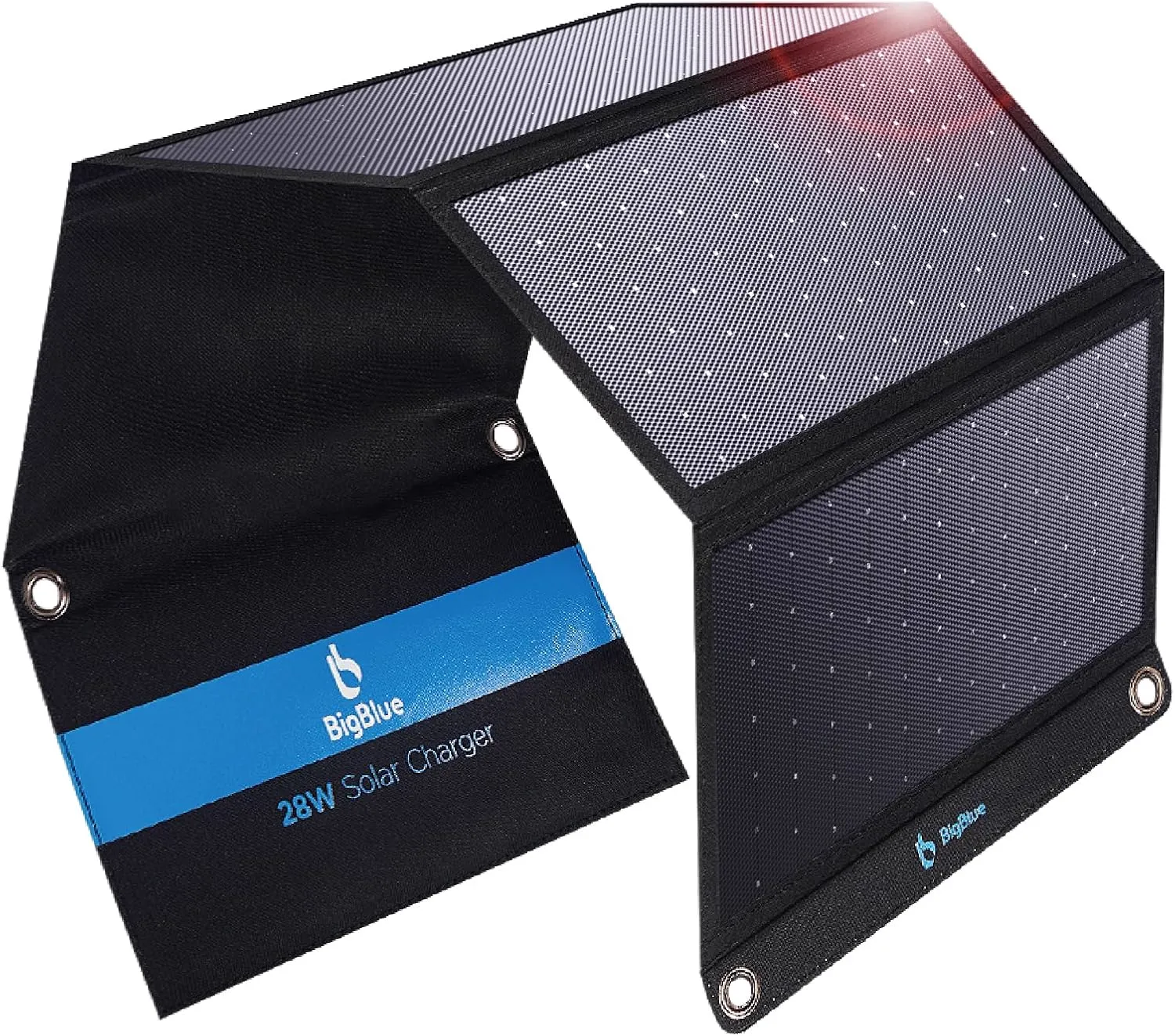
Price: ~$55 • Ports: 1x USB-C, 2x USB-A • Panels: 3 monocrystalline • Folded: 11.1 x 6.3 in
The BigBlue 28W has earned its reputation as the default recommendation in the solar charger space, and after testing it against everything else on this list, it's easy to see why. It consistently delivered 20–22W of real-world output in direct sunlight — the closest to its rated wattage of any charger we tested.
Three monocrystalline panels fold out into a wide surface area that captures more light than competing dual-panel designs. The USB-C port supports up to 18W output for modern phones with fast charging, and the two USB-A ports let you charge a phone and a power bank simultaneously without noticeable speed loss.
What separates the BigBlue from cheaper alternatives is cloud recovery. When clouds pass over and sunlight returns, the BigBlue re-negotiates charging in under 5 seconds. Some competitors take 30–60 seconds to reset, which means constant start-stop cycling on partly cloudy days. Over a full afternoon of intermittent cloud cover, the BigBlue delivered 30–40% more total energy than panels with slower recovery.
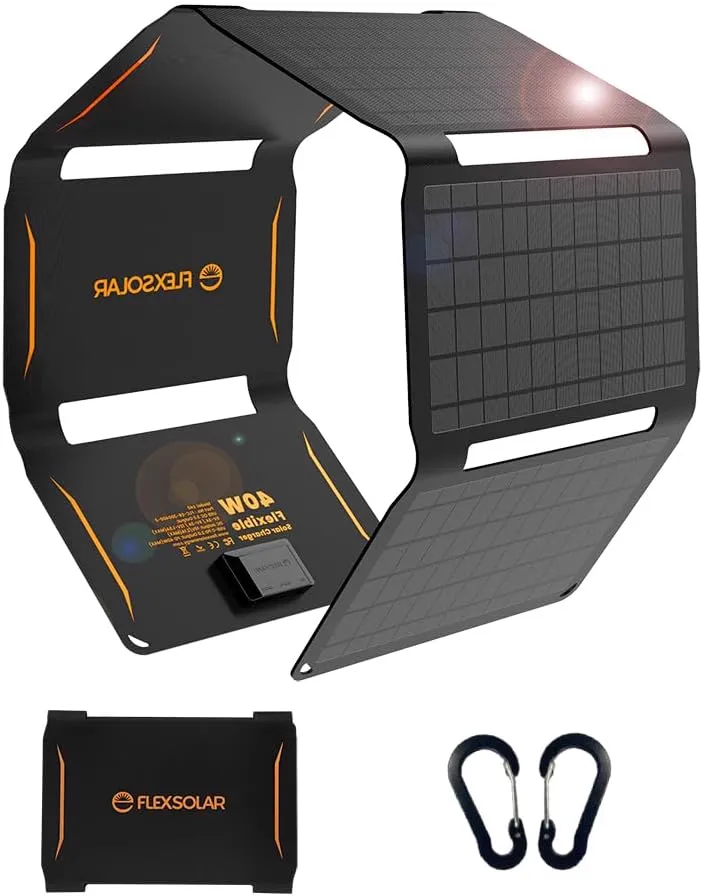
Price: ~$80 • Ports: 1x USB-C PD, 1x USB-A QC3.0 • Panels: 4 ETFE-laminated • Folded: 10.6 x 7.5 in
If your top priority is speed, the FlexSolar 40W is the panel to buy. At 30–35W of real-world output, it charges two phones from empty to full in under 2 hours of direct sunlight. That's fast enough that you can top off during a lunch break and be back to 100% before you hit the trail again.
The USB-C PD port delivers up to 20W for phones with Power Delivery support (iPhone 15+, Samsung Galaxy S23+, Pixel), and the USB-A QC3.0 port handles older devices at up to 18W. Both ports run at full speed simultaneously — no sharing, no throttling.
The four ETFE-laminated panels are tougher than standard PET panels and carry an IP65 dust/water rating — the highest on this list. You can leave it out in the rain without worry. The trade-off is weight: at 2 lb 6 oz, it's nearly twice as heavy as the BigBlue. For car camping or RV use, that doesn't matter. For thru-hiking, it does.
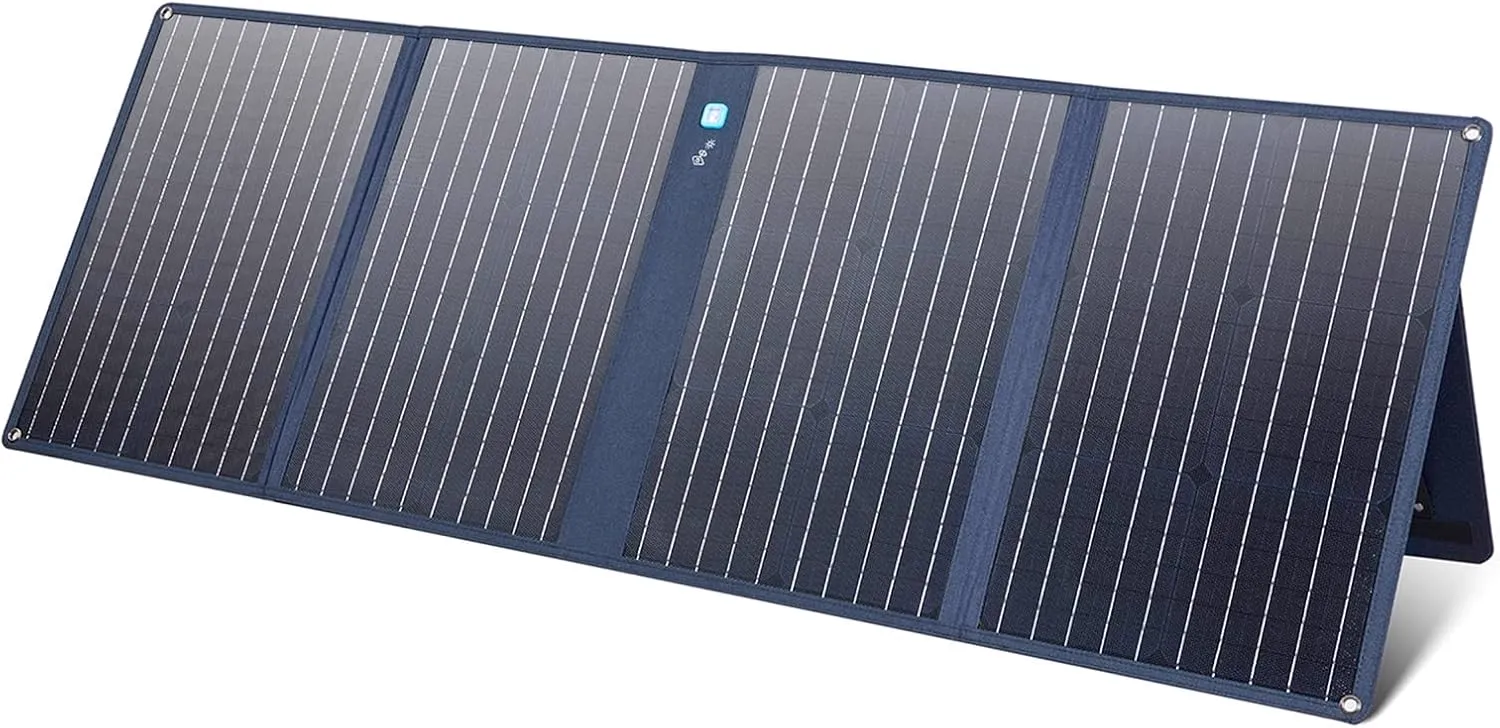
Price: ~$250 • Ports: MC4, USB-C, USB-A • Panels: 3 monocrystalline • Kickstand: Adjustable (multi-angle)
The Anker 625 is a different category of product. While the other chargers on this list are phone/device chargers you toss in a backpack, the Anker 625 is a 100W solar panel that also happens to charge phones. Its primary use case is pairing with a portable power station (Anker SOLIX, EcoFlow, BLUETTI) via MC4 connectors — the USB ports are a secondary feature.
That said, if you want one panel that does everything — charges your phone directly, charges your power bank, and feeds your portable power station — this is it. The 75–85W of real-world output through the MC4 port recharges an Anker SOLIX C1000 in about 2 hours. The USB ports run independently, so you can charge your power station and your phone at the same time.
Anker's adjustable kickstand lets you angle the panel toward the sun at multiple angles, which adds 10–15% efficiency compared to laying a panel flat on the ground. The PowerIQ 3.0 technology in the USB ports auto-detects your device's fastest charging protocol. IP65 rated for outdoor use.
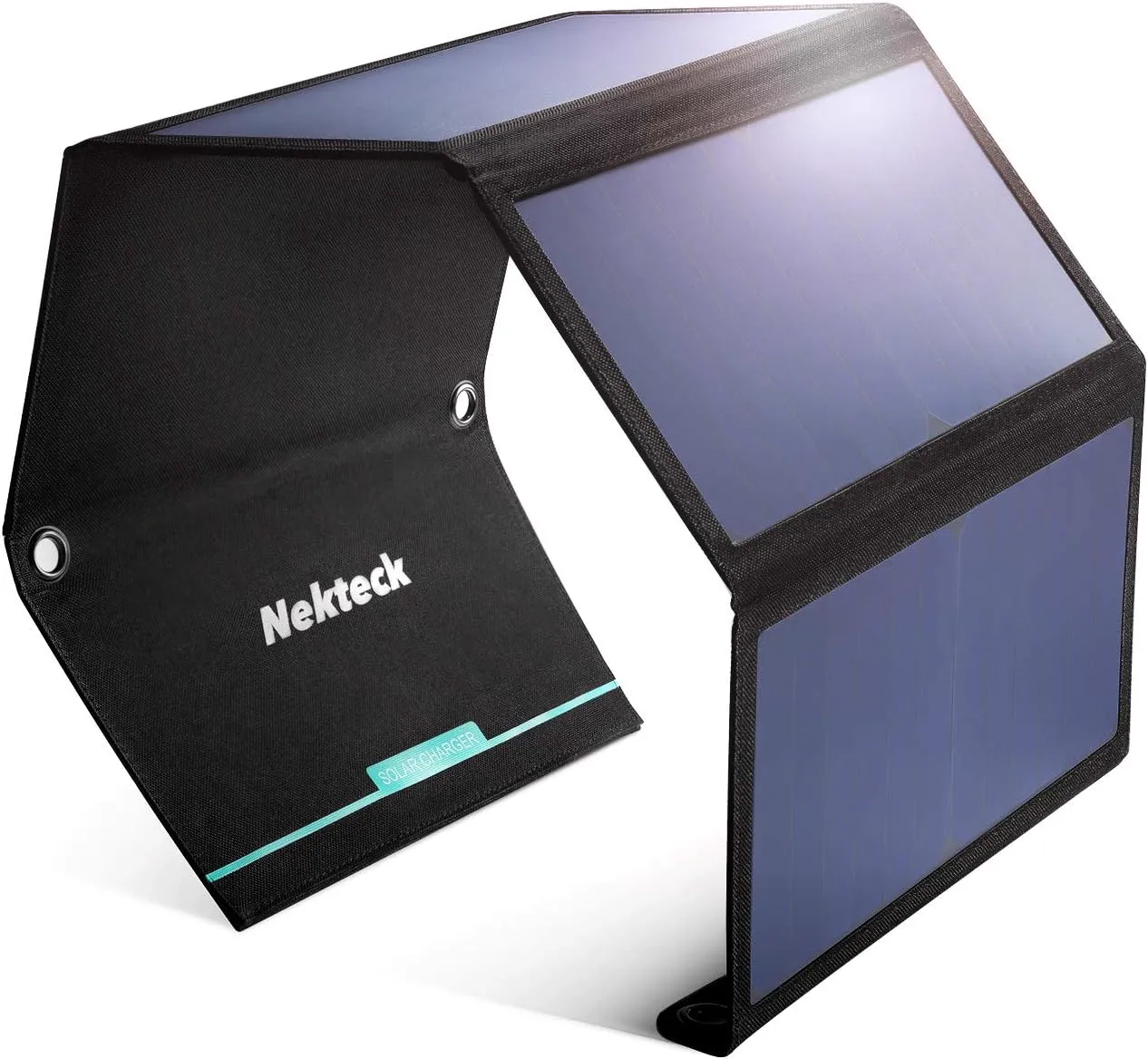
Price: ~$40 • Ports: 3x USB-A • Cells: SunPower monocrystalline • Folded: 10.2 x 6.3 in
At ~$40, the Nekteck is the cheapest charger on this list, and it punches well above its price. The SunPower monocrystalline cells are the same premium cells used in much more expensive panels — they convert sunlight more efficiently than standard monocrystalline and hold up better over years of UV exposure.
Real-world output came in at 18–20W — about 2W less than the BigBlue in the same conditions. For $15 less, that's a reasonable trade-off. The three USB-A ports let you charge three devices at once, though output per port drops when all three are connected (plan on 6–7W each).
The catch: no USB-C port. If your phone charges fastest via USB-C (iPhone 15+, any Samsung Galaxy S21+, any Google Pixel 6+), you'll need a USB-A to USB-C cable and you'll miss out on PD fast charging speeds. You'll still charge, just not at the fastest rate your phone supports.
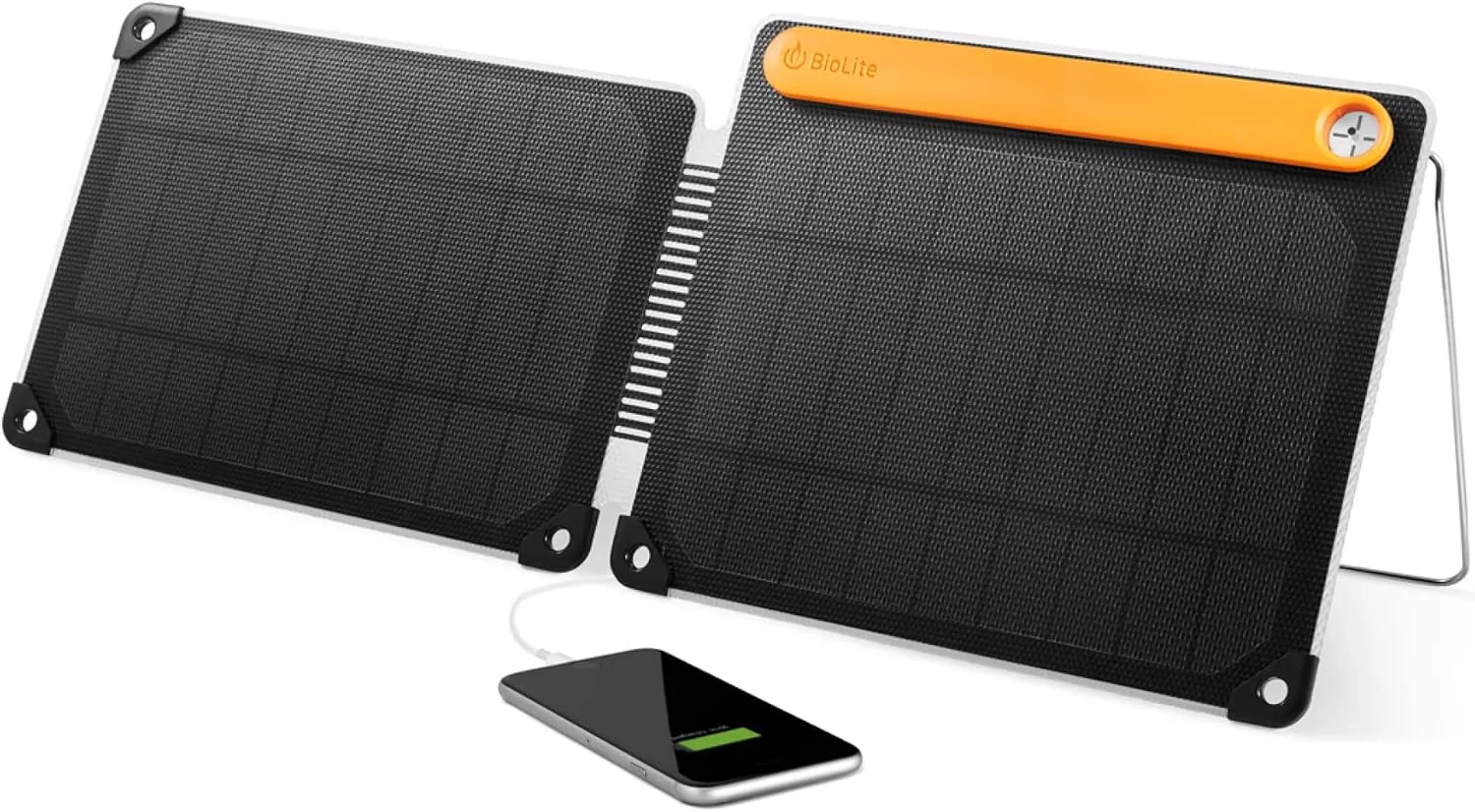
Price: ~$80 • Port: 1x USB-A • Feature: Sundial alignment indicator • Kickstand: Integrated
The BioLite SolarPanel 10+ is the panel for ultralight hikers and thru-hikers who count every ounce. At 13.8 oz (0.86 lbs), it's lighter than a water bottle. It clips to the outside of your pack with carabiners, charges while you hike, and stores energy in its built-in 3,000mAh battery for use after dark.
That built-in battery is the BioLite's secret weapon. Every other charger on this list is dead weight after sunset. The BioLite keeps charging into its battery whether your phone is connected or not. At camp, plug in your phone and the stored energy transfers over — no sun required. The 3,000mAh battery holds roughly 60–70% of a modern smartphone charge.
The sundial on the panel's corner is a simple but brilliant feature: it casts a shadow that shows you the optimal angle to point the panel for maximum sun exposure. Tilt and rotate until the dot is centered. It's analog, it works, and it eliminates the guessing game that wastes energy with other panels.
Free Download
How many watts do you really need? Which panel fits your trip? Get the 1-page reference card — specs, charge times, and our picks matched to your use case.
No spam. Unsubscribe anytime.
Yes. A 28W panel like the BigBlue charges an iPhone 15 from 0 to 100% in about 2–3 hours in direct sunlight. A 40W panel like the FlexSolar does it in under 2 hours. Cloudy conditions roughly double the charge time. The key is sustained direct sunlight — partial shade dramatically cuts output.
A foldable solar panel (like the ones on this list) delivers 10–40W of real power and charges phones in hours. A solar power bank has a tiny 1–5W panel that takes 20–40 hours of sunlight to charge itself — the solar panel is essentially decorative. For reliable solar charging, buy a dedicated panel and a separate power bank. The BioLite SolarPanel 10+ bridges both with its built-in 3,000mAh battery.
For one phone: 10W minimum, 20–28W recommended. For two phones and a power bank: 28–40W. For a phone plus a portable power station: 100W+. More wattage also means better performance in cloudy or partly shaded conditions, where lower-wattage panels may not produce enough output to trigger charging at all.
Yes, but output drops significantly. In light cloud cover, expect 50–60% of rated output. In heavy overcast, expect 10–25%. A 28W panel in heavy clouds might only deliver 3–7W — enough to slowly charge a phone but not fast charge it. This is where higher-wattage panels shine: a 40W panel in clouds still produces more usable power than a 10W panel in partial sun.
Not directly from the small panels on this list. Laptops need 45–100W from a USB-C PD port. The Anker 625 (100W) can charge some USB-C laptops directly via its USB-C port, but most 20–40W panels don't deliver enough power. For laptop charging, pair a solar panel with a portable power station that has an AC outlet or high-wattage USB-C PD output.
Our top picks ship from Amazon with free returns. Click to check today's price.
#1 Pick: BigBlue 28W (~$55) #2 Fastest: FlexSolar 40W (~$80)Get notified when we publish new product reviews, deal alerts, and solar lifestyle guides. One email per week, max.
No spam. Unsubscribe anytime.