Home ›
Blog › Hurricane Season Solar Backup
🌀 HURRICANE PREP
Hurricane Season Solar Backup Checklist 2026 — Keep Your Power On When the Grid Goes Down
A solar generator keeps your fridge running, phones charged, and lights on during a hurricane — no gas, no fumes, works indoors. Here's exactly what to charge, what you can run, and the 3 units we'd grab before the next storm.
By S.E.T. Editorial Team
Updated September 13, 2026
12 min read
Why Solar Generators Are the Smarter Hurricane Backup
Every hurricane season, the same story plays out across Florida: the power goes out, gas stations are either closed or have two-hour lines, and the neighborhood sounds like a construction site from gas generators running 24/7.
Meanwhile, gas generators cause more deaths after hurricanes than the storms themselves. Carbon monoxide poisoning from improperly vented gas generators kills dozens of Americans every year — CPSC data shows it's the leading cause of storm-related fatalities.
Solar generators solve every one of those problems:
- Zero carbon monoxide — safe to run inside your house, garage, or apartment
- Zero fuel needed — charge from a wall outlet before the storm, recharge with solar panels after
- Silent operation — no noise complaints, no disturbing sleeping kids or pets
- Instant on — press a button, your fridge starts running
- No maintenance — no oil changes, no spark plugs, no stabilizer in old gas
⚠️ 2026 Hurricane Season Alert: NOAA forecasts an above-average Atlantic hurricane season in 2026, with 14–21 named storms expected. Peak season runs through November 30. If you don't have backup power, now is the time — not when a storm is three days out and everything is sold out.
🌀 Pre-Storm Power Checklist
Do this 48 hours before a storm is expected to make landfall:
- Charge your solar generator to 100% — most LiFePO4 units charge from wall outlet in 1–2 hours
- Charge all solar panels — test that they pair correctly with your unit before the storm
- Charge every device — laptops, phones, tablets, battery banks, flashlights
- Lower your fridge/freezer to coldest setting — a colder starting temp means longer food safety
- Fill coolers with ice as backup — if your battery runs out, ice buys time for perishables
- Identify essential circuits — know which outlets power your fridge, router, and medical devices
- Stage the generator near your fridge — less cord length = less voltage drop
- Test your setup — plug in essentials and verify everything runs simultaneously
- Download offline maps and emergency info — cell towers may go down
- Store solar panels safely inside — don't leave them out during the storm
💡 Pro Tip: After the storm passes, deploy your solar panels to recharge. Most Florida locations see sun within 24–48 hours post-hurricane. A 200W panel can refill a 2,000Wh battery in about 10 hours of direct sunlight — giving you unlimited cycles of backup power.
⚡ Household Wattage Chart — What Can You Actually Run?
Before choosing a solar generator, you need to know your actual power draw. Here's what common household items pull:
| Appliance |
Running Watts |
Priority |
Daily Wh (est.) |
| Refrigerator |
100–200W |
🟢 Essential |
1,200–2,400 |
| Wi-Fi Router |
10–20W |
🟢 Essential |
240–480 |
| Phone Charger (x2) |
10–20W |
🟢 Essential |
60–120 |
| LED Lights (5 bulbs) |
40–50W |
🟢 Essential |
240–400 |
| CPAP Machine |
30–60W |
🟢 Essential |
240–480 |
| Laptop |
50–100W |
🟡 Important |
200–400 |
| Fan (box or pedestal) |
50–75W |
🟡 Important |
400–600 |
| TV |
60–150W |
🟡 Important |
240–600 |
| Window AC Unit |
500–1,500W |
🔴 Heavy |
4,000–12,000 |
| Microwave |
600–1,200W |
🔴 Heavy |
100–200 (short use) |
| Space Heater |
750–1,500W |
🔴 Heavy |
3,000–6,000 |
The essentials (fridge + router + lights + phones + CPAP) draw about 200–350W combined. A 3,000Wh solar generator runs that load for 8–15 hours straight — enough to get through the storm and recharge with solar panels in the morning.
🌀 Free Hurricane Power Prep Guide
Get our printable pre-storm checklist + wattage calculator. One email, no spam.
✓ Check your inbox! Guide is on its way.
🔋 Our 3 Hurricane-Ready Solar Generator Picks
We've tested and reviewed dozens of solar generators. These three are our top picks specifically for hurricane and storm prep — ranked by the balance of capacity, output, recharge speed, and value.
🏆 #1 Pick — Best Overall Hurricane Backup
EcoFlow DELTA Pro
3,600WhCapacity
3,600WOutput
1,600WSolar Input
99 lbsWeight
The EcoFlow DELTA Pro is the gold standard for whole-home hurricane backup. At 3,600Wh, it runs a fridge, lights, router, and phone chargers for 15+ hours on a single charge. The 3,600W inverter handles a window AC unit, microwave, and most power tools.
Why it's #1 for hurricanes: The Smart Home Panel 2 lets you wire it directly into your home's electrical panel — when the grid drops, the DELTA Pro kicks in automatically. It's the closest thing to a whole-home battery without a $15,000 Powerwall install. Expandable up to 25kWh with extra batteries.
✓ Pros
- 3,600Wh — enough for 15+ hrs of essentials
- Smart Home Panel integration (automatic transfer)
- Expandable to 25kWh with extra batteries
- 1,600W max solar input — fast recharge
- UPS mode (20ms switchover)
✗ Cons
- 99 lbs — heavy, needs wheels for moving
- Higher price point (~$2,899)
- Smart Home Panel sold separately ($1,599)
See Today's Price on EcoFlow
Read Our EcoFlow Guide
💰 #2 Pick — Best Value for Hurricane Prep
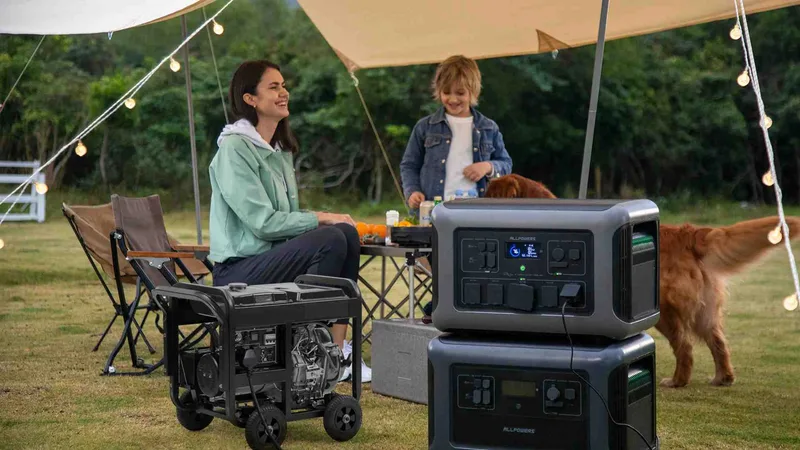
ALLPOWERS R3500
3,168WhCapacity
3,200WOutput
2,000WSolar Input
75.4 lbsWeight
The ALLPOWERS R3500 delivers 90% of the DELTA Pro's hurricane performance at roughly 65% of the price. At 3,168Wh and 3,200W output, it handles the same essential loads — fridge, lights, router, fans — for 12+ hours.
Why it's the value pick: The R3500 accepts up to 2,000W of solar input — actually faster than the DELTA Pro for solar recharging after a storm. It includes a transfer switch input for direct home panel connection. At ~$1,899 (and often less during sales), it's the best Wh-per-dollar in the category.
✓ Pros
- 3,168Wh — runs essentials 12+ hrs
- 2,000W solar input (fastest recharge)
- Transfer switch ready
- 25 lbs lighter than DELTA Pro
- Currently on sale — use code APSEP110
✗ Cons
- No auto-transfer panel like EcoFlow's SHP2
- Slightly smaller battery than DELTA Pro
- Newer brand — less ecosystem support
See Today's Price on ALLPOWERS
Read Our R3500 Review
🏠 #3 Pick — Best Mid-Range Apartment/Condo Backup
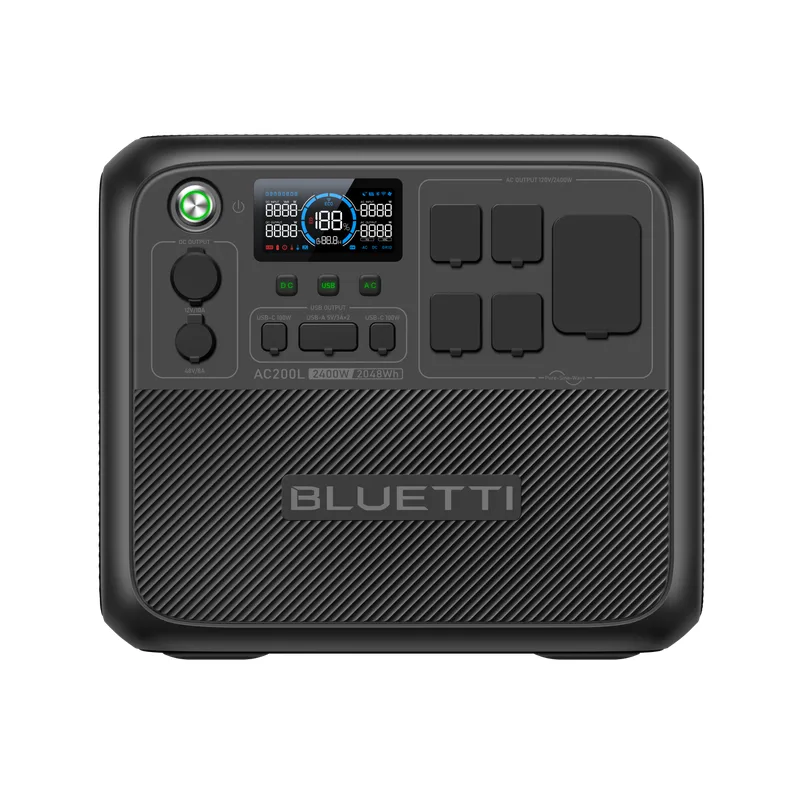
BLUETTI AC200L
2,048WhCapacity
2,400WOutput
1,200WSolar Input
62.4 lbsWeight
The BLUETTI AC200L is the sweet spot for apartment and condo dwellers who don't need whole-home backup. At 2,048Wh, it keeps a fridge, lights, and devices running for 8–10 hours — plenty to get through a storm night.
Why it's the apartment pick: At 62 lbs, it's manageable for one person to carry. The 2,400W output handles everything except central AC. It charges to 80% in 45 minutes via wall outlet — ideal for last-minute storm prep. BLUETTI's app gives you real-time battery monitoring from your phone.
✓ Pros
- 2,048Wh — 8–10 hrs of essentials
- 62 lbs — lightest in this class
- 80% charge in 45 min (wall outlet)
- Bluetooth app monitoring
- More affordable (~$1,299–$1,599)
✗ Cons
- Smaller capacity — not for extended outages
- No transfer switch integration
- Not expandable
See Today's Price on BLUETTI
Read Our BLUETTI Guide
⚡ Solar Generator vs. Gas Generator — Hurricane Edition
Let's put the two head-to-head for hurricane-specific use:
| Factor |
Solar Generator |
Gas Generator |
| Indoor Use |
✓ Safe indoors |
✗ NEVER — CO kills |
| Fuel Required |
✓ None — wall + solar |
✗ Gasoline (scarce after storms) |
| Noise |
✓ Silent |
✗ 65–80 dB (lawn mower level) |
| Startup Time |
✓ Button press |
Pull-start (may not start if old) |
| Maintenance |
✓ None |
✗ Oil, spark plug, stabilizer |
| Runtime per Fill |
8–15 hrs (battery dependent) |
8–12 hrs per tank |
| Recharge After Storm |
✓ Free — solar panels |
✗ Need more gas |
| Upfront Cost |
$1,299–$2,899 |
$300–$800 |
| Lifetime Cost |
✓ $0 fuel, 10+ yr lifespan |
$200+/yr in gas + maintenance |
| Power Central AC? |
✗ No (most models) |
✓ Yes (larger models) |
Bottom line: Gas generators win on raw sustained power output and upfront cost. Solar generators win on everything else — especially safety, convenience, and long-term value. For most Florida homeowners running essentials during a 1–3 day outage, a solar generator is the smarter choice. The only scenario where gas clearly wins is if you need to power central AC for multiple days.
📋 What Size Do You Actually Need?
Quick sizing guide based on your situation:
Apartment / Condo (1–2 people): 2,000Wh minimum → BLUETTI AC200L
Covers: fridge, lights, phones, Wi-Fi, laptop. Runtime: 8–10 hours.
House (2–4 people): 3,000Wh minimum → ALLPOWERS R3500 or EcoFlow DELTA Pro
Covers: fridge, lights, Wi-Fi, phones, fan, TV. Add window AC for short periods. Runtime: 12–15 hours.
House + Medical Devices: 3,600Wh+ recommended → EcoFlow DELTA Pro + Smart Home Panel
Automatic transfer when grid drops. Critical for CPAP, oxygen concentrators, powered wheelchairs.
FAQ — Hurricane Solar Backup
Can a solar generator power a house during a hurricane?
A solar generator can power essential circuits during a hurricane — fridge, lights, phone chargers, Wi-Fi router, and medical devices. A 2,000–3,600Wh unit like the EcoFlow DELTA Pro or ALLPOWERS R3500 can keep a fridge and basic essentials running for 12–24 hours on a single charge. You won't run central AC, but you'll keep food safe and stay connected.
Is a solar generator better than a gas generator for hurricanes?
For most homeowners, yes. Solar generators work indoors (no carbon monoxide risk — the #1 cause of generator-related deaths after hurricanes), require zero fuel (gas stations close before storms), start instantly, and recharge from the sun once the storm passes. The main trade-off: solar generators cost more upfront but have zero recurring fuel costs and last 10+ years.
How long does a solar generator last in a power outage?
Runtime depends on battery capacity and load. A 3,600Wh unit powering a fridge (150W), Wi-Fi router (15W), LED lights (30W), and phone chargers (20W) — about 215W total — lasts roughly 15 hours. Add a window AC (1,000W) and runtime drops to about 3 hours. Solar panels add unlimited recharge cycles after the storm.
What size solar generator do I need for hurricane season?
For essential backup (fridge, lights, phones, Wi-Fi), a minimum of 2,000Wh. For extended outages or running a window AC, 3,000Wh or more. The sweet spot for Florida hurricane prep is a 3,000–3,600Wh unit with 2,000W+ output, paired with 200–400W of solar panels for post-storm recharging.
Can I charge a solar generator during a hurricane?
Not during the storm itself — panels shouldn't be deployed in high winds or rain. The strategy: charge to 100% from a wall outlet before the storm (most charge in 1–2 hours), run essentials during the outage, then deploy solar panels once the storm passes. Most Florida locations see sun within 24–48 hours post-hurricane.